YELLOWSTONE
Yellowstone National Park Trip Report (4 Days): Geyser Basins, Bison Jams, and Sleeping in the Car Outside the Gate
Four days driving Yellowstone’s figure-eight loop — geyser basins, blue hot springs, the Lower Falls, endless bison jams, and car camping outside the gate.
Yellowstone is enormous — more than two million acres sitting on top of an active supervolcano, laced together by a single figure-eight road that takes most of a day to drive end to end. We had four days in September, a car set up to sleep in, and a spot in the national forest just outside the west entrance. The plan, to the extent we had one, was to drive a different stretch of the loop each day and take whatever the park put in front of us.
What it put in front of us, mostly, was steam and bison. The ground here doesn’t behave like ground anywhere else — it hisses, bubbles, and bleeds color, with hot springs the blue of pool water and mud that breathes. And between the basins, the herds: bison grazing the meadows by the hundred and crossing the road whenever they felt like it, completely indifferent to the line of cars stacking up behind them.
September turned out to be a good time to come. The summer crowds had thinned, the mornings had an edge to them, and the bison were on the move. We slept in the car each night with the platform built out flat, woke up cold, made coffee in the trees, and drove back through the entrance gate as the light came up.
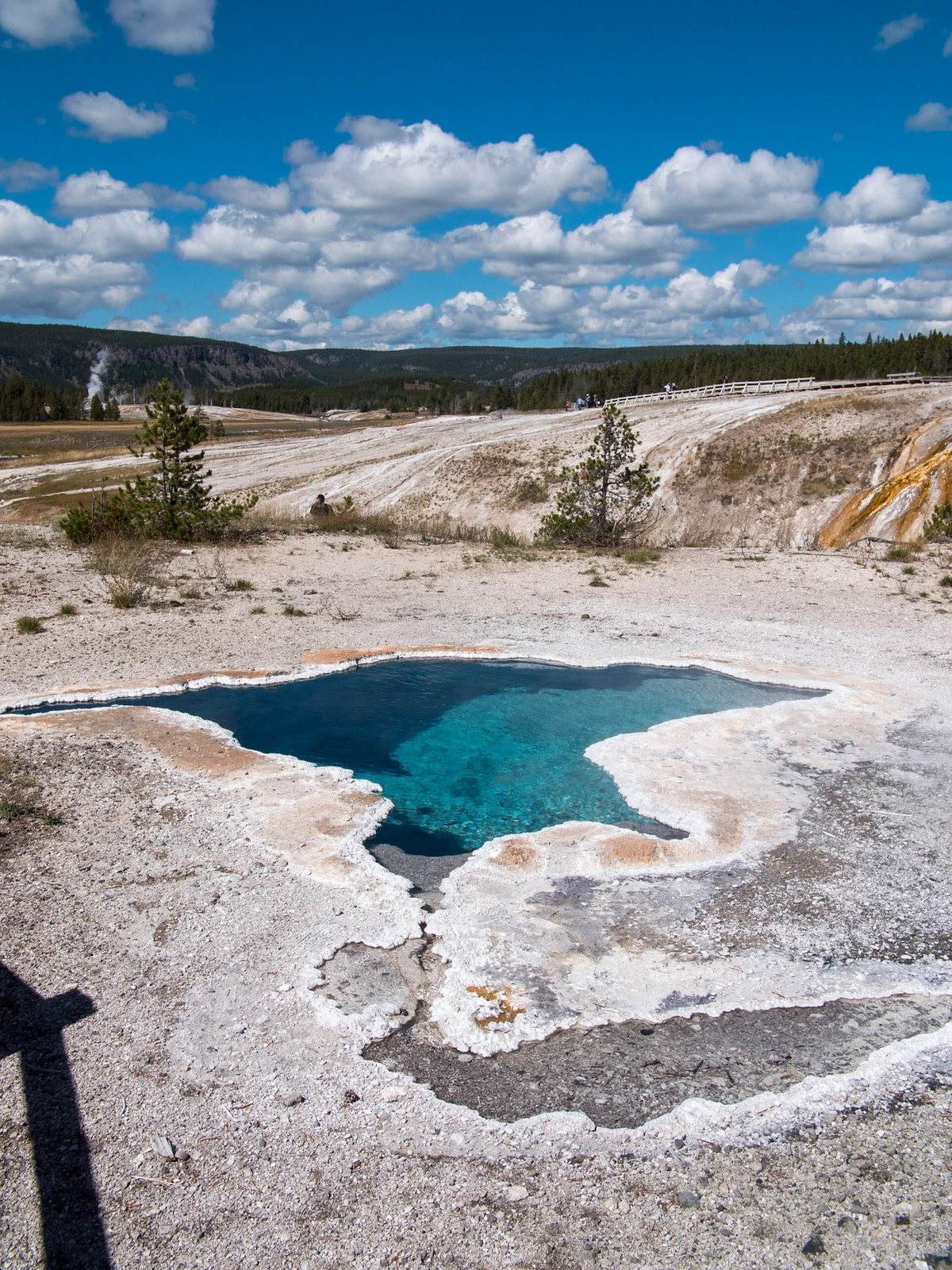
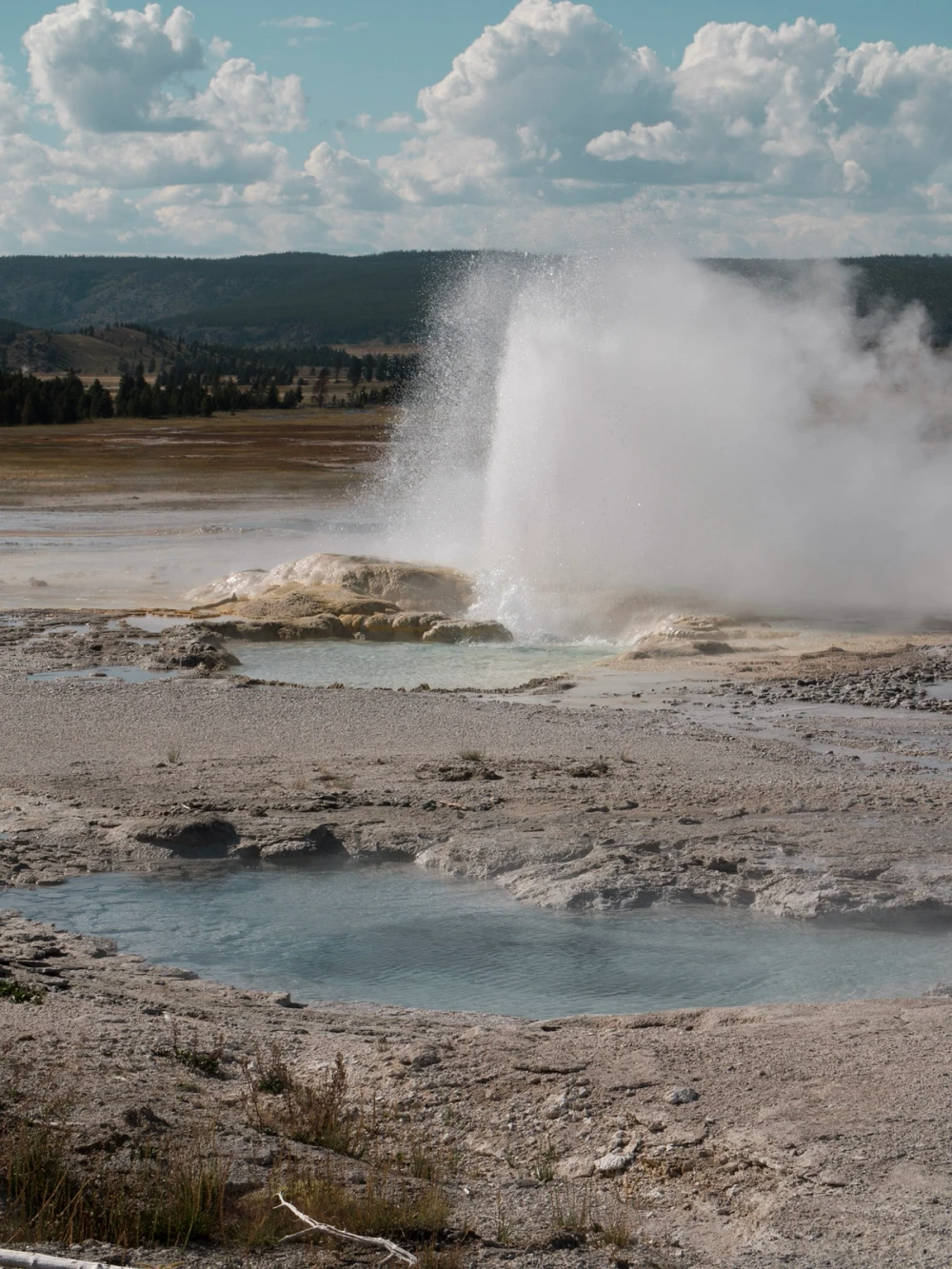
We started where everyone starts: Old Faithful and the Upper Geyser Basin, the densest collection of geysers on Earth. The boardwalks run for miles out across a bone-white plain, past springs with names and springs without, and the whole basin smells faintly of sulfur and throws off heat you can feel on your face when the wind shifts.
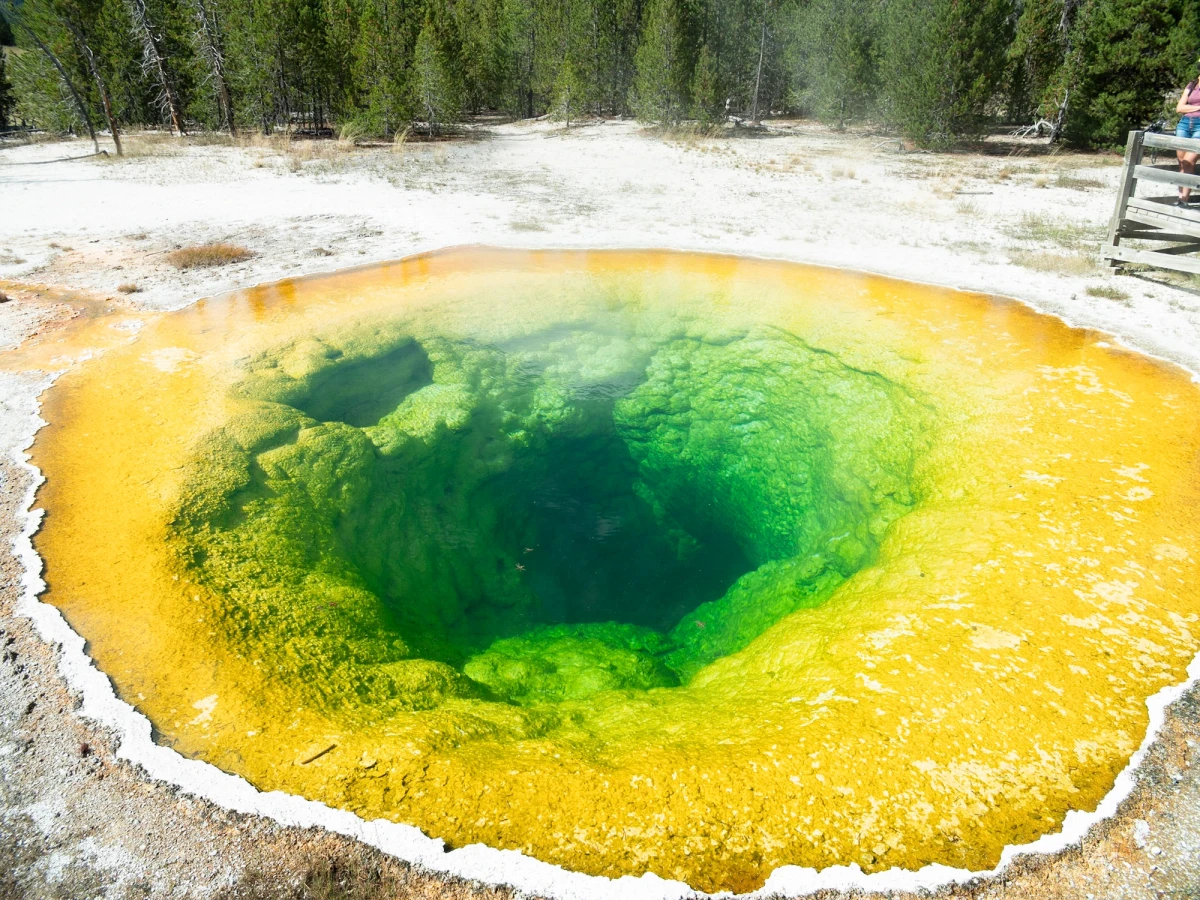
You learn to read the colors fast. The deep blues are the hottest and clearest; the oranges, yellows, and greens fanning out from the edges are mats of bacteria living in water that would cook you. Morning Glory Pool was the one we’d come to see — a ringed eye of yellow and green, its cooler edges tinted by decades of coins tossed into the vent.
We spent the whole morning just walking the basins, waiting out eruptions and watching geysers fire off without warning across the flats. A few you can predict to the hour; most you can’t, and there’s a particular thrill to a column of water and steam going up two hundred yards away while you weren’t looking.
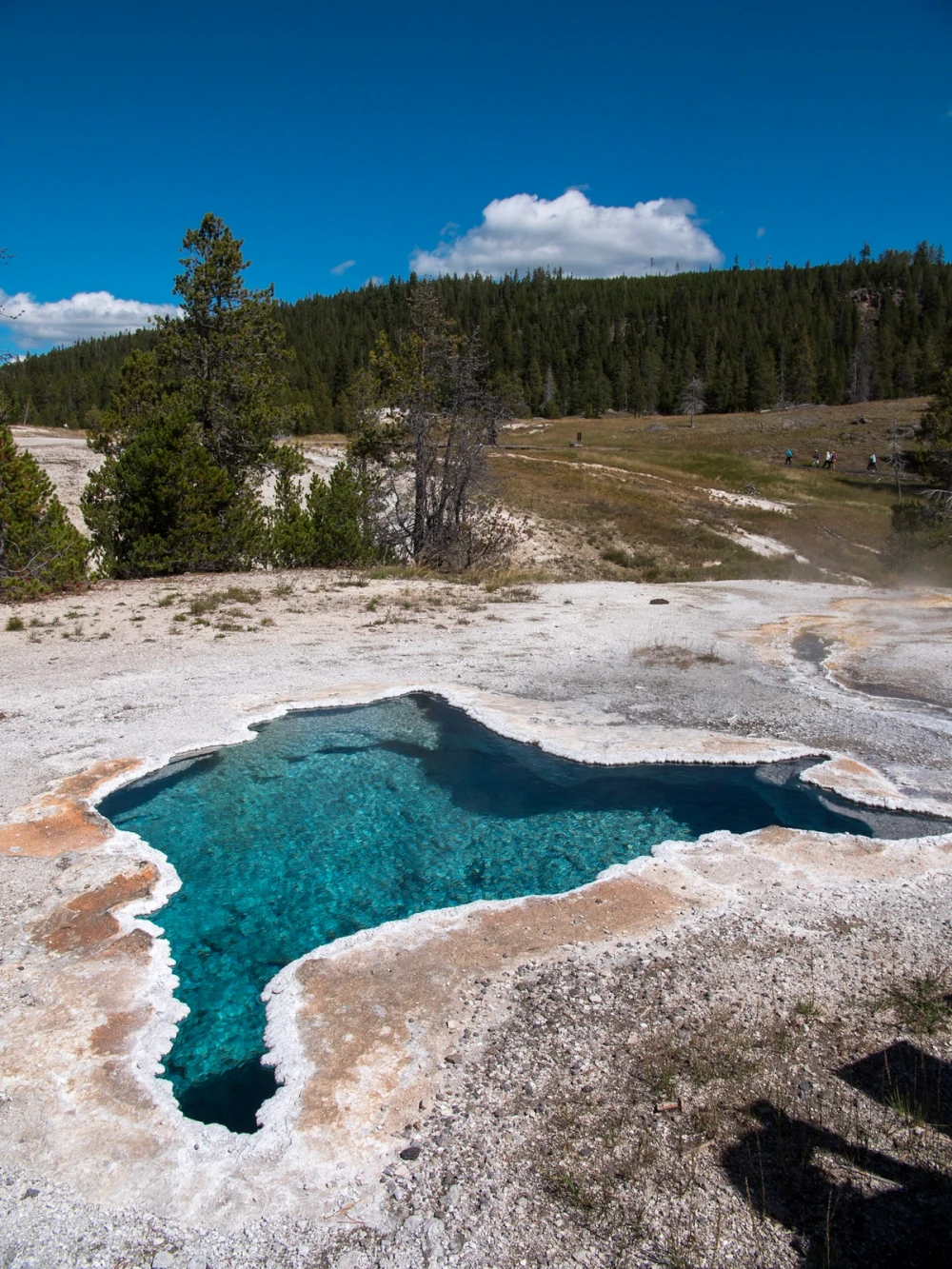
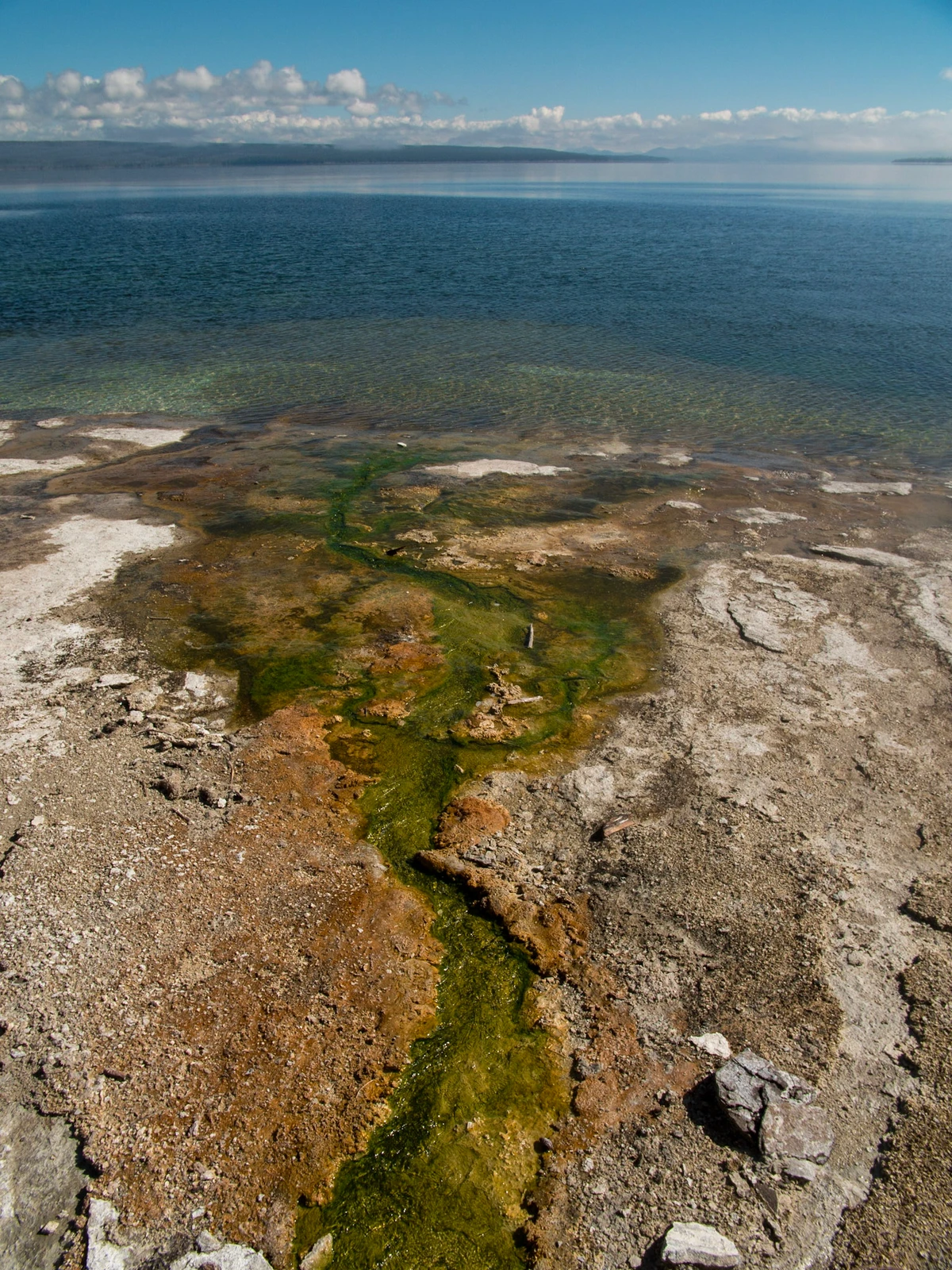
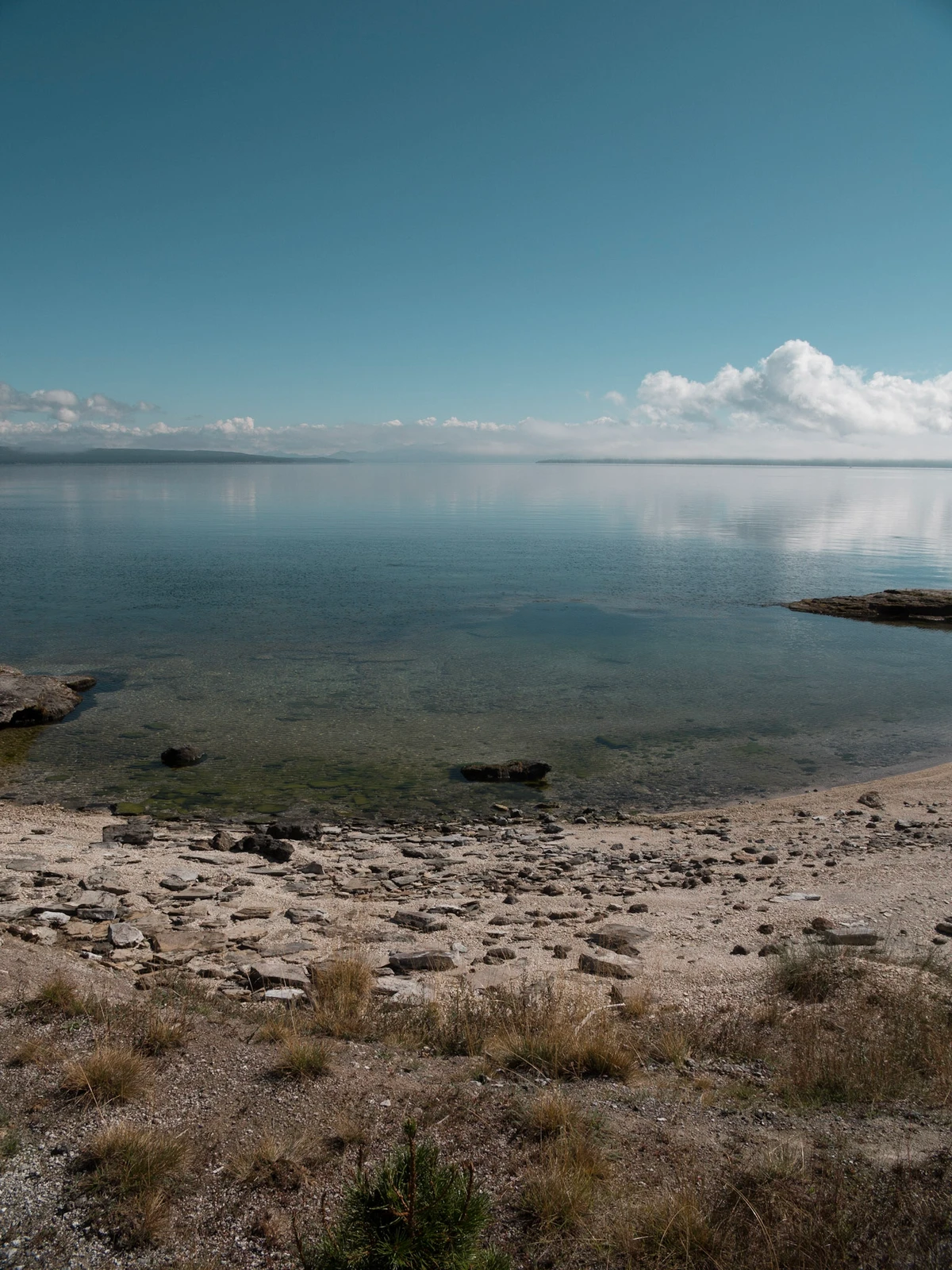
Yellowstone Lake is the largest high-elevation lake in North America, big enough to make its own weather, and the drive to its western edge is one of the prettiest in the park. At West Thumb the thermal features run right down to the shoreline — hot springs steaming a few feet from cold lake water, runoff channels streaked orange and green cutting across the sand into the shallows.
It’s a strange place to stand. On one side, a spring hot enough to kill you; on the other, a lake so clear and still it looks like glass. We followed the boardwalk down to where the two met and sat there a while.
Most of the day, though, went to driving. The park is so big that getting from one basin to the next eats hours, and we’d badly underestimated it. We ate lunch in turnouts, watched the lake change color with the clouds, and got stopped — twice — behind bison who’d decided the road was theirs.
“A bison will not be hurried. You stop, you turn the engine off, and you let the biggest animal for miles cross the road on its own schedule.”
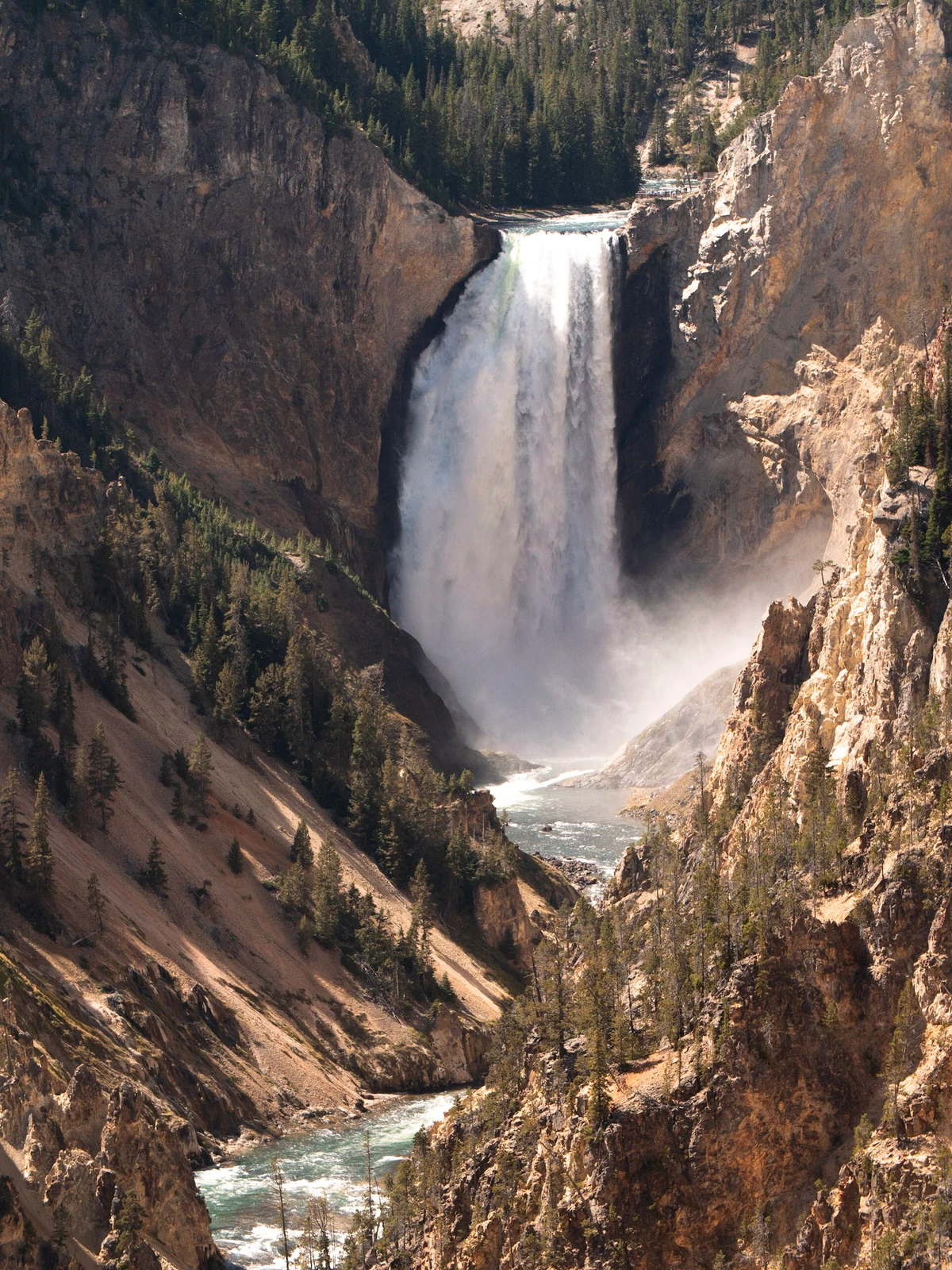
The Grand Canyon of the Yellowstone is the surprise of the park — a thousand-foot gorge of yellow and rust-colored rock with the river thundering through the bottom of it. We walked out to the overlooks above the Lower Falls and stood watching the water drop more than three hundred feet, the spray catching the light the whole way down.
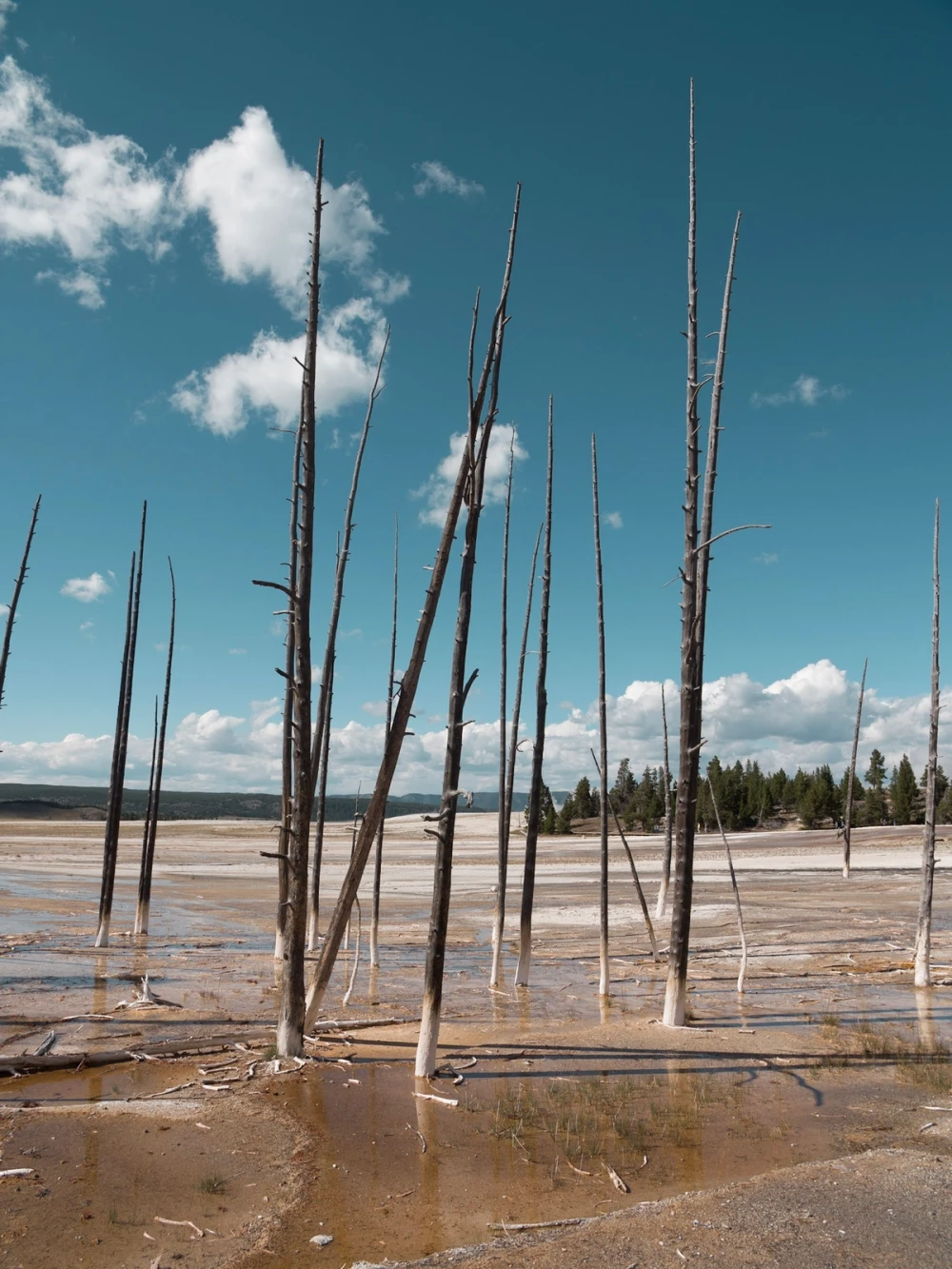
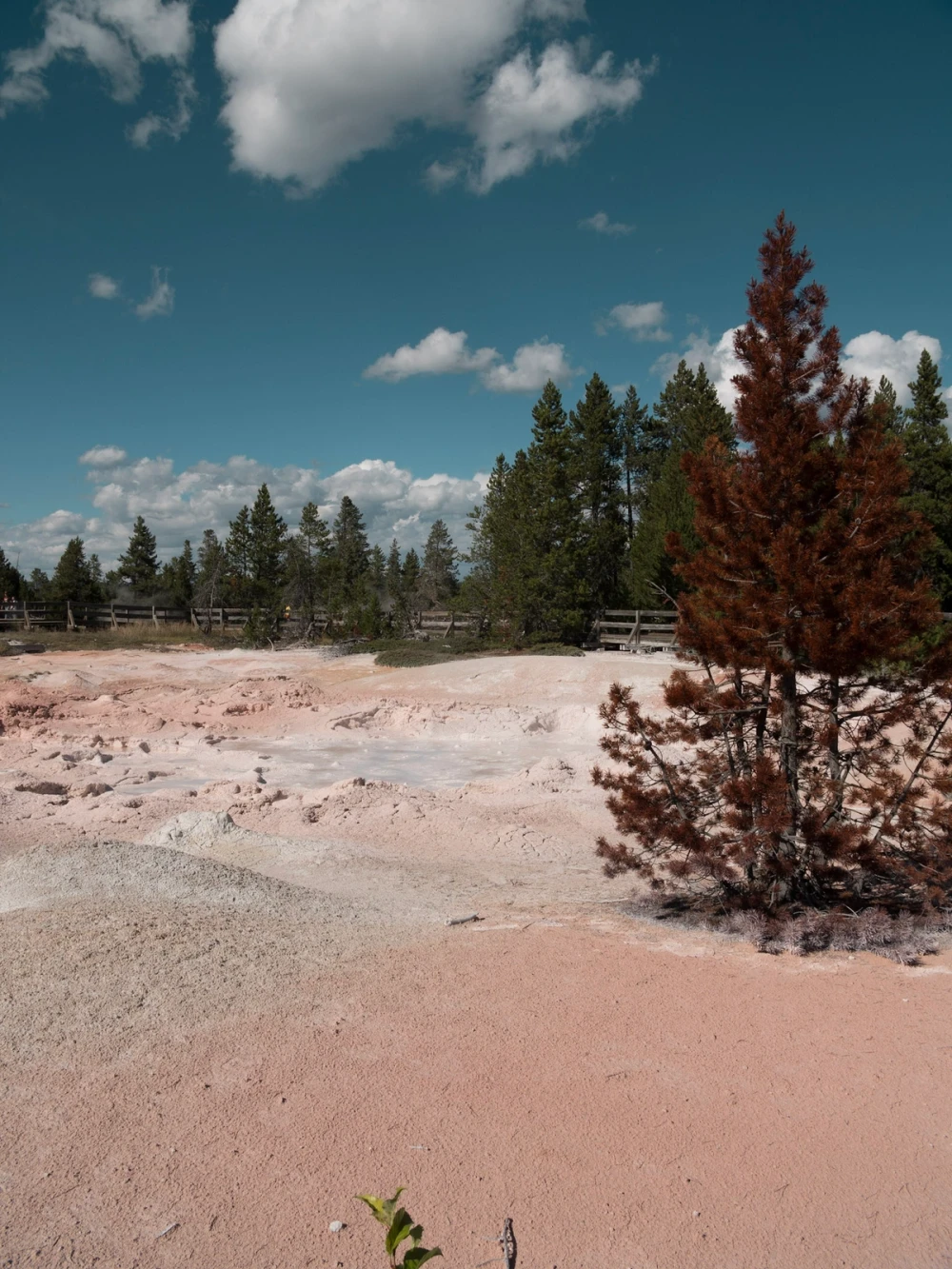
From the canyon we worked back through the stranger thermal country — mud pots plopping like boiling porridge, milky springs ringed in pink and grey, and whole stands of trees bleached white and dead where the hot water shifted and drowned their roots. These were the parts that felt least like Earth.
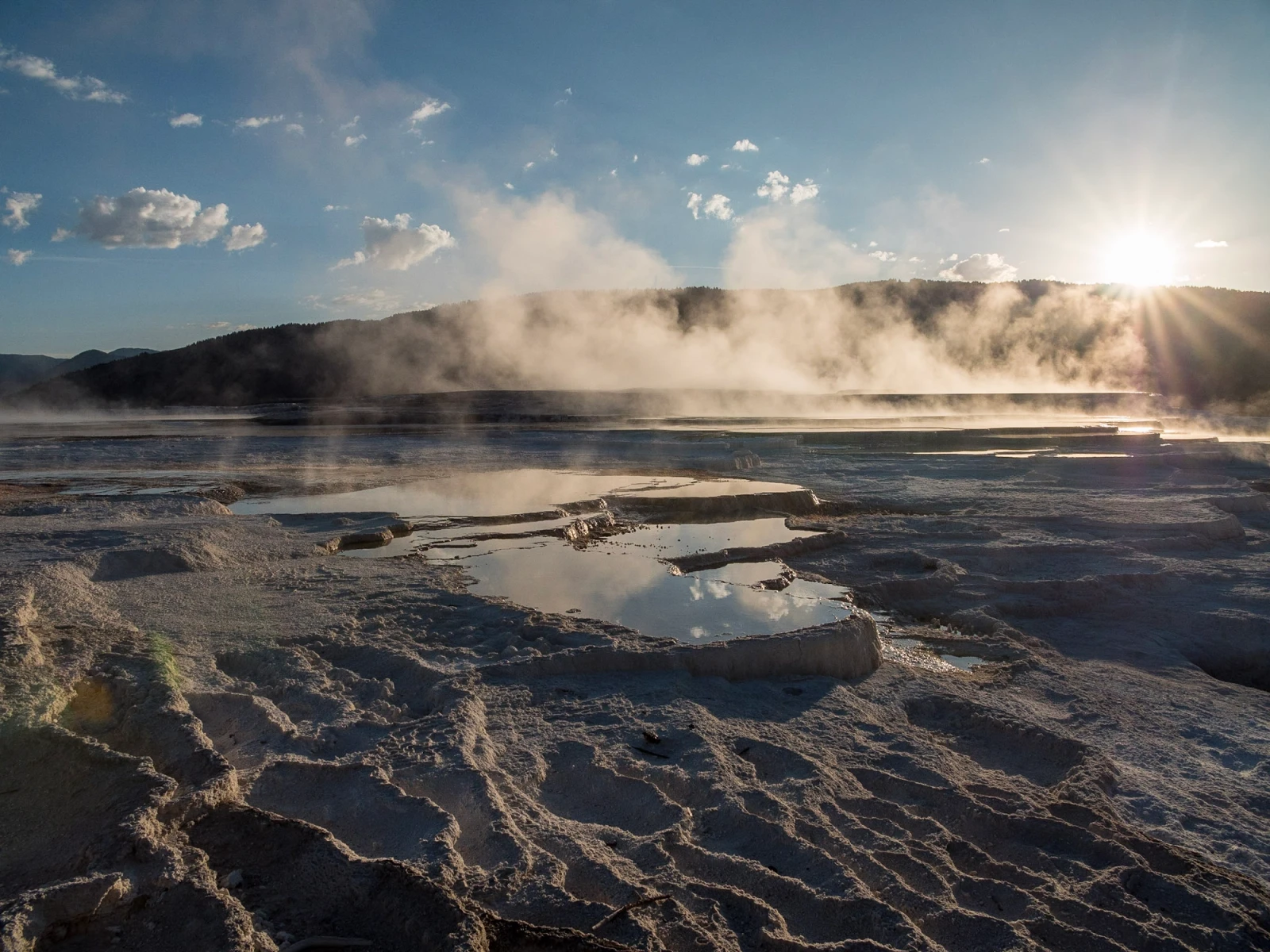
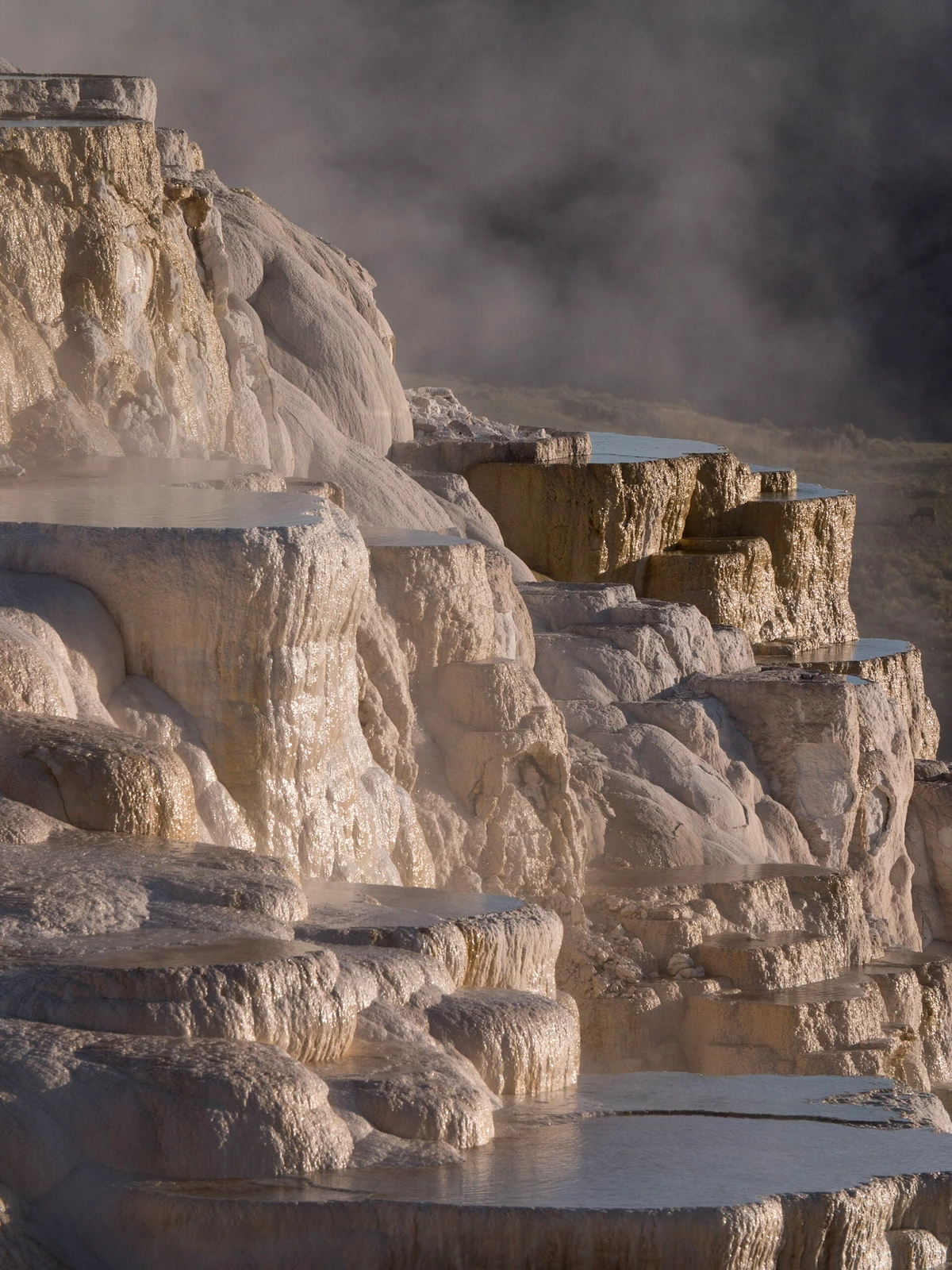
We saved Mammoth for the last day — the terraces at the far north of the park, where hot water loaded with limestone builds and abandons travertine steps that look like a frozen waterfall. They’re always changing; a terrace that’s wet and alive one season goes chalk-dry and grey the next as the water finds a new way down.
We got there early, before the heat burned off the steam, and had the boardwalks mostly to ourselves. The low sun came through the rising steam and lit the whole hillside gold.
Four days in Yellowstone is enough to drive the loop and stand in front of the famous things; it’s nowhere near enough to know the place. We left with a notebook of pullouts we never reached and a clear sense of how much we’d been driving straight past. The park rewards slowing down, and we mostly didn’t have the time to.
What stays with us is the contradiction of it — that something this violent underneath could be this beautiful on top, and that the most powerful thing in the park on any given day is a herd of animals deciding when to cross the road. We slept outside the gate, woke up cold, and drove back in every morning glad to. We’d come back in a heartbeat, and stay longer.
Give yourself more days than you think, and pick one or two regions a day rather than trying to see all of it — the distances between basins are deceptive and the driving will eat your time. Sleeping outside the gates is cheaper and quieter and puts you at the entrance early, when the basins are empty and steaming. Carry bear spray and keep real distance from the bison; they look slow and aren’t, and every year someone learns that the hard way. And build slack into the schedule for the traffic jams — when the herd is on the road, you are not going anywhere fast.