OAXACA DÍA DE MUERTOS
Oaxaca for Día de los Muertos (6 Days): Comparsas, Catrinas, Candlelit Cemeteries, and the Valley Towns of Monte Albán and Mitla
Six days in Oaxaca for Día de los Muertos — comparsas and Catrinas, candlelit cemeteries, mole markets, and the ruins of Monte Albán.
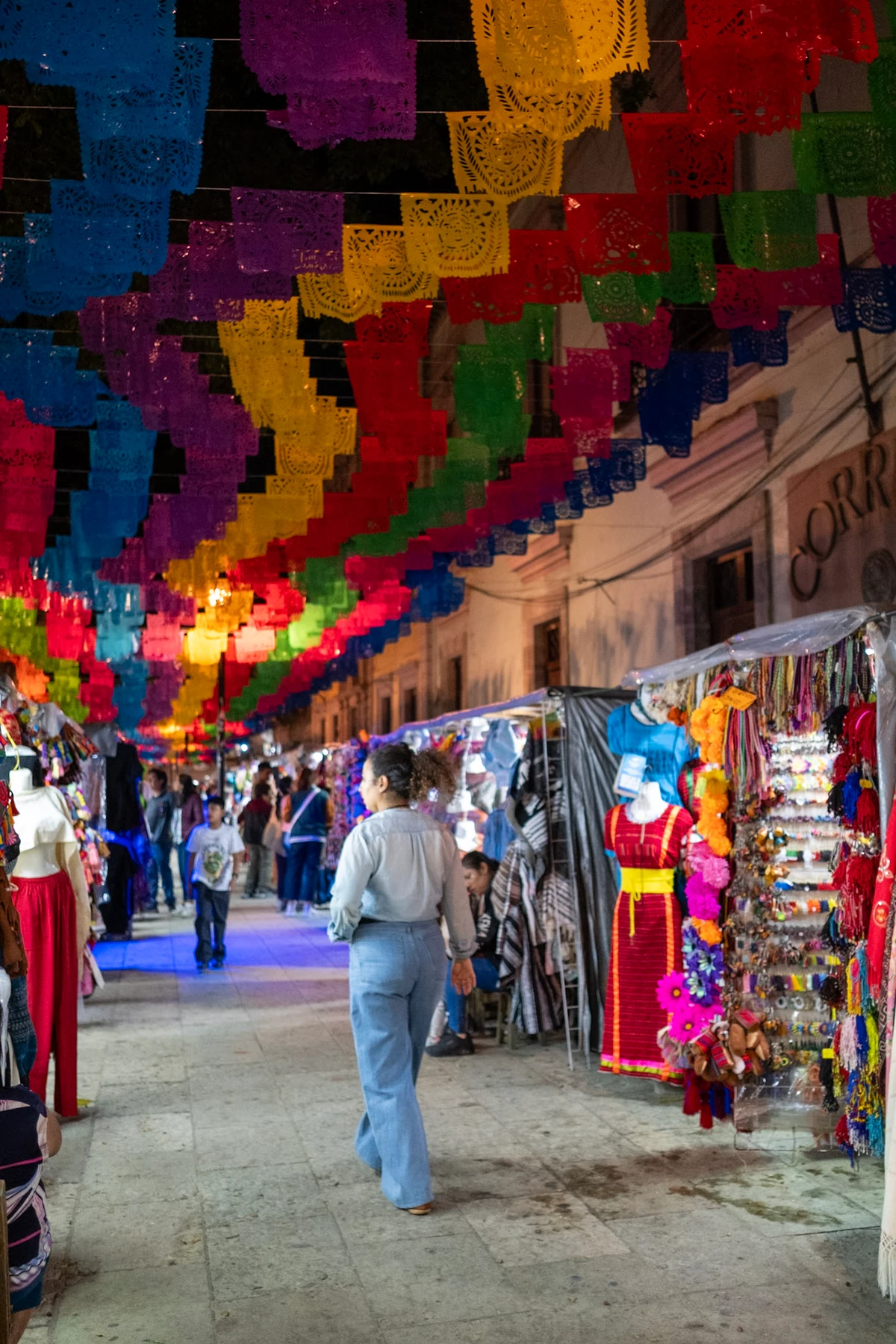
Oaxaca de Juárez sits in a high valley in southern Mexico, a little over five thousand feet up and ringed by dry mountains. The old center is low and walkable — stone churches the color of sand, courtyards behind heavy doors, streets that fold into markets without warning. We arrived the afternoon before Día de los Muertos began, and the city was already getting ready: marigolds stacked on every corner, banners of cut paper going up over the streets, a smell of copal smoke and frying somewhere close.
We gave ourselves six days — the day before the holiday opened through a few days after the crowds thinned — because we wanted the whole arc of it, not just the famous nights. The build-up, the two big evenings, and the quiet mornings after, when the petals are still on the ground and the city is hungover and gentle.
It is not Halloween, though it borrows the same week. Día de los Muertos is a welcome. Families clean and dress the graves, lay out marigolds and the food the dead loved in life, and sit up to keep them company. The public version of that happens in the streets, loud and joyful. The private version happens in the cemeteries, after dark, and is one of the quietest things we have ever stood near.
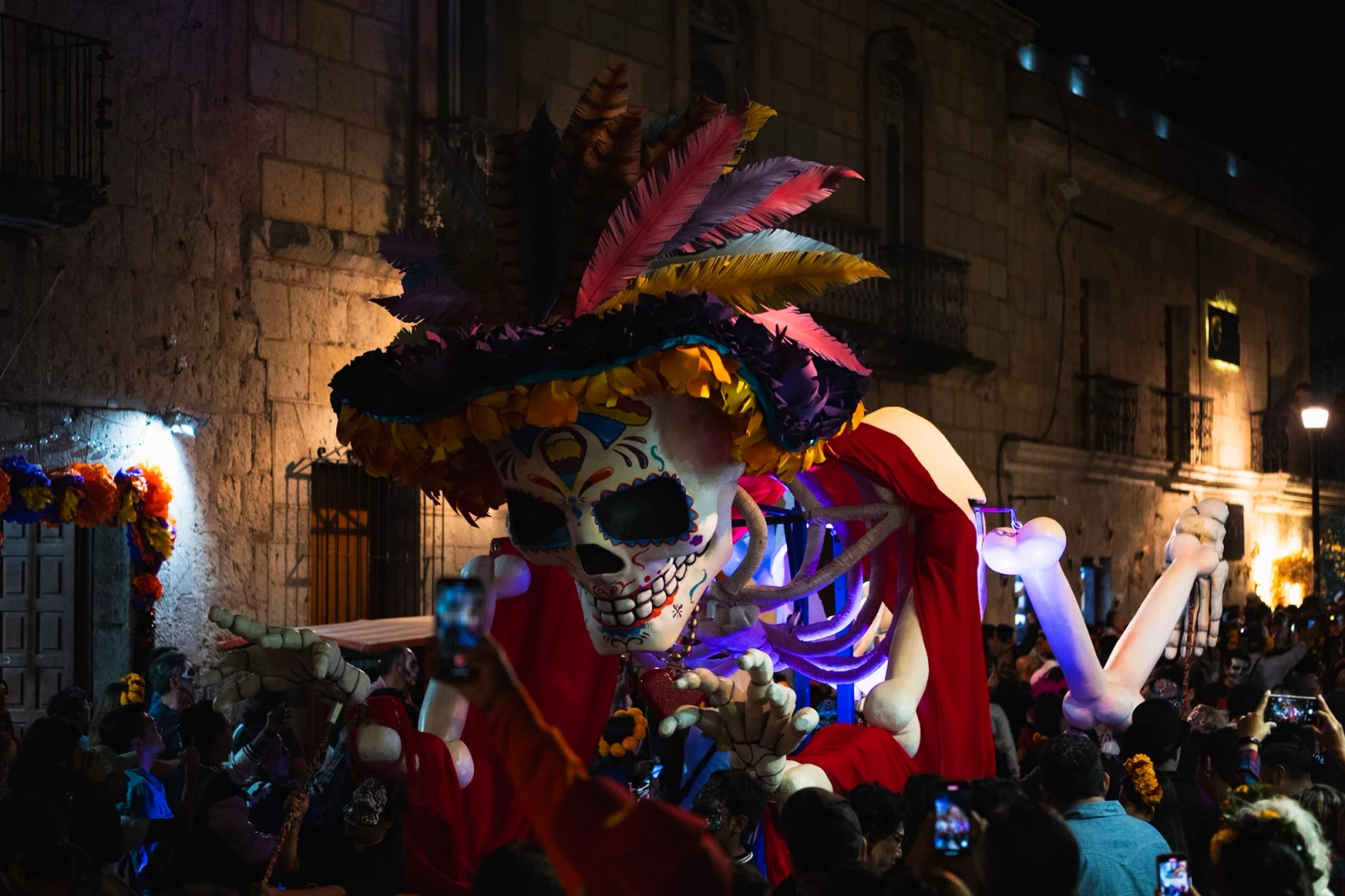
The festival lives at night. Comparsas — roving street parades with brass bands, mezcal passed hand to hand, and giant puppets — start somewhere in the Centro and pull everyone in behind them. The system for finding one is simple: you hear a tuba two streets over and you walk toward it. Within a block you are inside a moving crowd, and somewhere ahead a mojiganga — a towering papier-mâché Catrina — is swaying over the rooftops on a dancer’s shoulders.
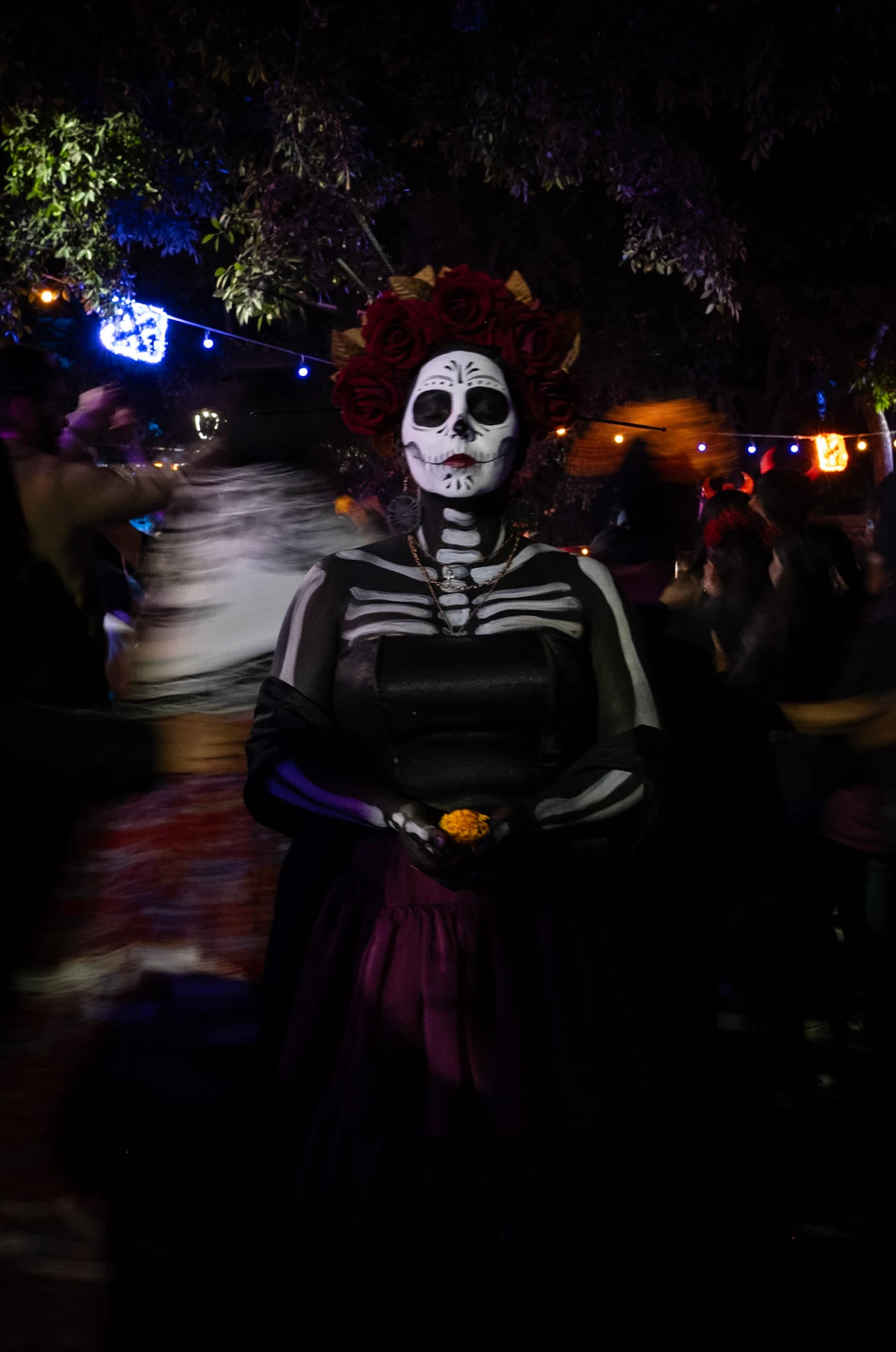
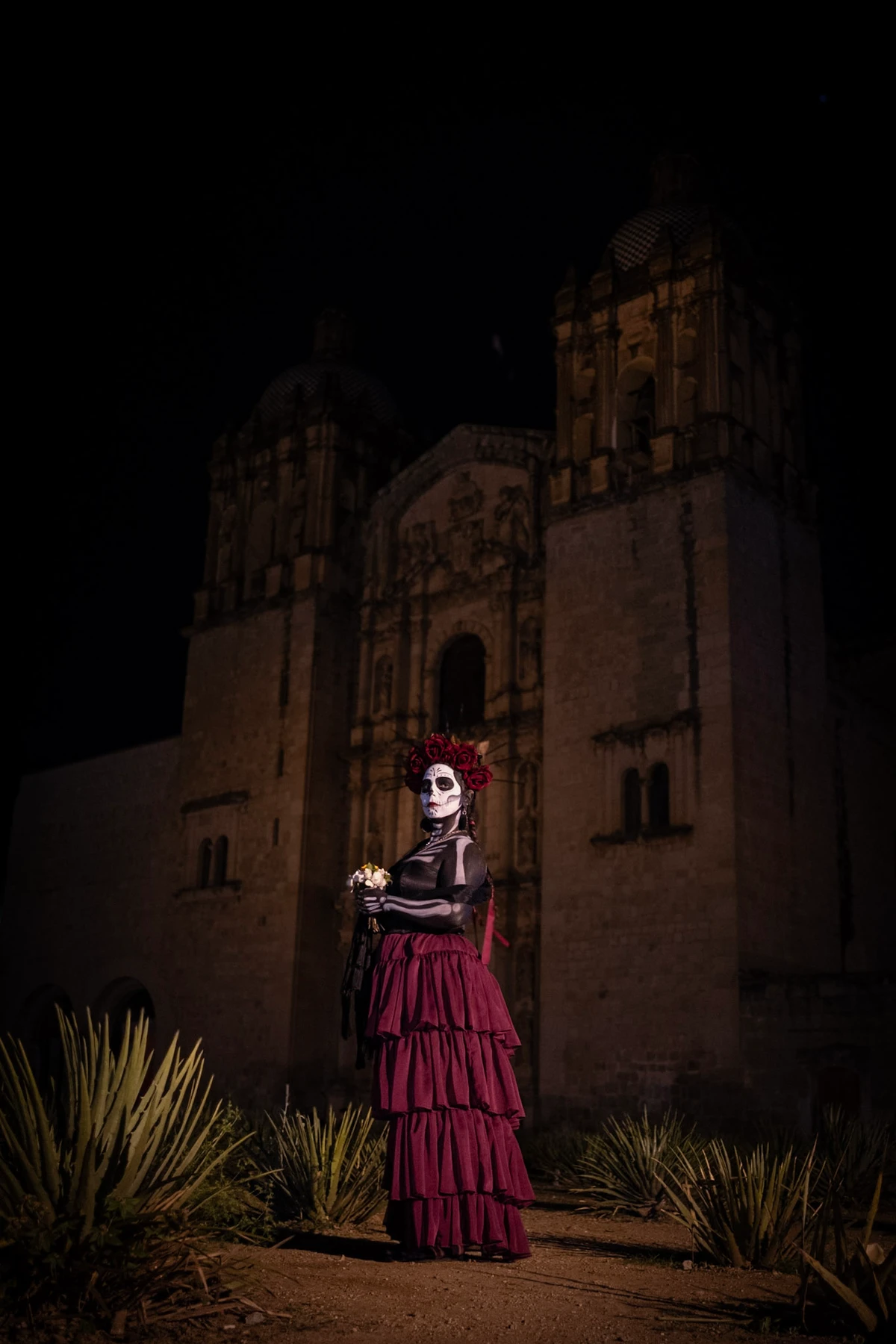
The makeup is the heart of it. Half the city paints up as La Catrina, the tall elegant skeleton drawn a century ago as a joke about pretending you are above death. People spend hours on it — white base, dark rings around the eyes, a stitched line drawn across the lips, marigolds and gold worked into the hair. Strangers stop in the street and hold still to be photographed, then thank you for it. Nobody is in a hurry.
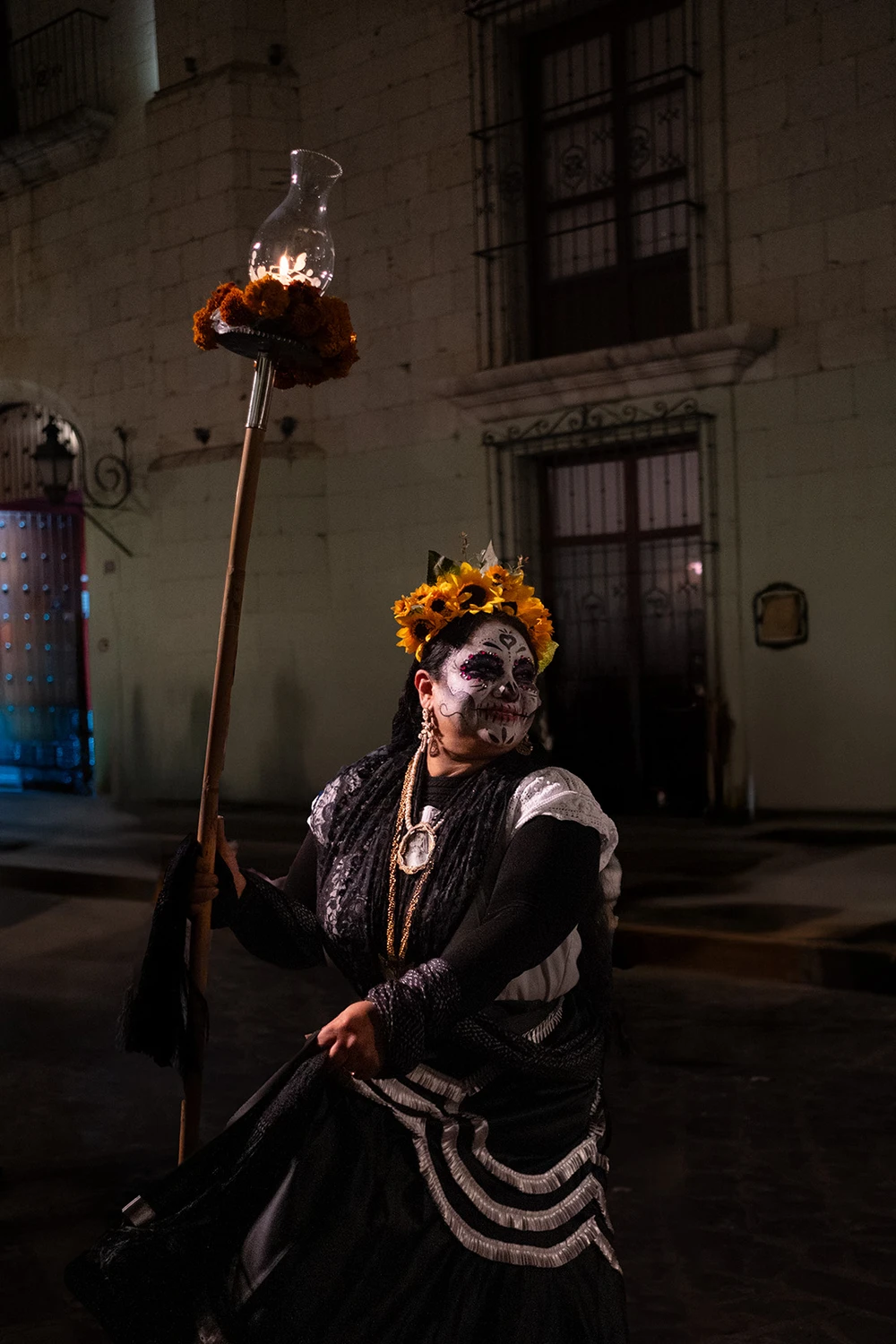
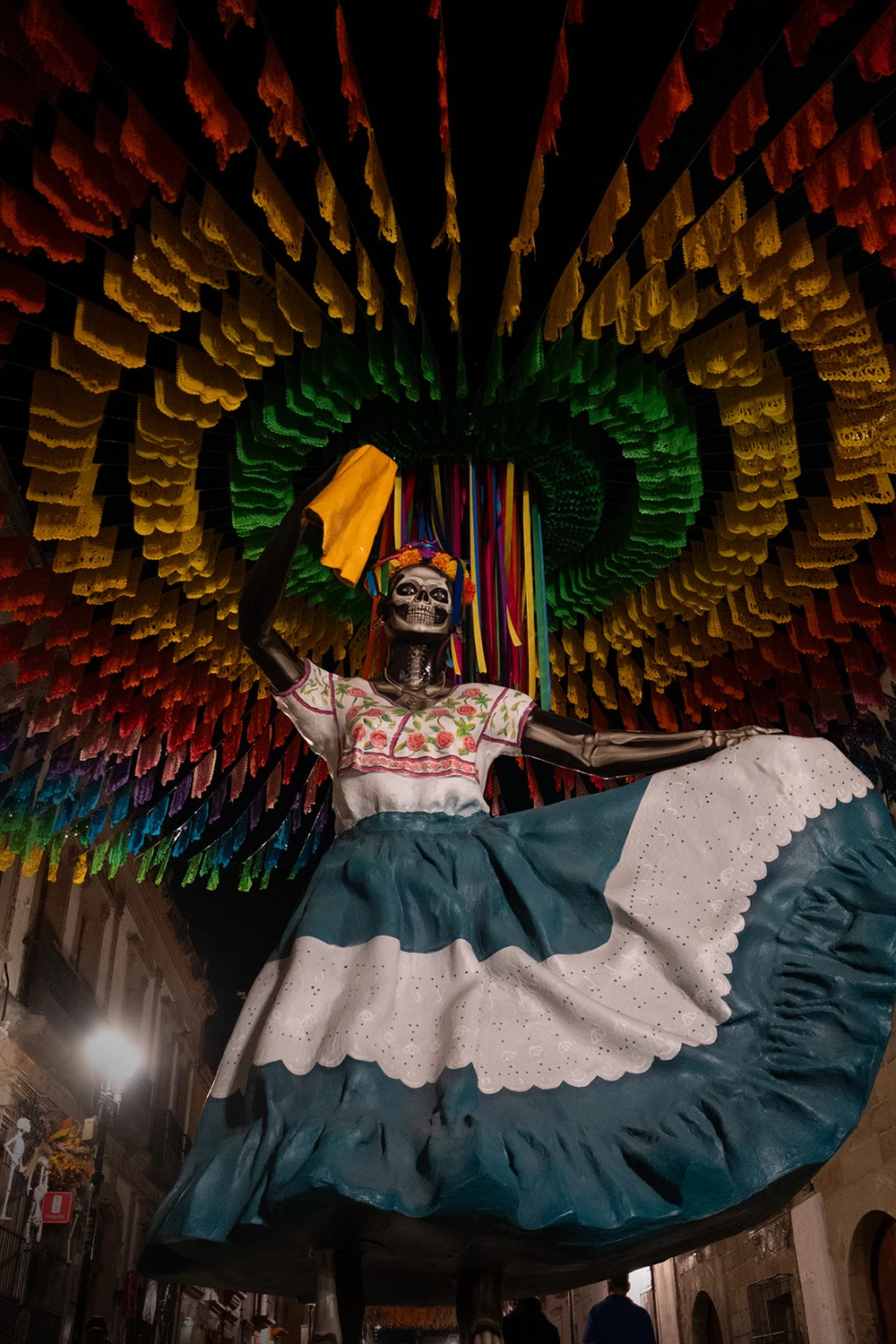
Up close the costumes are extraordinary — not just face paint but gold leaf laid along the collarbones, ribs drawn down the arms, embroidered huipiles, crowns of real flowers and beaten metal. It reads as theater from across a plaza and as devotion from a foot away. We kept being let in close, kept being trusted with it.
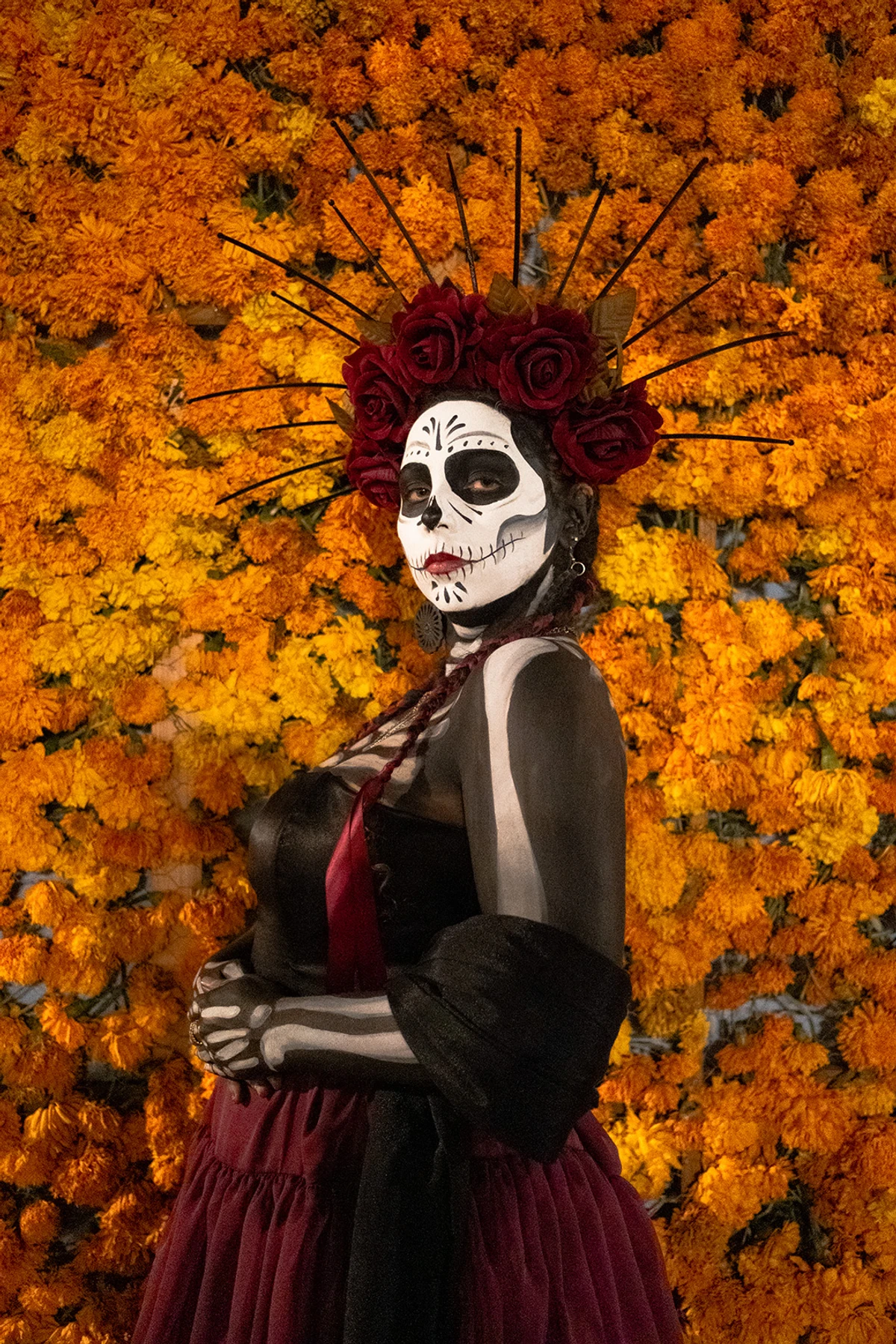
“They don’t paint themselves as the dead to mock them. They do it to keep the dead company for one night, and to look good doing it.”
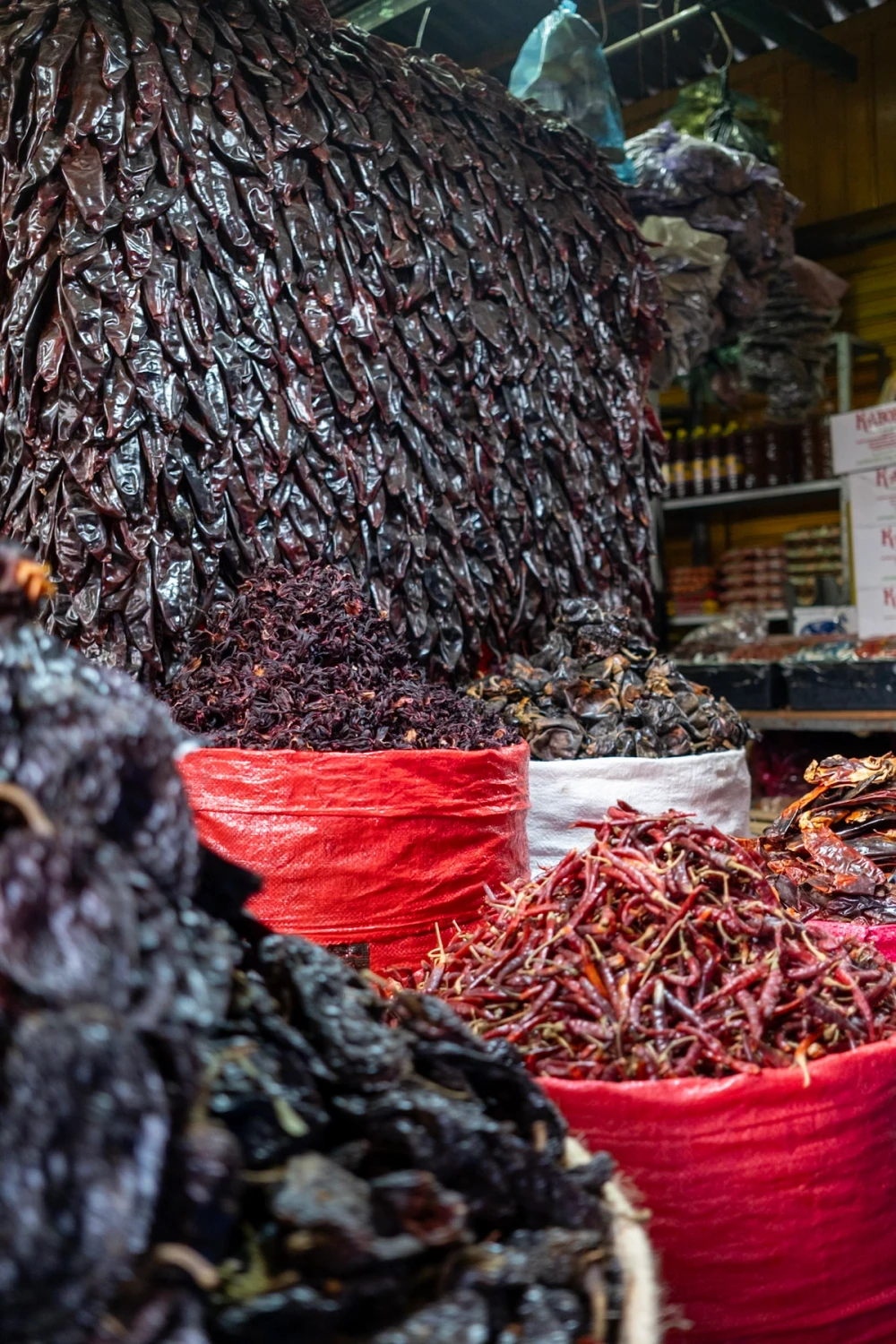
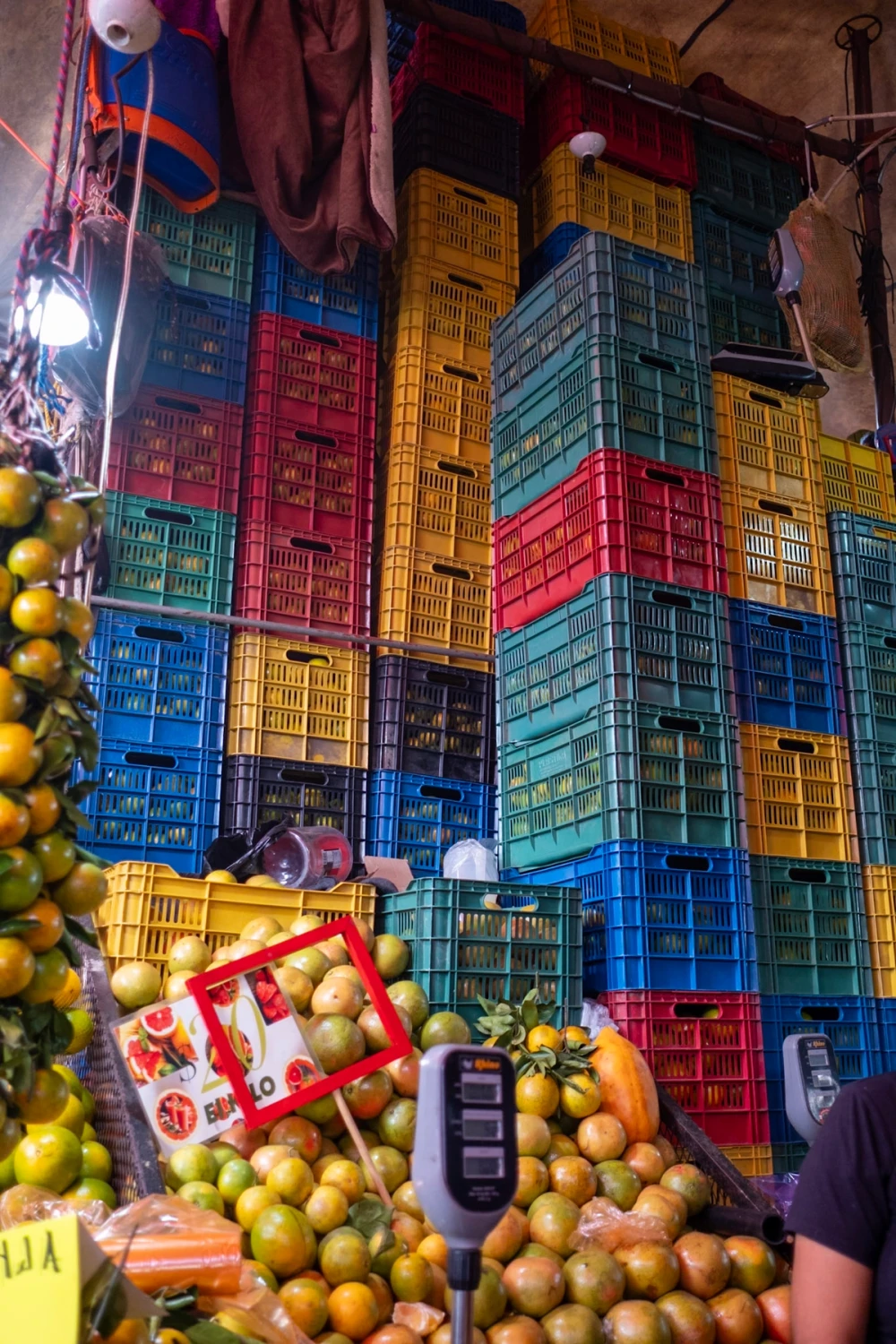
Daytimes belonged to the markets. Oaxaca is a food city before it is anything else — the home of the seven moles and of more shapes and shades of dried chile than we knew existed — and the mercados are where you feel that. We followed our noses through aisles of mole paste sold by the kilo, baskets of grasshoppers, towers of produce, and the marigolds going out by the armful for the altars and the graves.
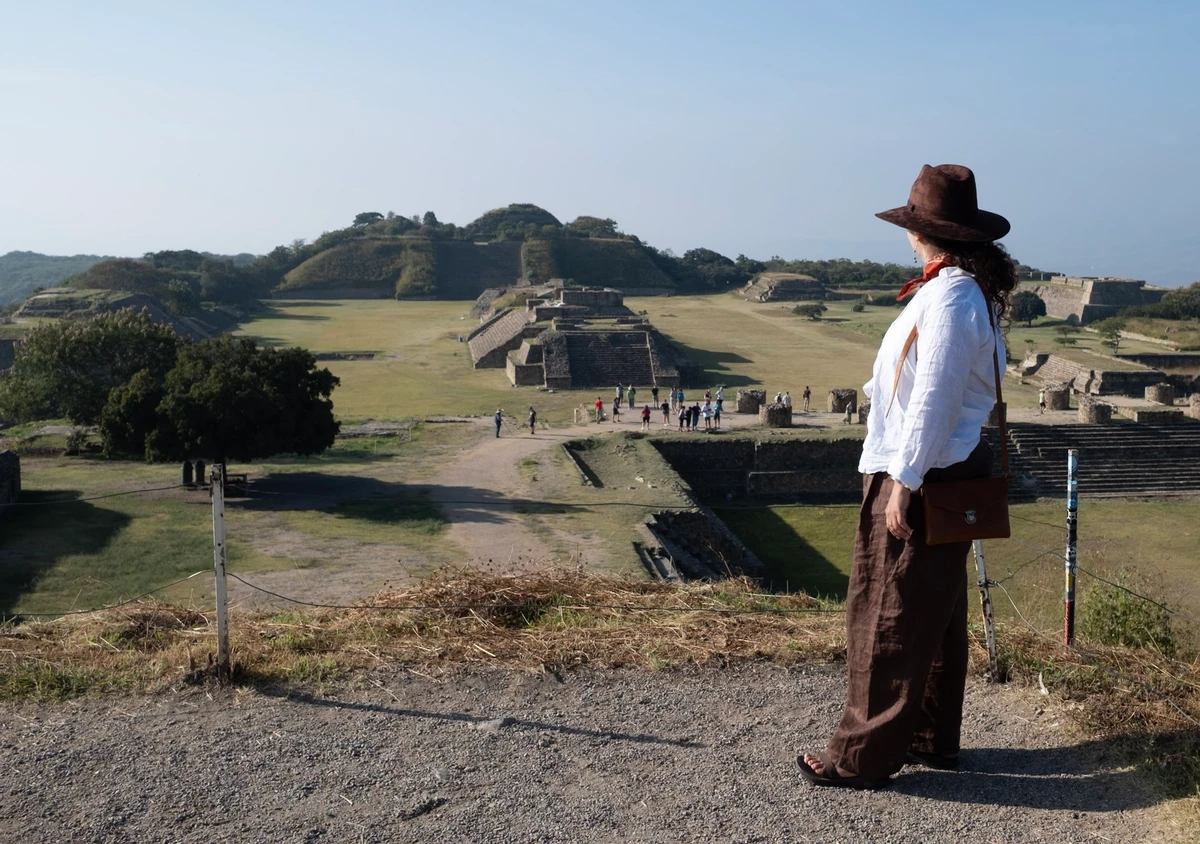
Between the nights we drove out into the Central Valleys, the wide dry basins that fan out from the city. This is mezcal country — agave to the horizon, with the old places of the Zapotec and Mixtec set into the hills. Monte Albán sits on a ridge that was flattened by hand more than two thousand years ago, a grand plaza of pyramids and platforms with the whole valley laid out below it.
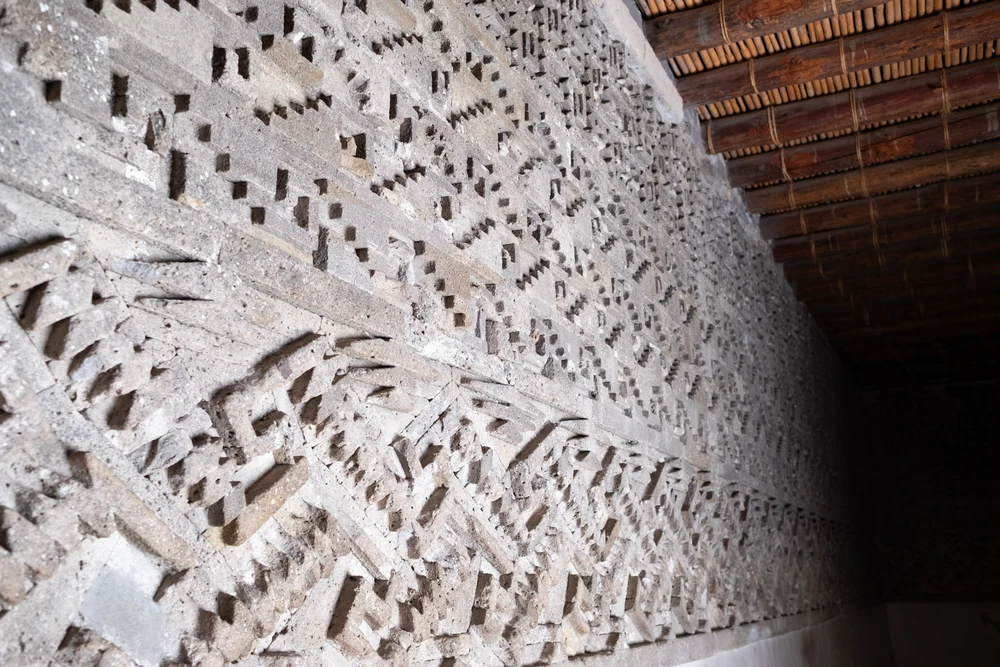
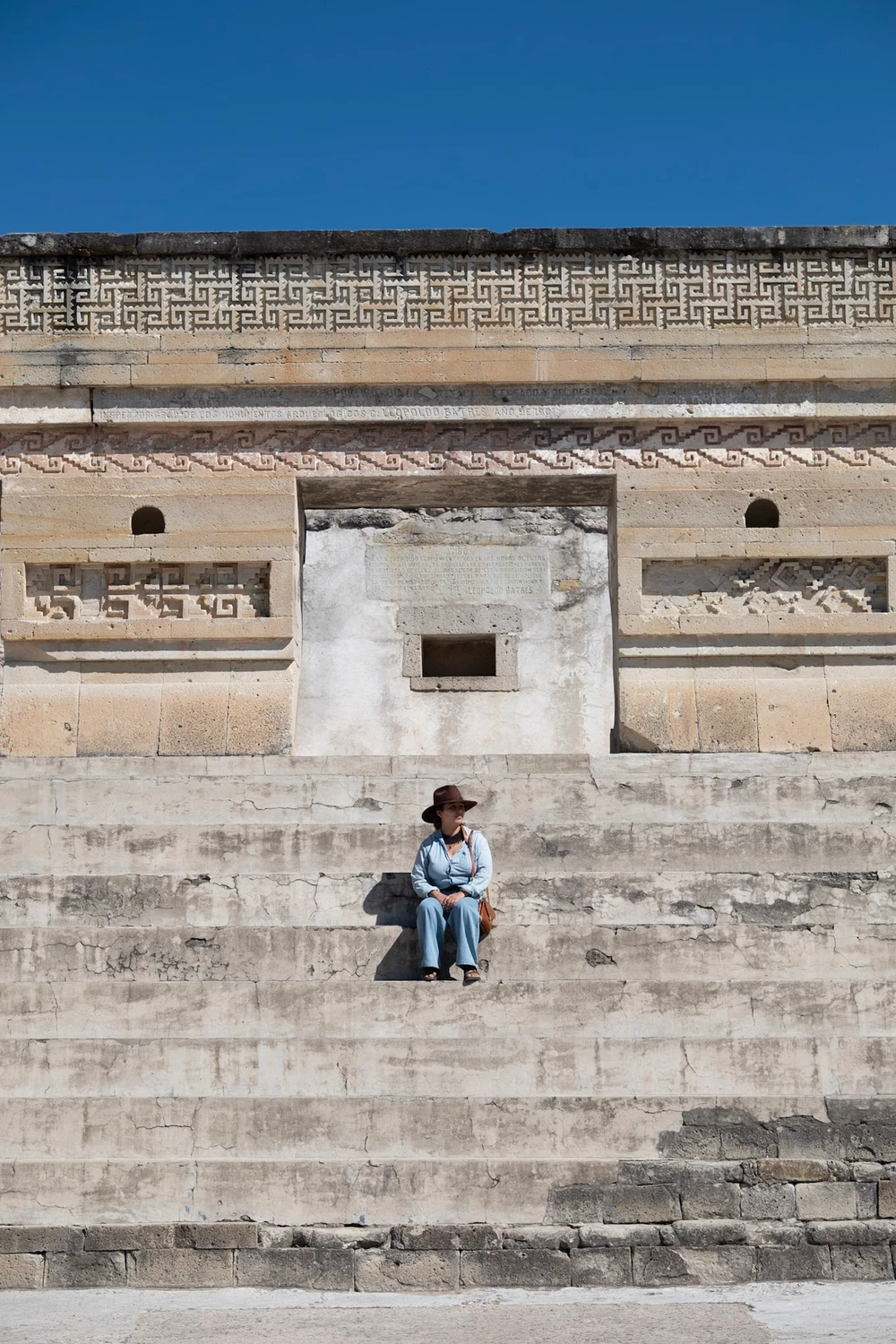
East of the city, Mitla is a different kind of marvel: walls covered in greca, geometric mosaics cut from thousands of small stones and fitted together without mortar, each step locked to the next. No two panels repeat. We sat in the cool of it for a while, then climbed back out into the white midday light.
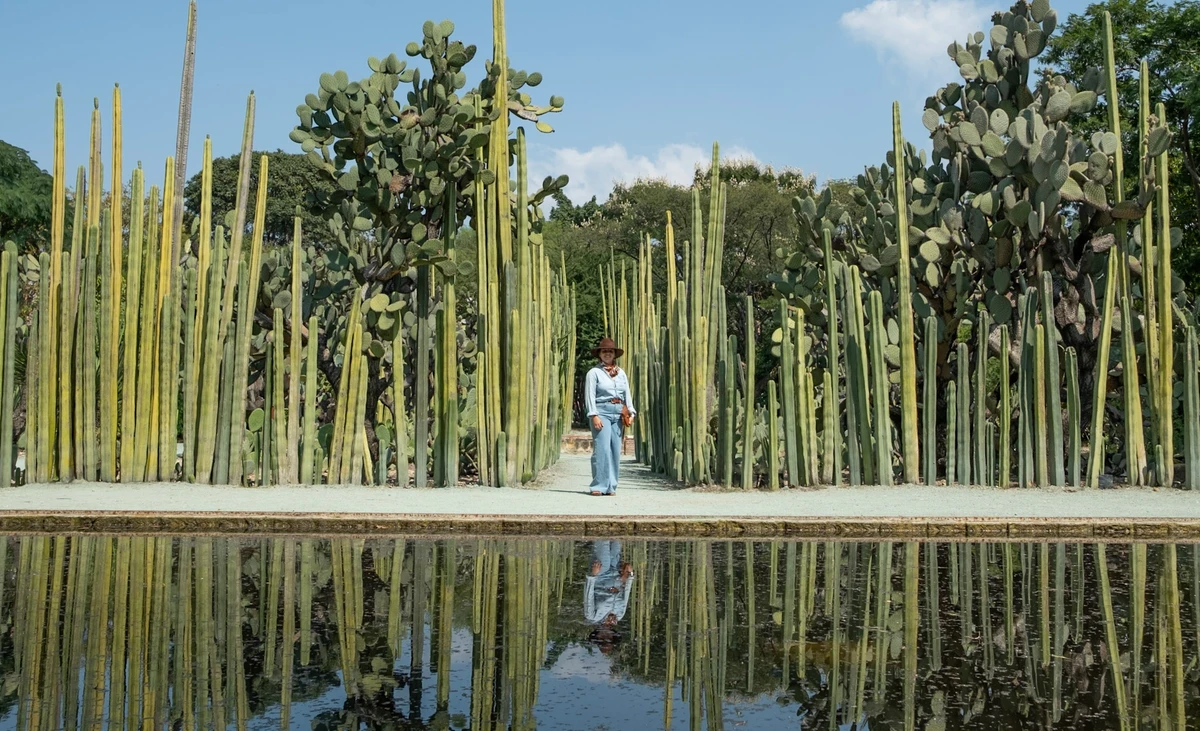
Closer to home, the city’s ethnobotanical garden gathers the plants the whole region is built on — towering organ-pipe cactus, century plants throwing up their flower stalks, the agaves that become mezcal. Late in the afternoon the columns stood mirrored in a long reflecting pool, and for a minute it was completely silent.
On the night of the first into the second, we went out to one of the village cemeteries beyond the city. This is the part the comparsas are a celebration of, and it is the opposite of them — hushed. Families had spent the day building the graves into gardens of orange marigold and deep-red cockscomb, and now they sat among the candles, talking low, eating, waiting. Somewhere a small band played, then stopped. We kept to the edges and tried to take up no room.
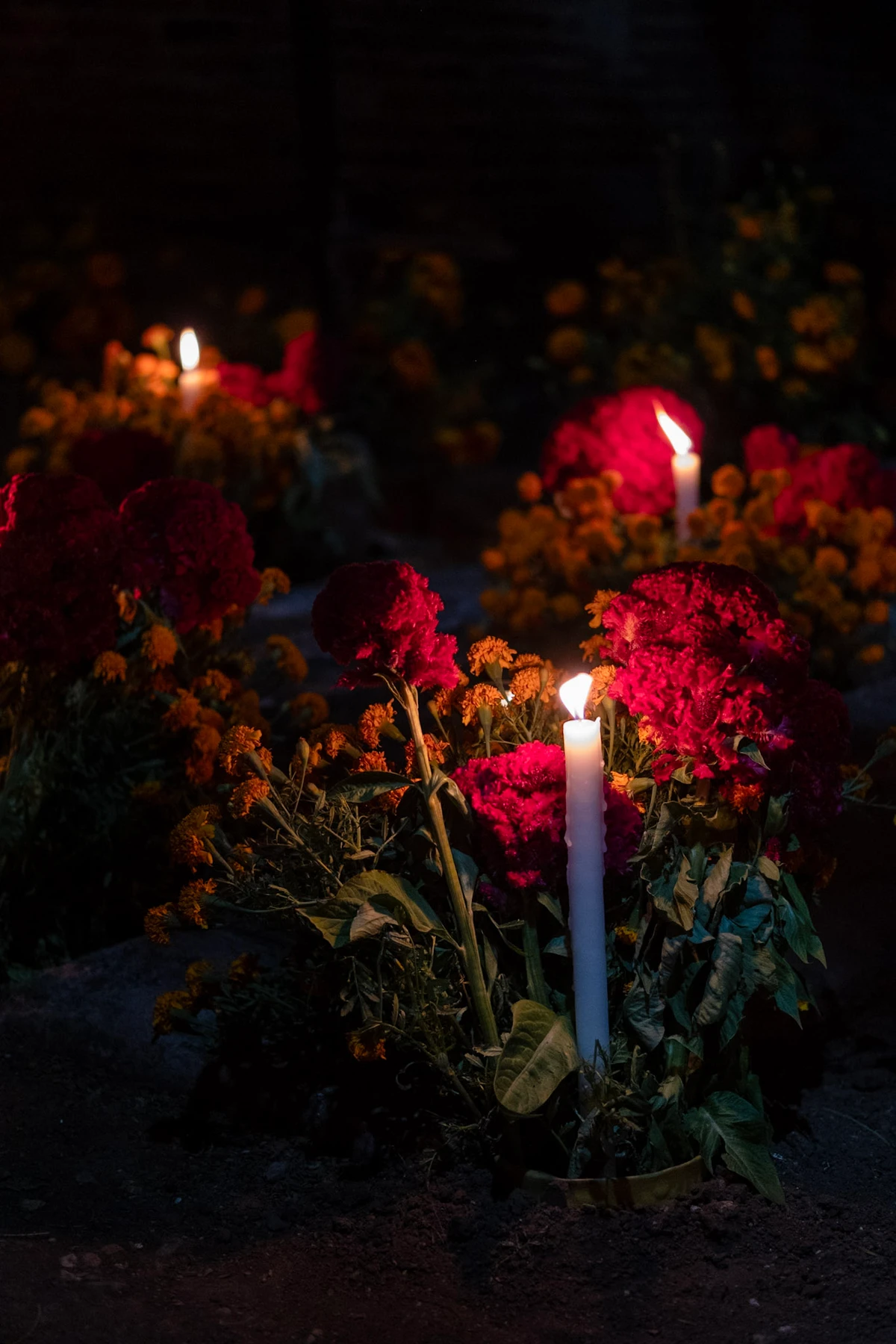
No one was sad in the way an outsider expects a cemetery to be sad. The dead were simply expected, and the living had laid a table and lit the way. We left before midnight, walking back past graves that would stay lit until dawn, and didn’t say much in the car.
Oaxaca over Día de los Muertos is two festivals at once. There is the loud one — the comparsas, the puppets, the painted faces, mezcal in the street until late — and underneath it the quiet one, the families at the graves doing the actual work the whole week is about. The city lets you stand in both, and trusts you not to confuse the spectacle for the substance.
What stays with us is how unafraid of death the whole thing is — how it treats the dead as guests with a standing invitation rather than as something to be gotten over. We came for the photographs and the parade and left thinking differently about the holiday we grew up with. Six days was enough to see it and nowhere near enough to belong to it. We’d go back, and next time we’d stay quieter, longer.
Book lodging months ahead — downtown Oaxaca fills up by spring for these dates, and you want to be inside the walkable center where the comparsas pass. Give it the full span rather than flying in just for November 2nd; the build-up and the morning-after are half of it. If you go to a cemetery vigil, treat it as the family event it is: no flash in people’s faces, ask before you photograph a grave, and consider a less-touristed panteón over the famous ones. The altitude is mild but the midday sun is strong — hat, water, and save the heavy days for the cool of the markets and the cool of the night.