MOMBACHO CLOUD FOREST
Mombacho Volcano Cloud Forest, Nicaragua: A Day in the Bromeliads, Fumaroles, and Mist Above Granada
A day in the cloud forest atop Nicaragua’s Mombacho Volcano — dripping moss, bromeliad-laden trees, fumaroles, and orchids above Granada.
Mombacho rises straight out of the lowlands just south of Granada — a dormant volcano with its head almost permanently in cloud. We had spent the previous days down in the heat of the city, and the plan for this one was simple: get to the top, where a cloud forest grows in the old craters and does things nothing down in the heat can.
Getting up there is half of it. From the biological station at the base you climb into the back of an open eco-truck and grind up a road so steep it feels built as a dare, coffee and banana giving way to forest as you go. The lowland sun drops behind you. By the time the truck levels out near the rim the air has turned cool and wet, and you are inside the cloud the mountain is named for.
We came in March, the dry season, when Granada bakes — but the top of Mombacho keeps its own weather. The forest drips whether or not it rains. Everything is green, and most of that green is growing on something else.
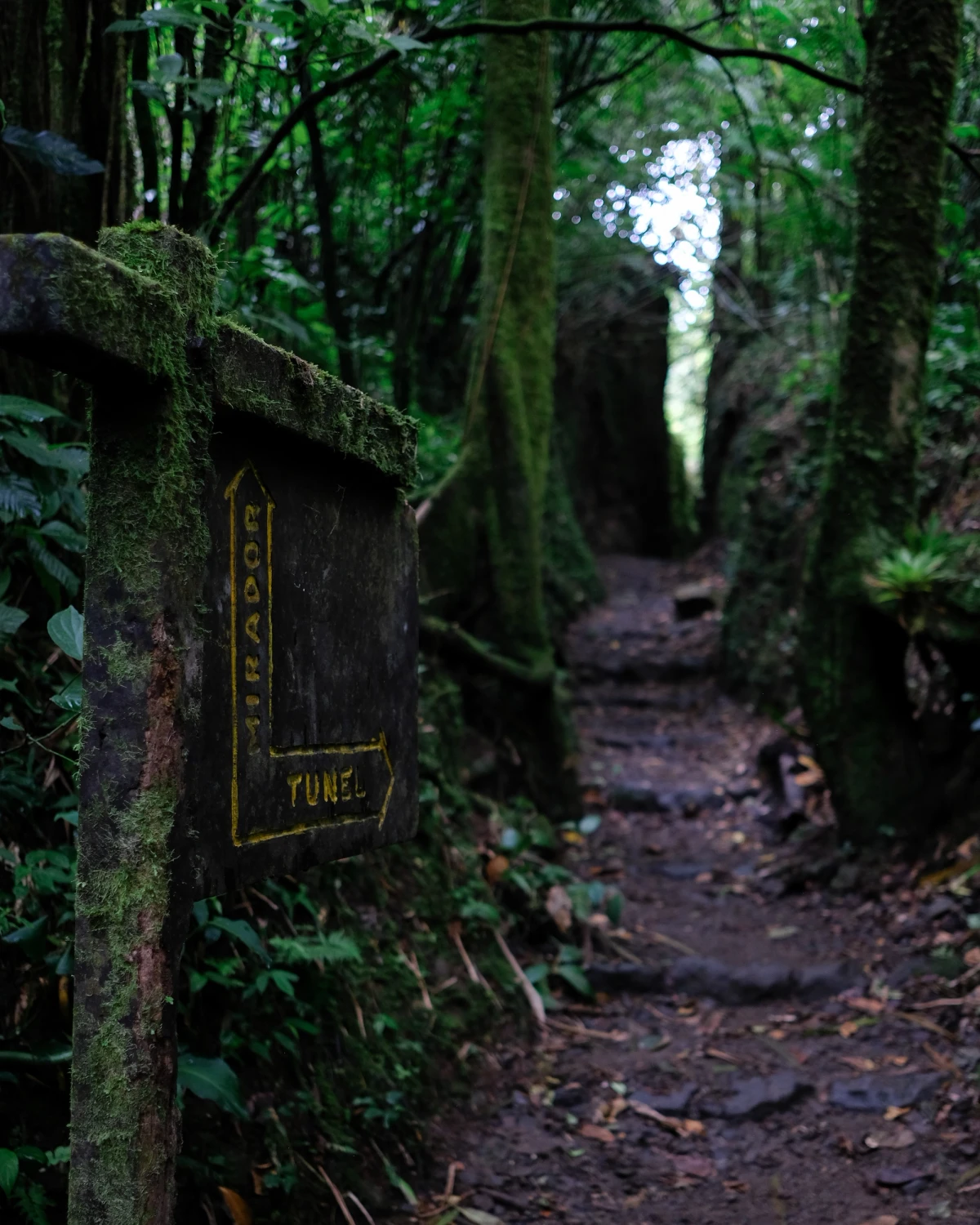
The base station sits in the dry warmth, surrounded by flowering gardens and the lower edge of the coffee that grows on Mombacho’s flanks. You wait for the truck here, and then you hold on. The road climbs fast enough that your ears pop, the temperature falls degree by degree, and the bright lowland light dims to a soft grey as the canopy and then the cloud close over the track.
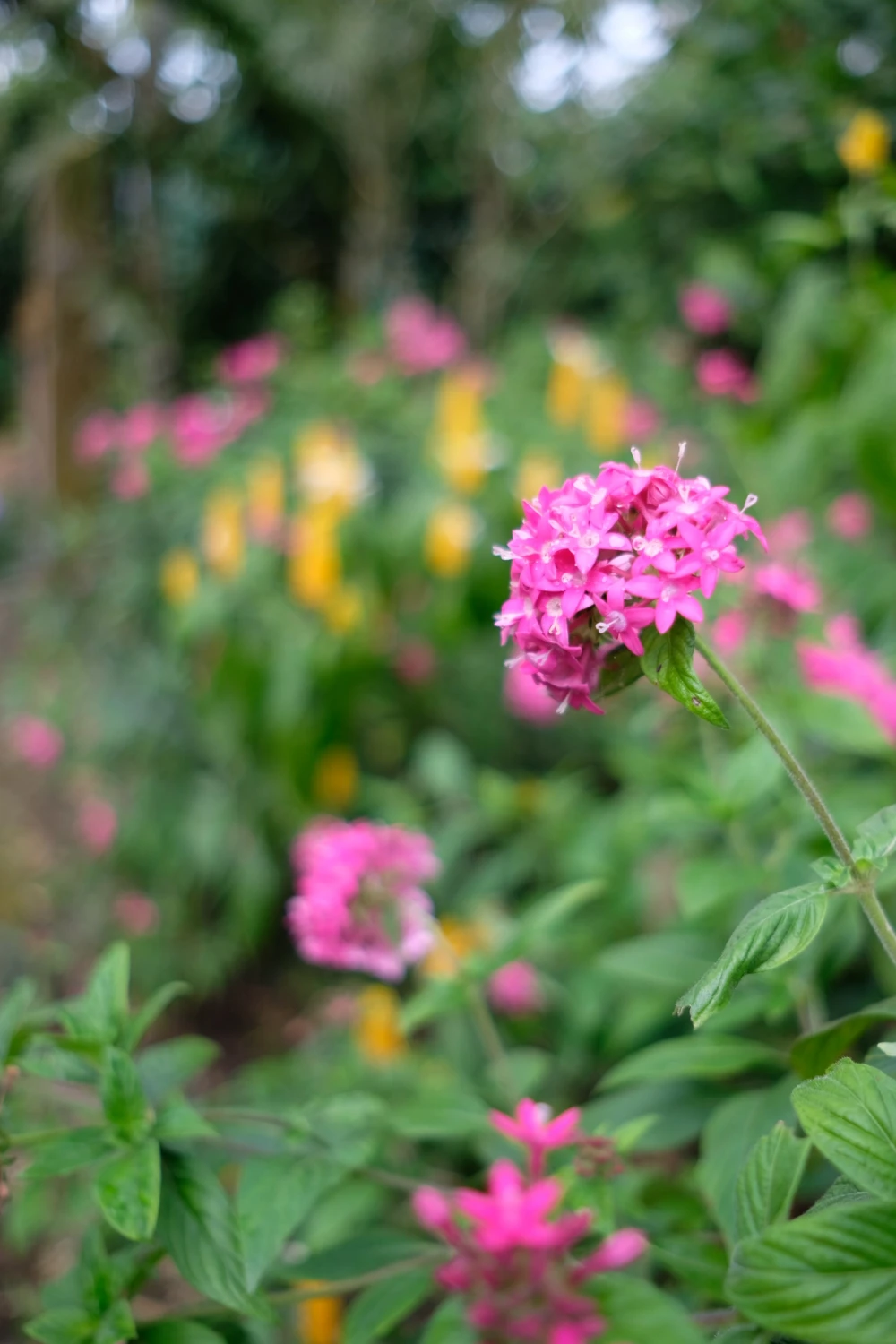
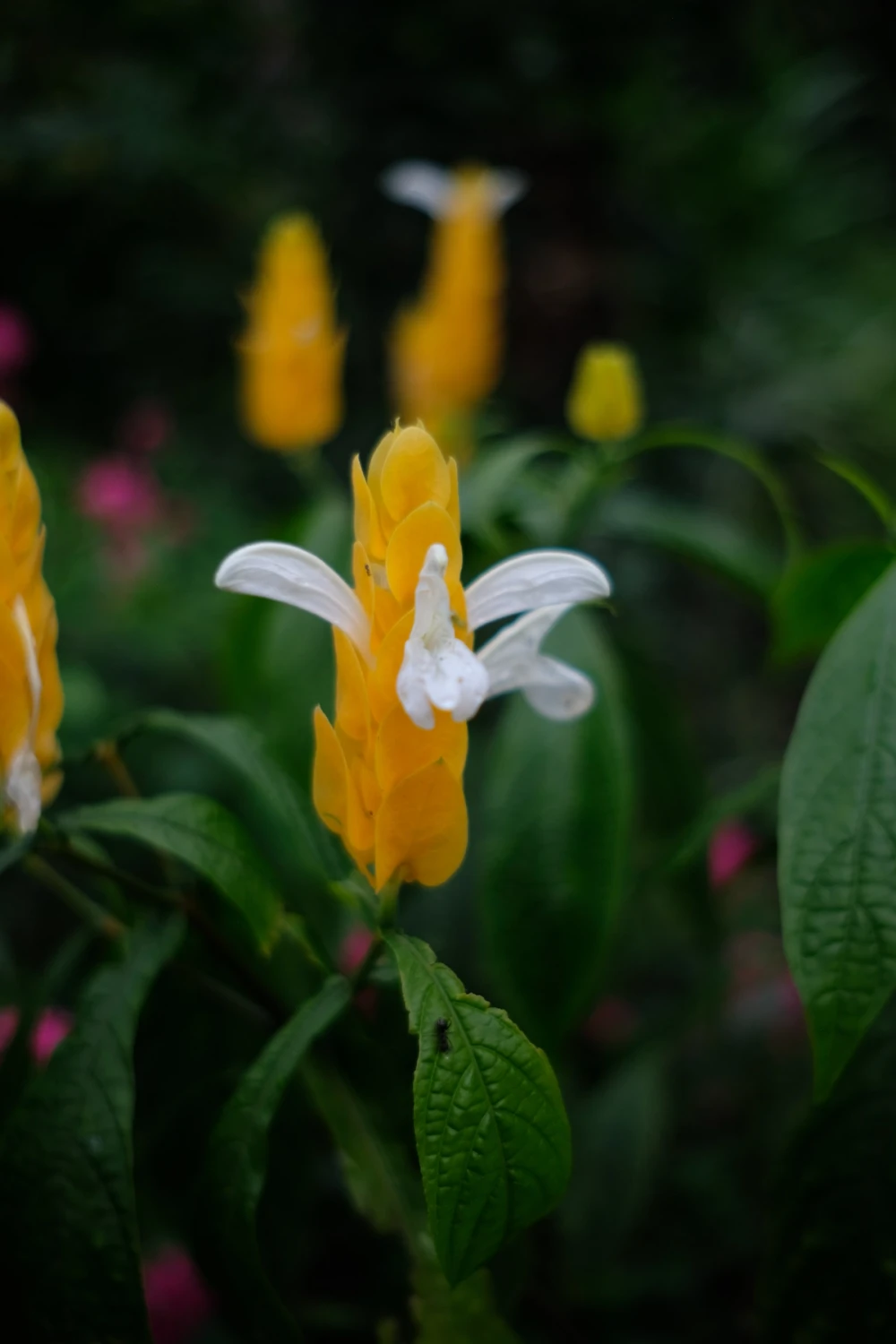
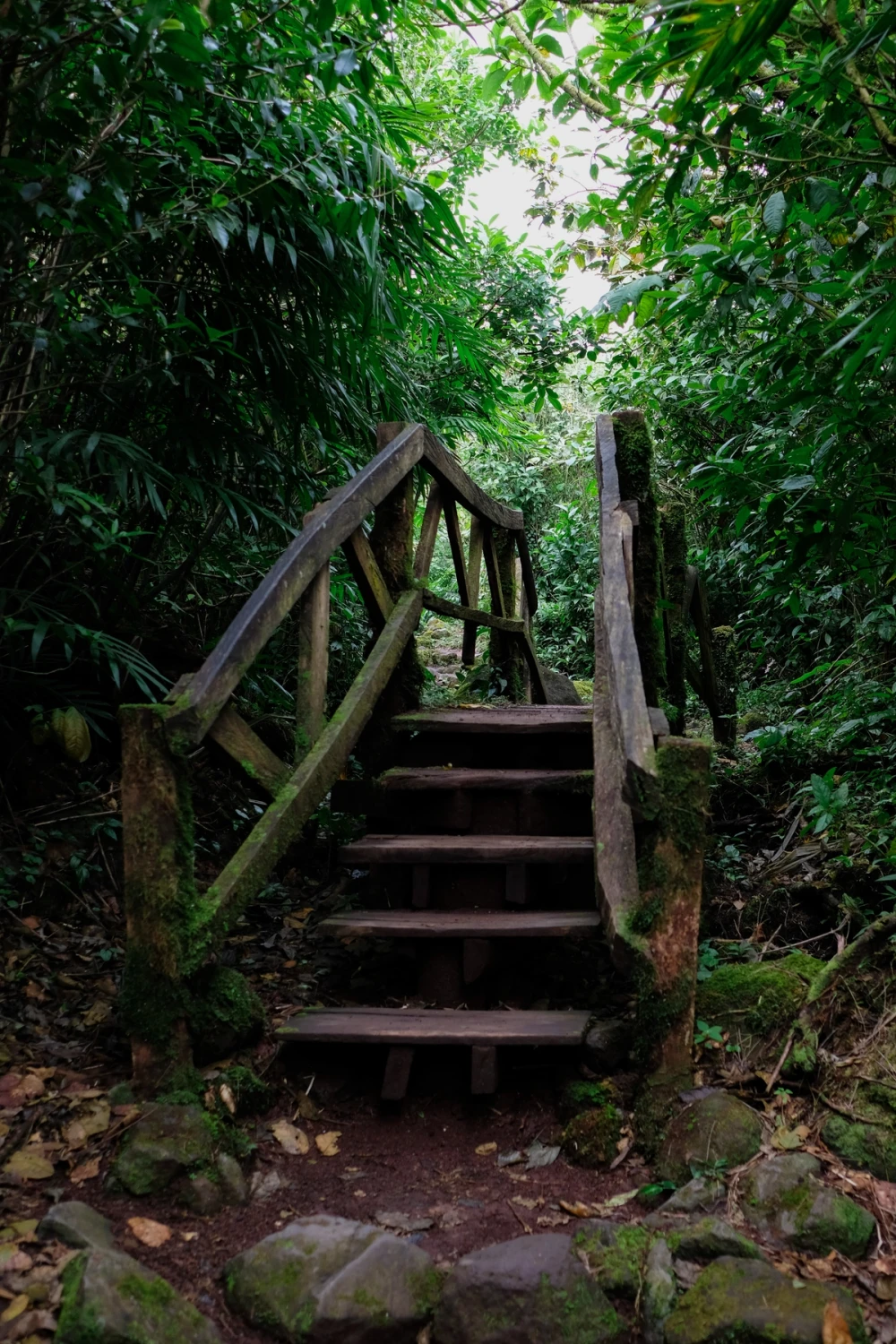
The main loop, the Sendero El Cráter, wraps one of the volcano’s old craters in a little under a mile. Step onto it and the change is immediate: the trail narrows, the light goes green, and every surface — trunk, branch, rock, railing — is alive with something. It is cool enough for a layer, and the whole forest is wet to the touch even though it hasn’t rained.
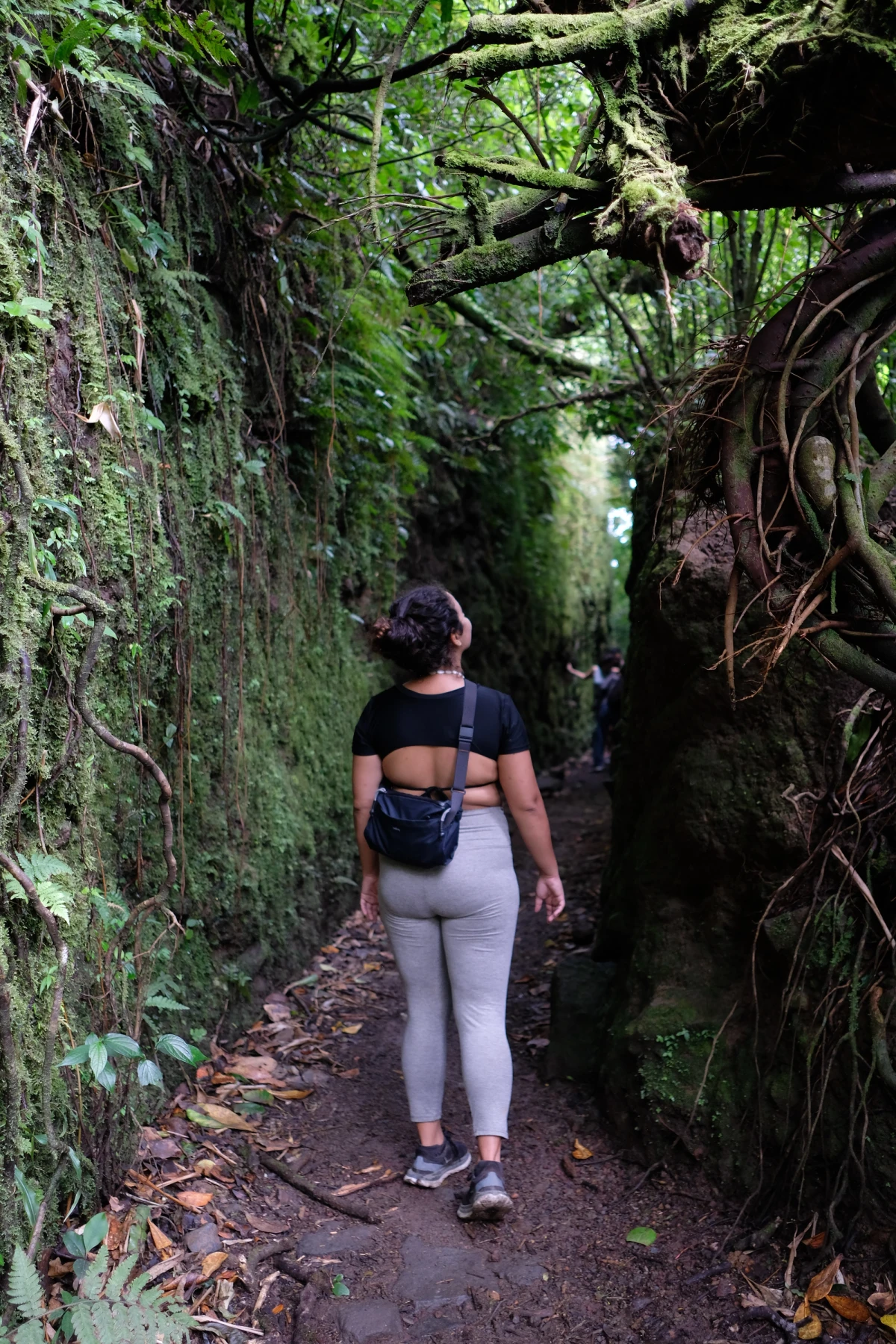
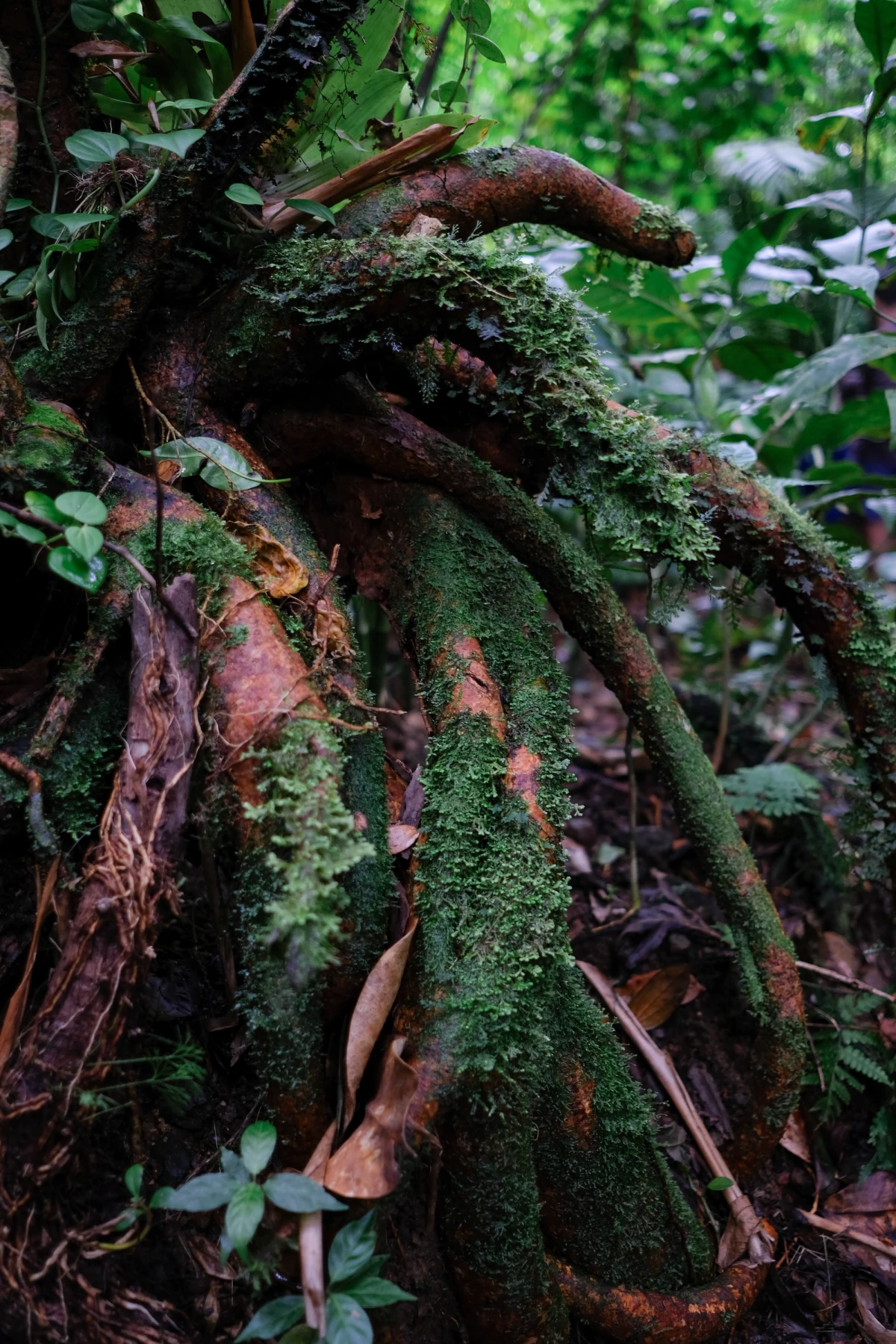
We took it slowly, partly because the footing is muddy and rooted and partly because there is so much to look at within arm’s reach. Roots spill across the path gone furry with moss. The quiet up here is real — just dripping water, the odd bird, and somewhere below, the hiss of the mountain still letting off steam.
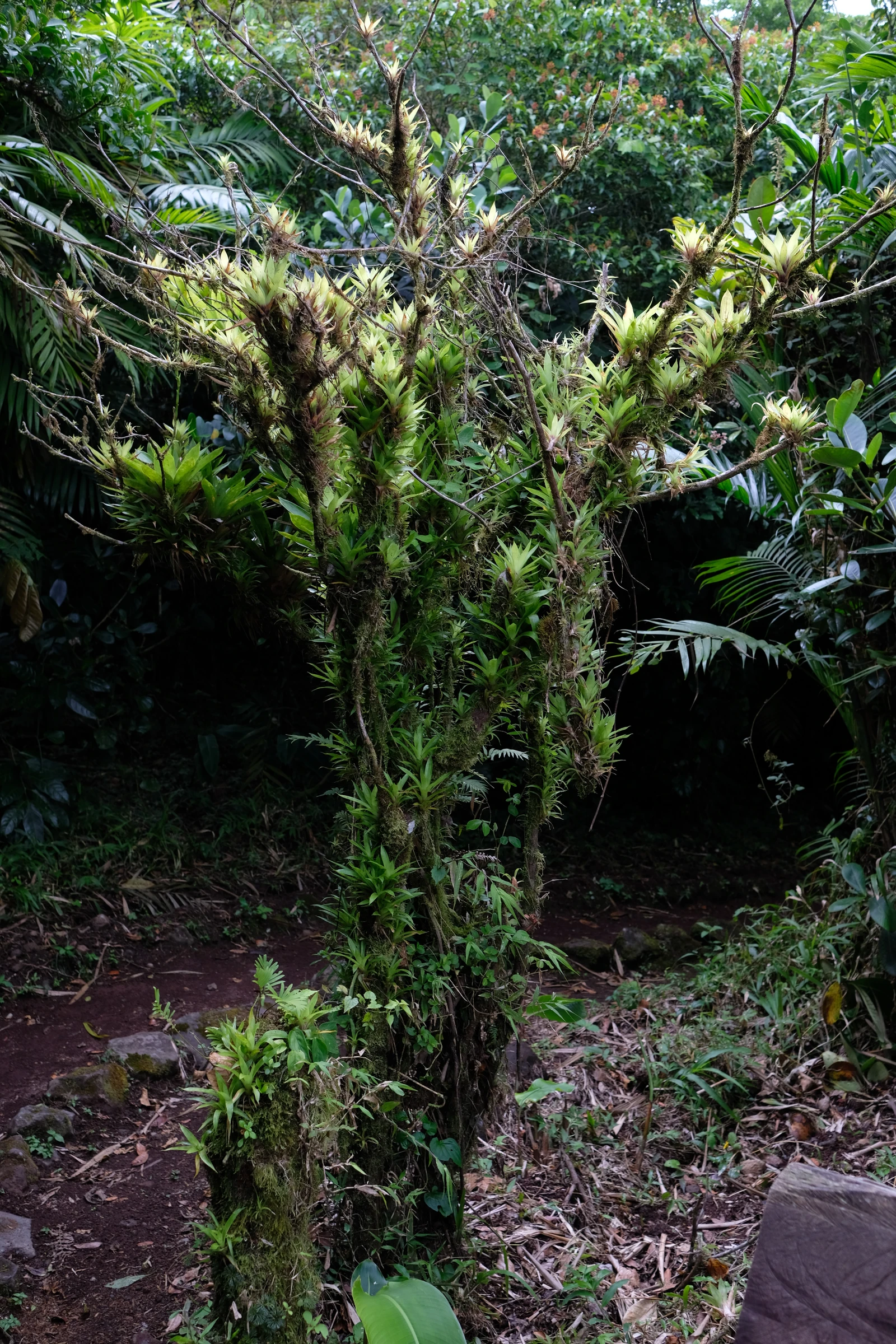
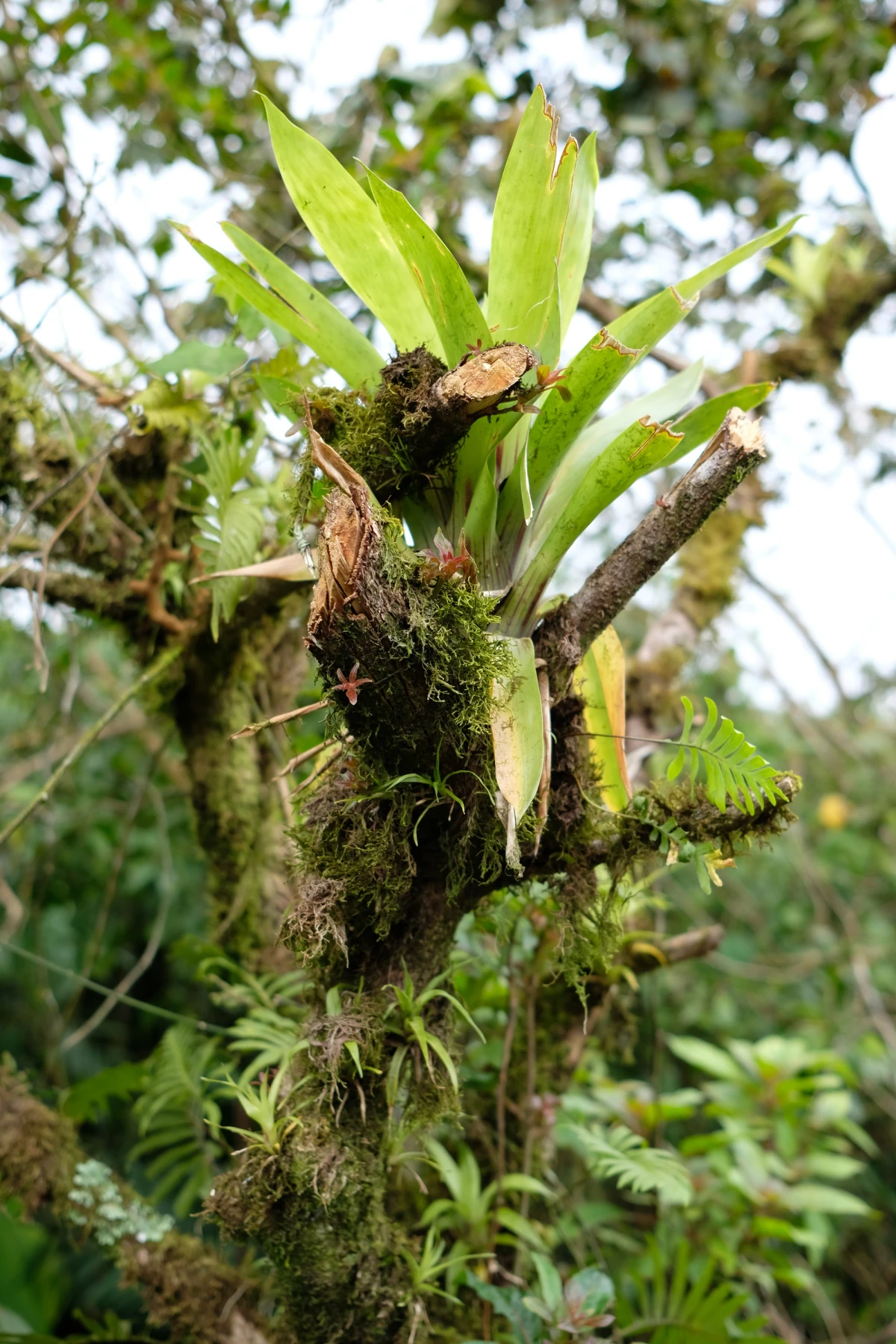
The thing that defines a cloud forest is what grows where there is no soil. Bromeliads, orchids, ferns, mosses, and trailing peperomia don’t bother with the ground here — they live straight on the trees, drinking the cloud out of the air. A single branch can carry a whole hanging garden, and the trees themselves nearly disappear under their tenants.
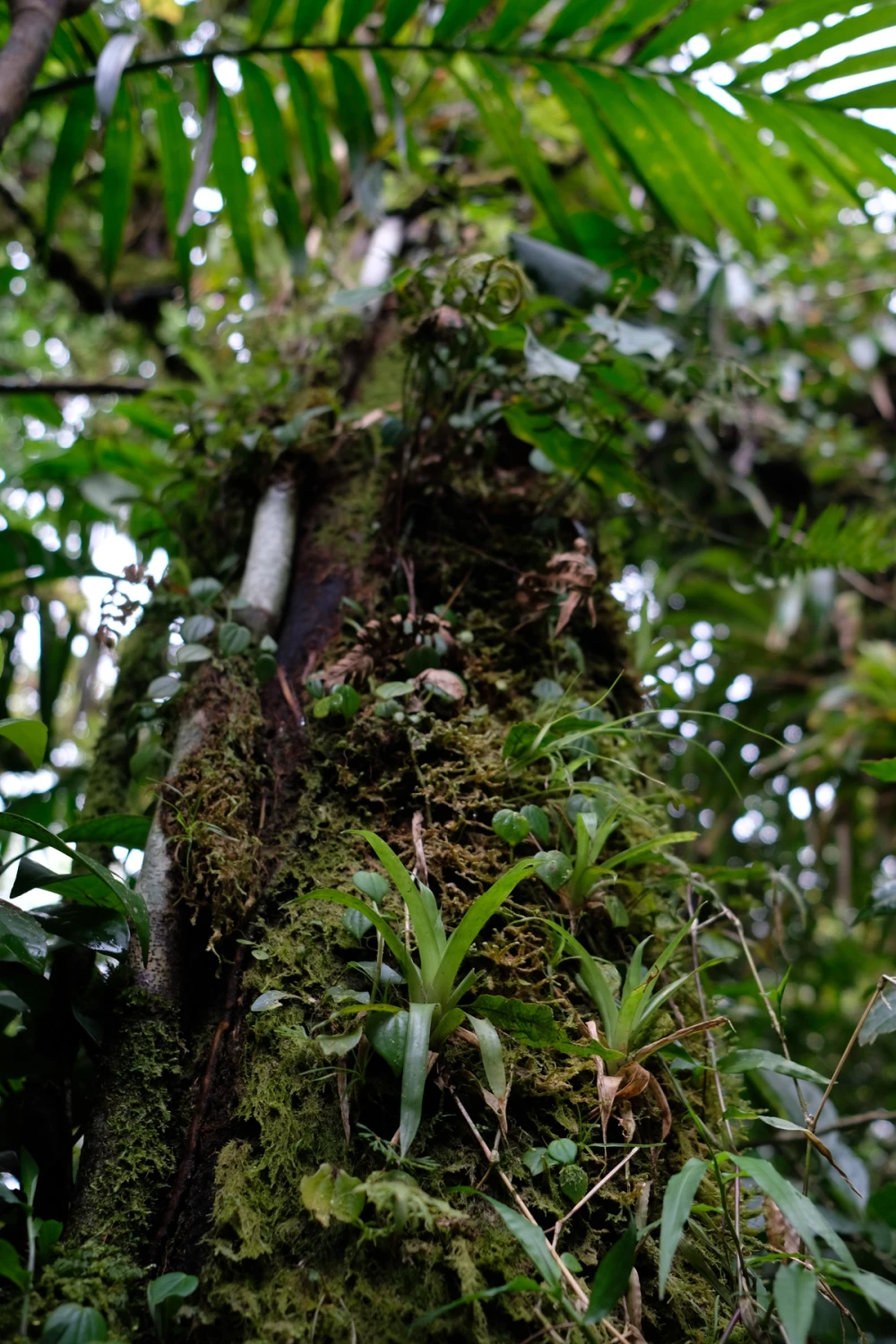
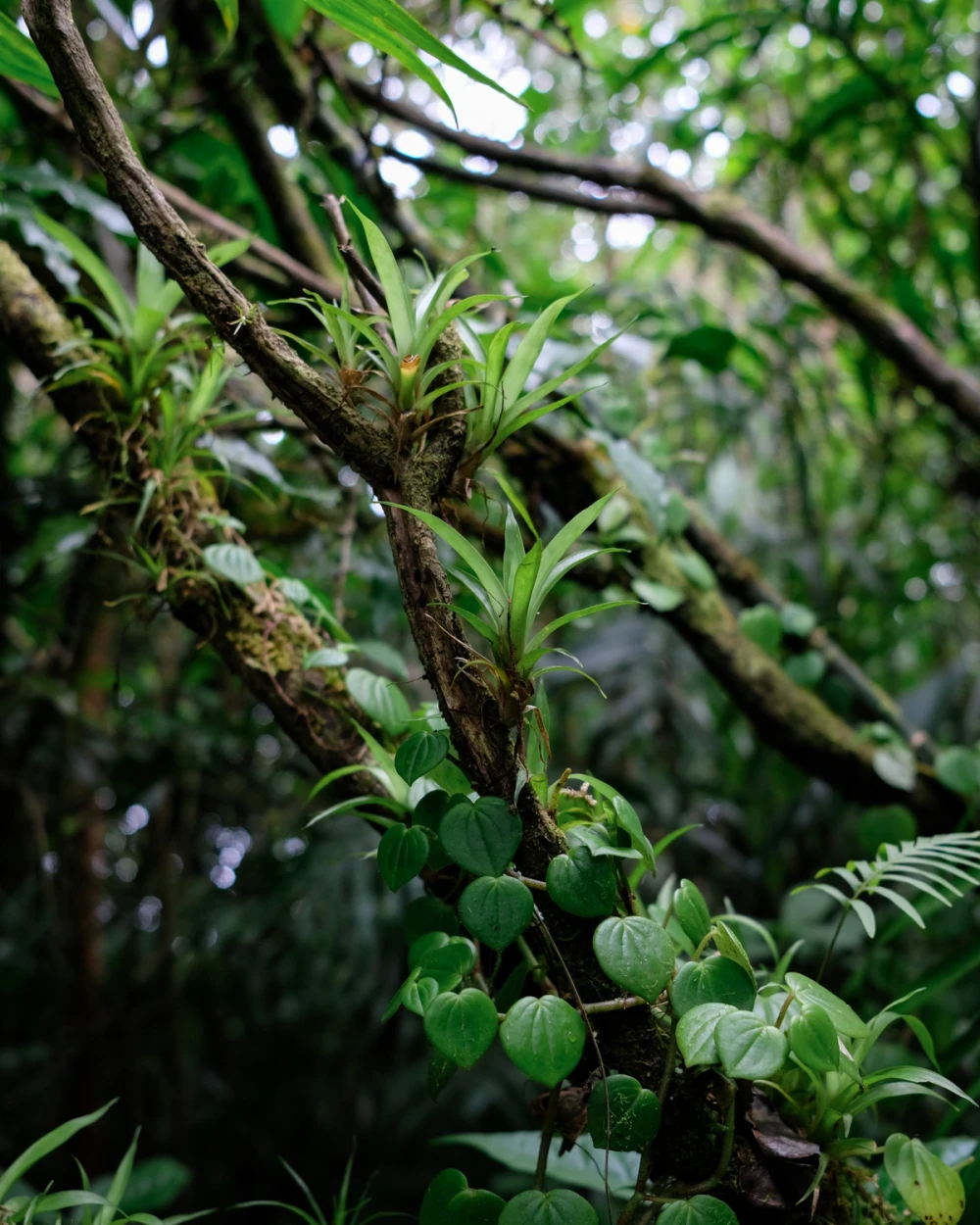
Whole trunks turn into vertical gardens, layered top to bottom in moss, fern, and vine, fed entirely by the mist that hangs in the canopy.
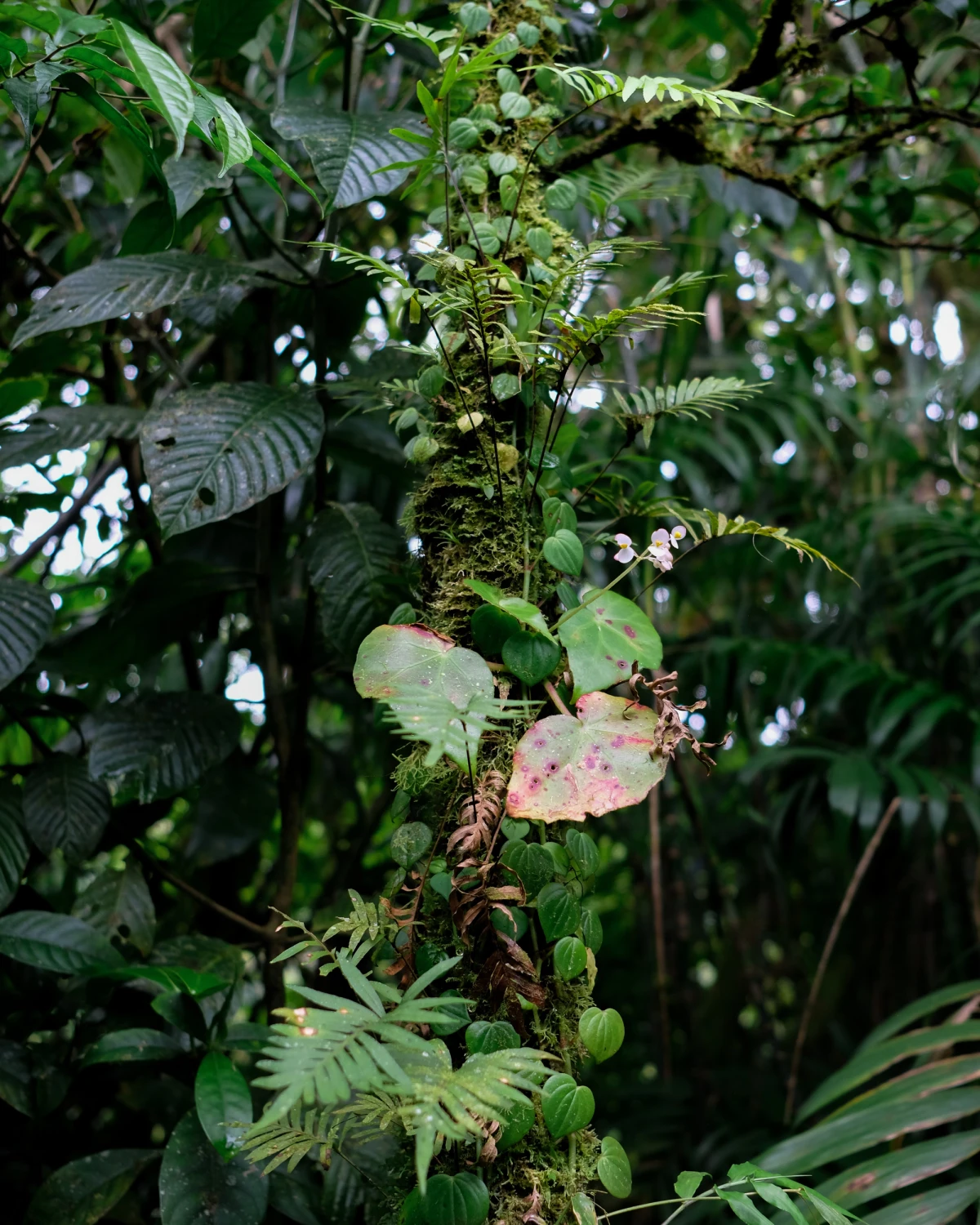
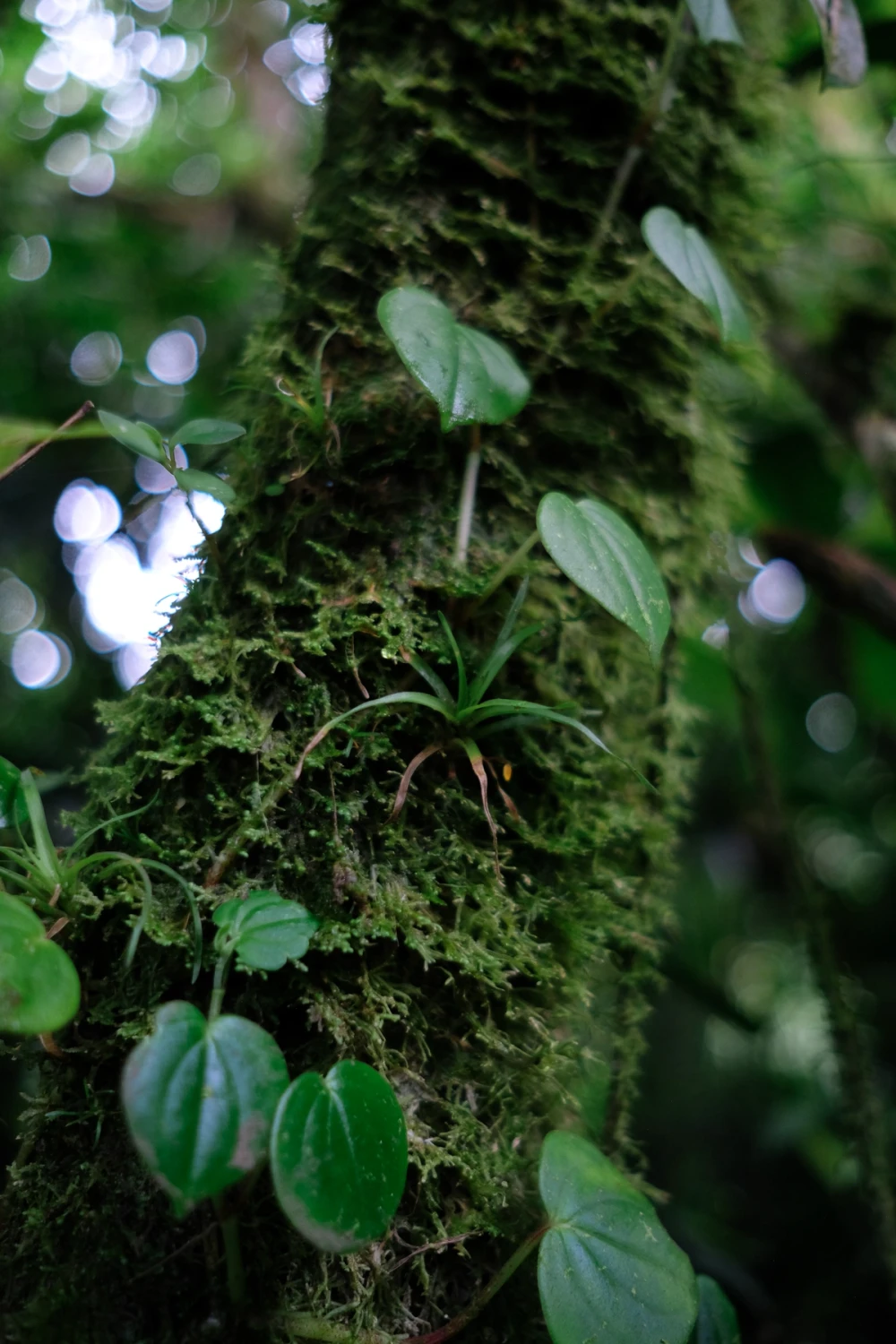
“Nothing here grows alone. Every branch is a garden, every trunk a tenement of moss, fern, and flower.”
For all the green, Mombacho doesn’t let you forget what it is. Along the trail, fumaroles breathe warm, faintly sulfurous air up through the moss — the volcano, dormant but not dead, still venting. The loop passes a string of miradores on the rim, and on the rare moment the cloud tears open you get the reward: Granada, the vast pale sheet of Lake Nicaragua, and Las Isletas — the 365 little islands that Mombacho itself scattered into the lake when one of its flanks collapsed long ago.
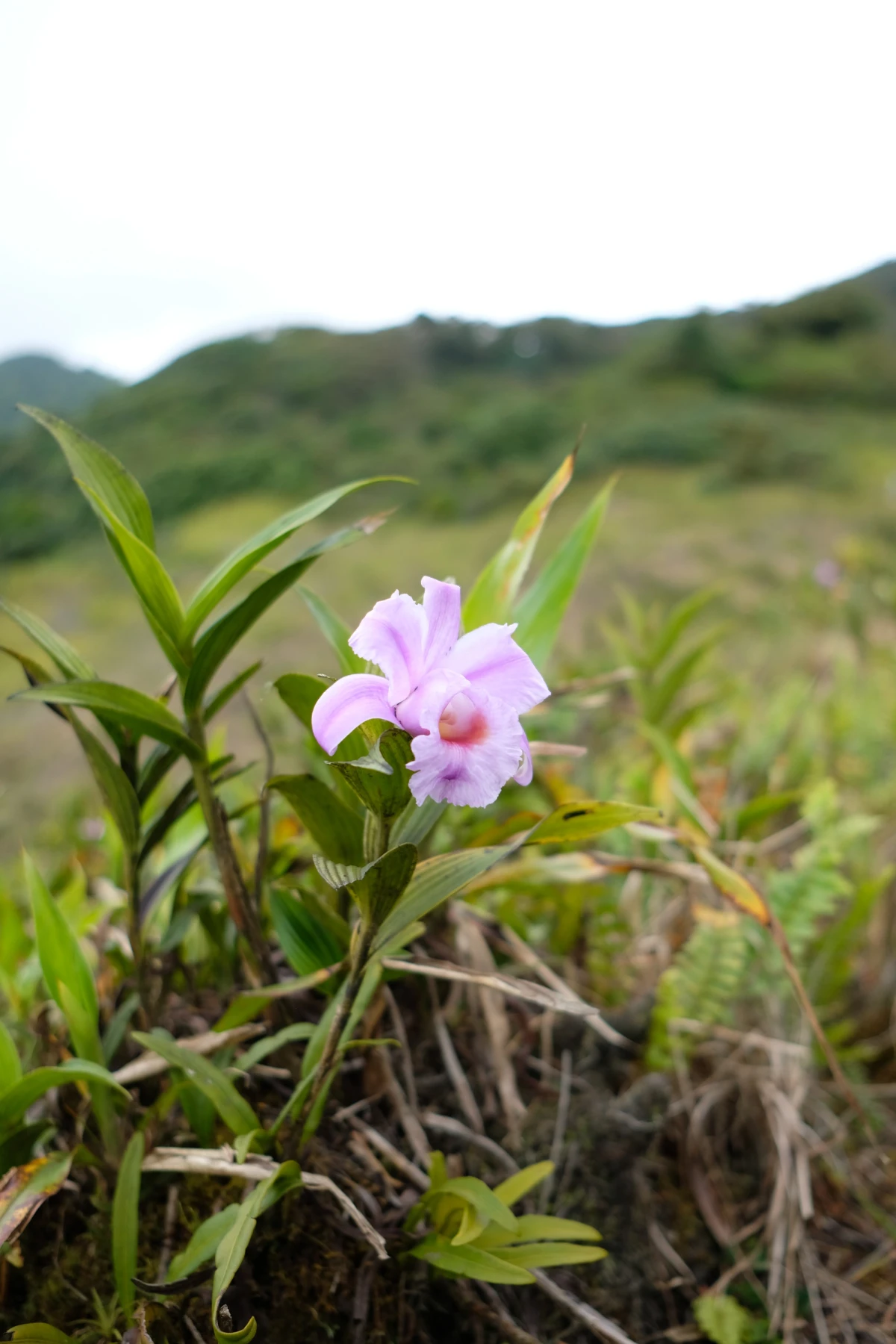
You can do Mombacho in half a day, and we did, but it stays with you longer than the time it takes. It’s the density of it — a forest so full of life that it grows on itself, hung on a mountain that built the islands you can see from its shoulder. The contrast does the rest: an hour earlier we’d been sweating in Granada, and here we were pulling on a layer in the dripping green.
We climbed back down the absurd road in the open truck, the cloud thinning, the heat rising to meet us, and were back in the city for dinner. A short trip up a single volcano — and a reminder that the most interesting things are often hiding in the weather at the top.
Bring a rain layer even in the dry season — it’s a cloud forest, and you will get damp whether or not it rains. Go early in the day for any chance at the view from the miradores, before the cloud thickens. Take the eco-truck up rather than walking the access road; it’s steeper than it has any right to be, and the schedule for the ride back down is worth checking before you start. If you can, hire a guide and walk the longer Sendero El Puma — it’s the better shot at seeing the endemic Mombacho salamander and more of the orchids.