ICELAND
Iceland Self-Drive Trip Report (7 Days): Waterfalls, Glaciers, an Ice Cave, and the Northern Lights
A week driving Iceland in October — Snæfellsnes, the Golden Circle, glacier lagoons, an ice cave, hot springs, and the aurora.
We had a week in Iceland in October and a rental car with no fixed plan beyond a loose loop — Snæfellsnes in the west, the Golden Circle, and the south coast out to the glaciers. October is shoulder season: the summer crowds gone, the first snow dusting the higher peaks, and just enough darkness returning at night to make the aurora possible.
The weather was cloudy most days and never quite settled. Rain moved through in bands, the wind rarely stopped, and the light shifted from flat grey to sudden gold and back within an hour. We learned to drive toward the breaks in the cloud and pull over whenever the road offered something — a waterfall off the shoulder, a black-sand bay, a field of moss running to the sea. Most of the country, it turned out, is exactly that kind of pull-over.
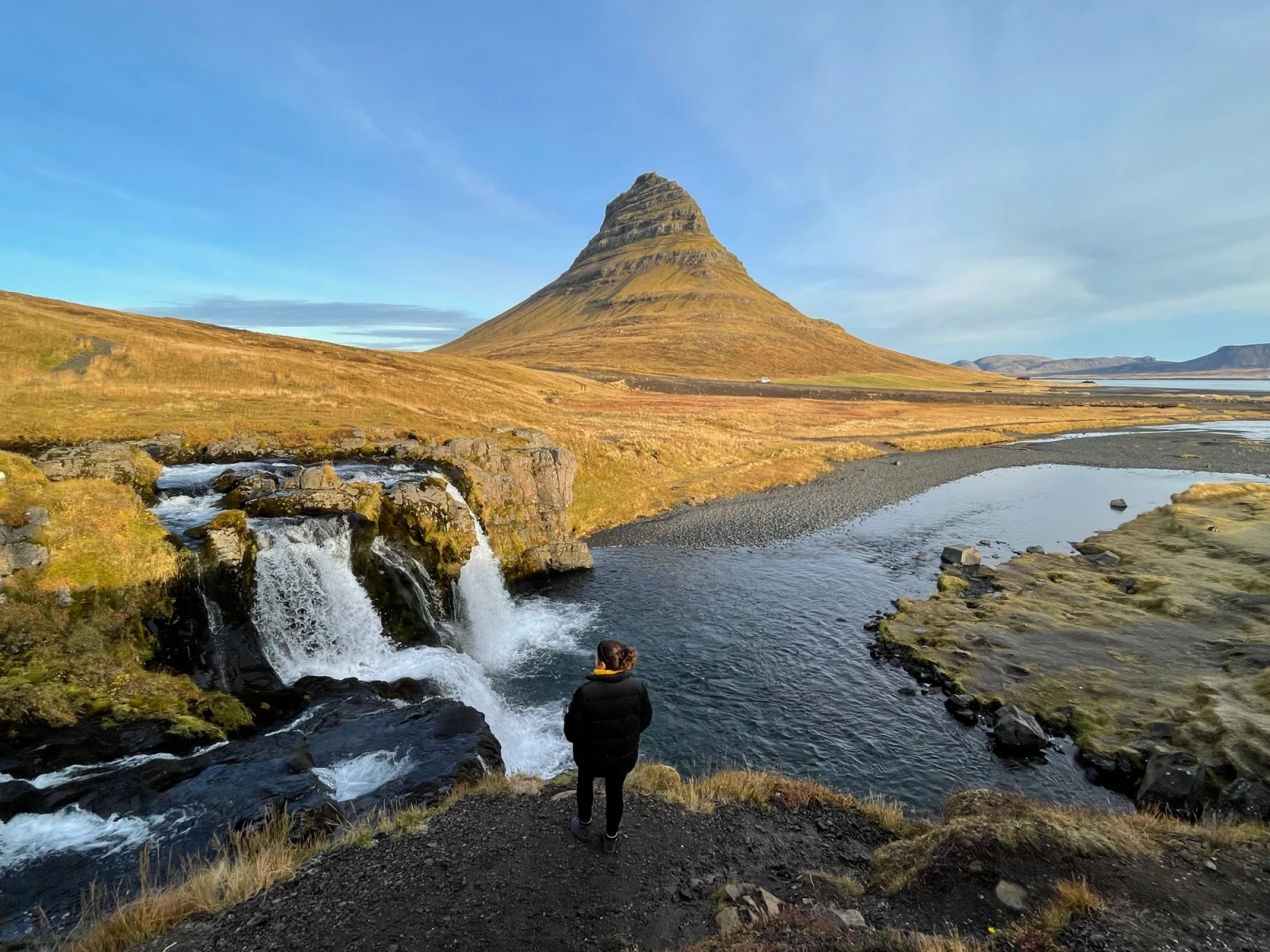
Snæfellsnes is a peninsula that packs most of Iceland into one short drive — a volcano under ice, black beaches, fishing towns, and Kirkjufell, the pointed peak that shows up on every postcard. We reached the falls below it in the late afternoon with the wind coming hard off the water. The mountain kept its shape against a moving sky; the small waterfall in front of it never stopped.
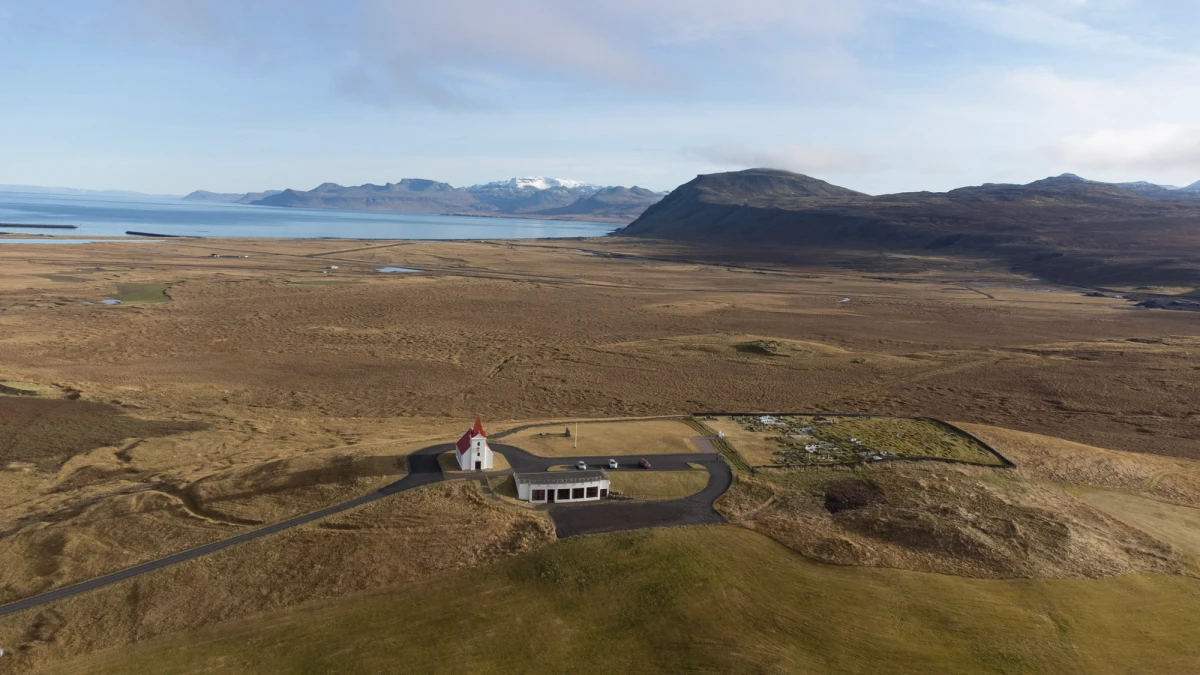
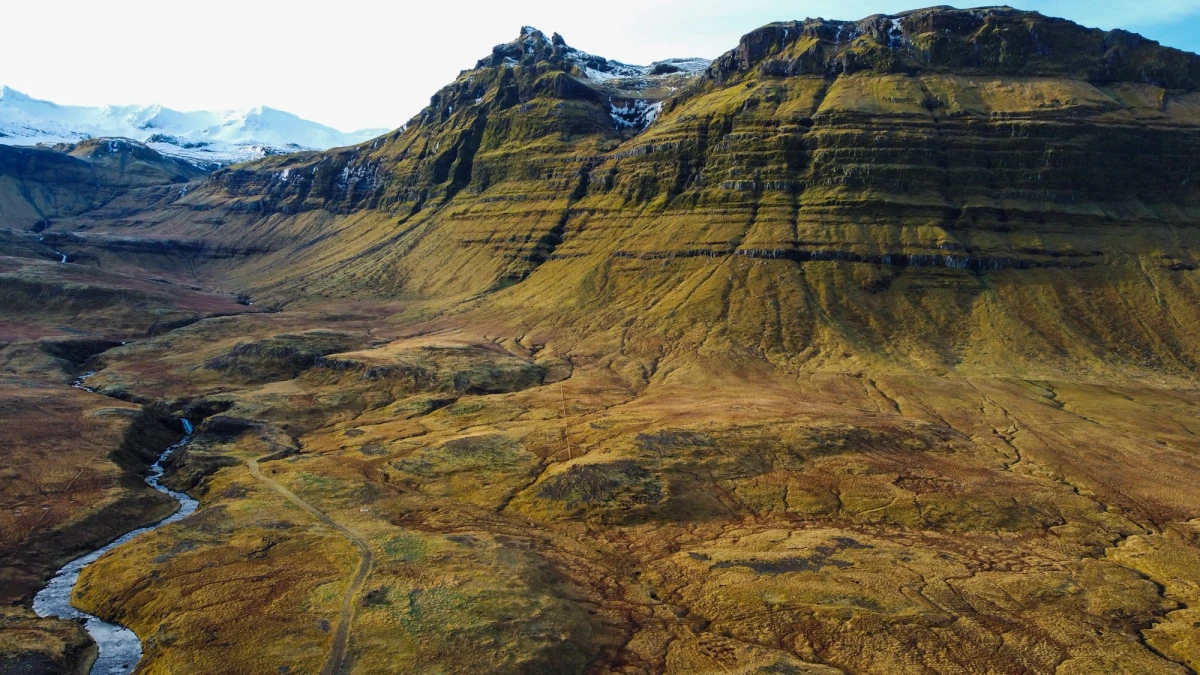
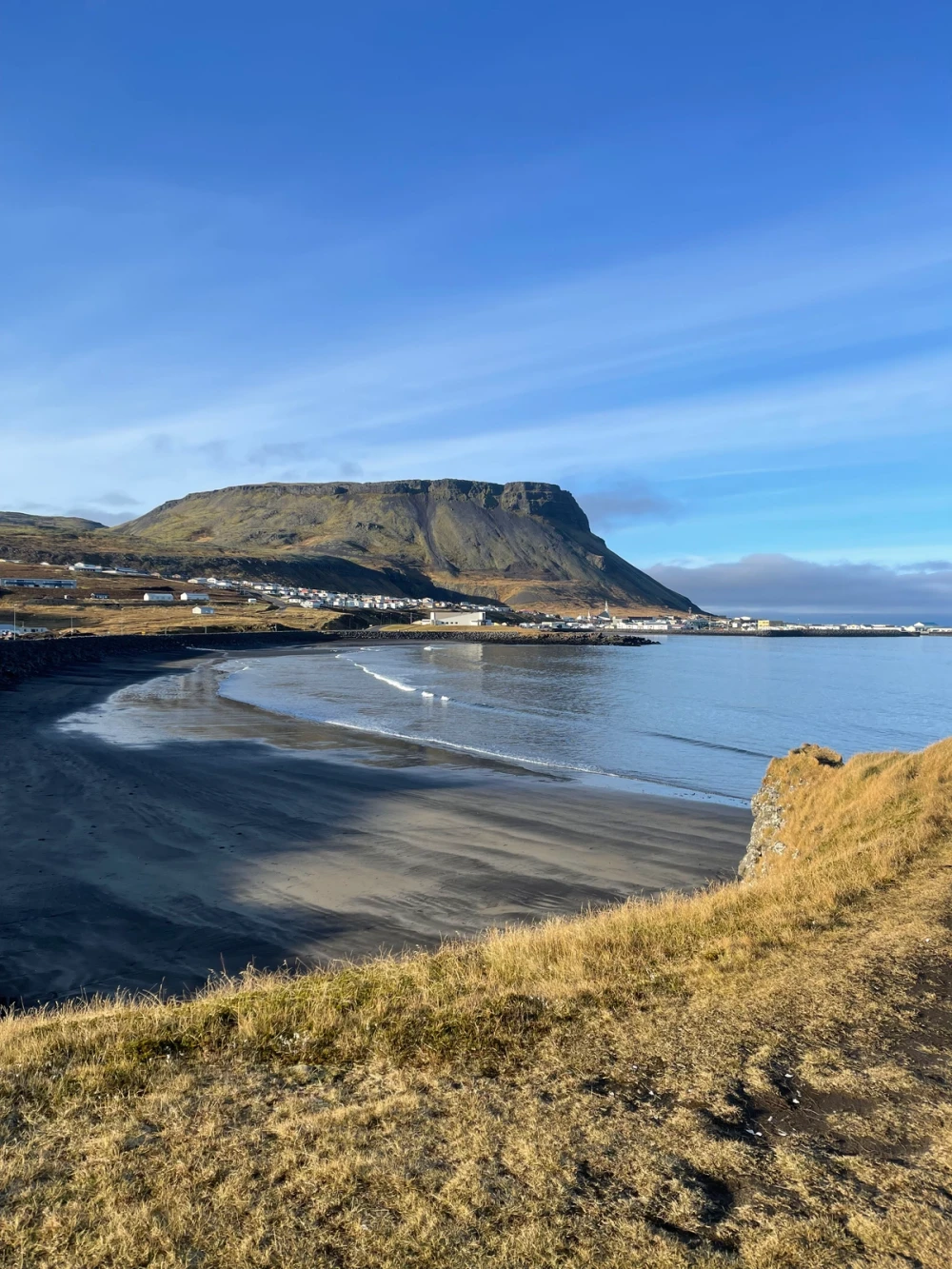
We spent a full day circling the peninsula — a black-sand cove below a flat-topped headland, a hillside of moss in the last gold light, meltwater dropping through lava rock beneath a snowed-in peak. Nothing was crowded. Half the stops weren’t marked on anything.
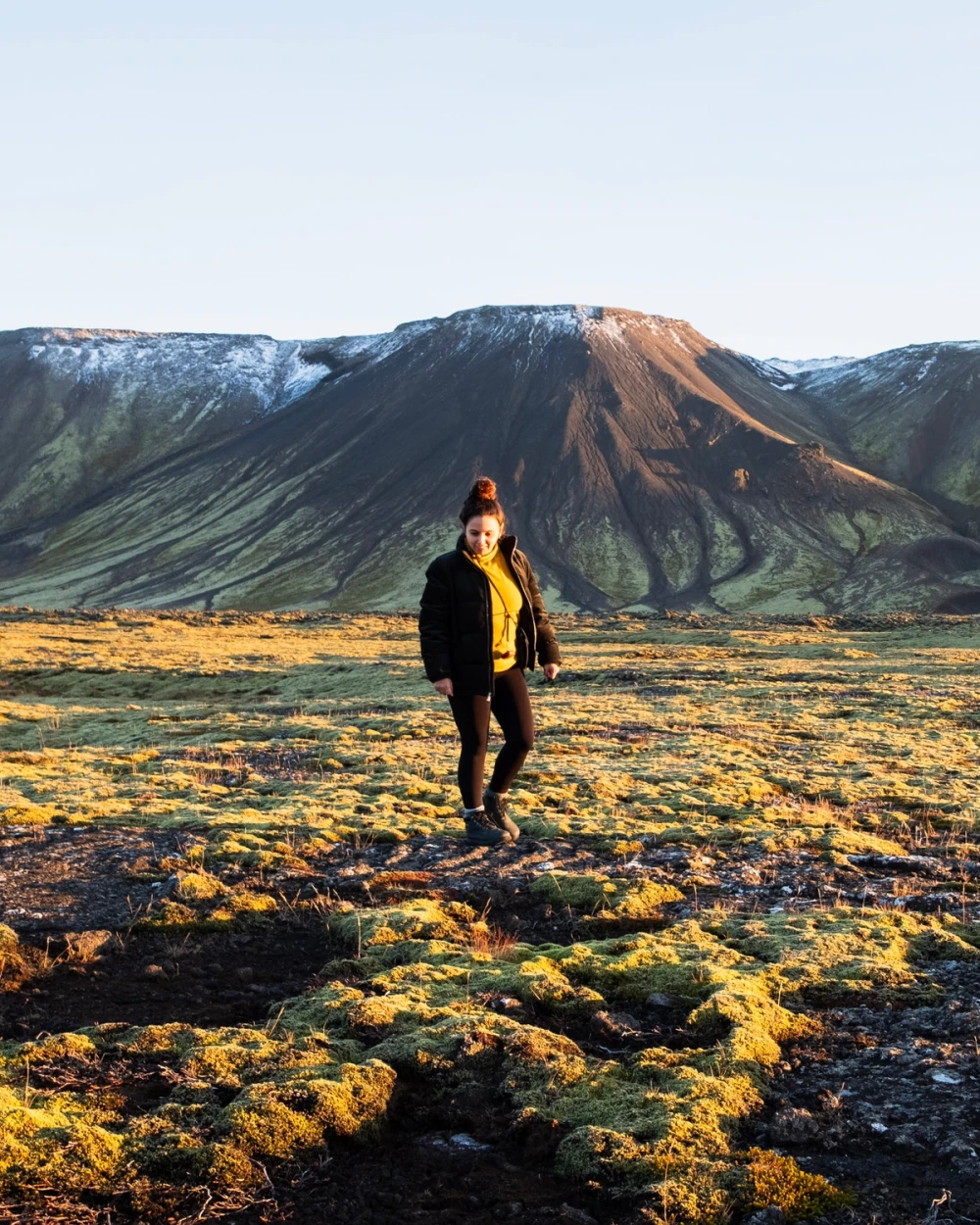
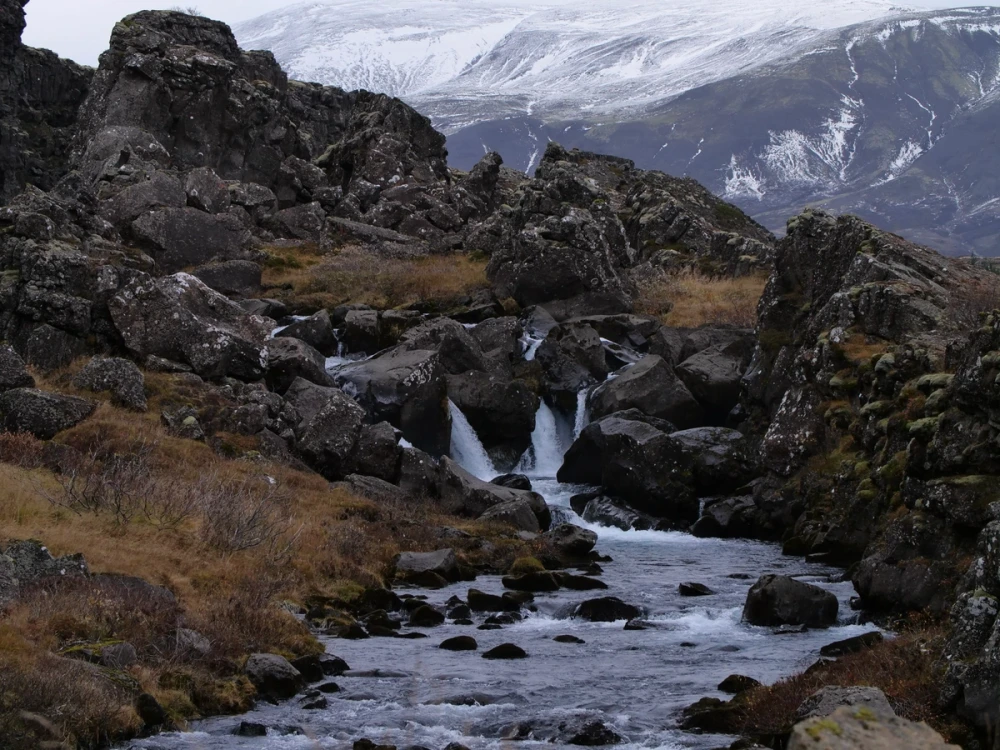
“You stop planning the day around sights and start planning it around the weather — driving toward whatever patch of sky looks like it might open.”
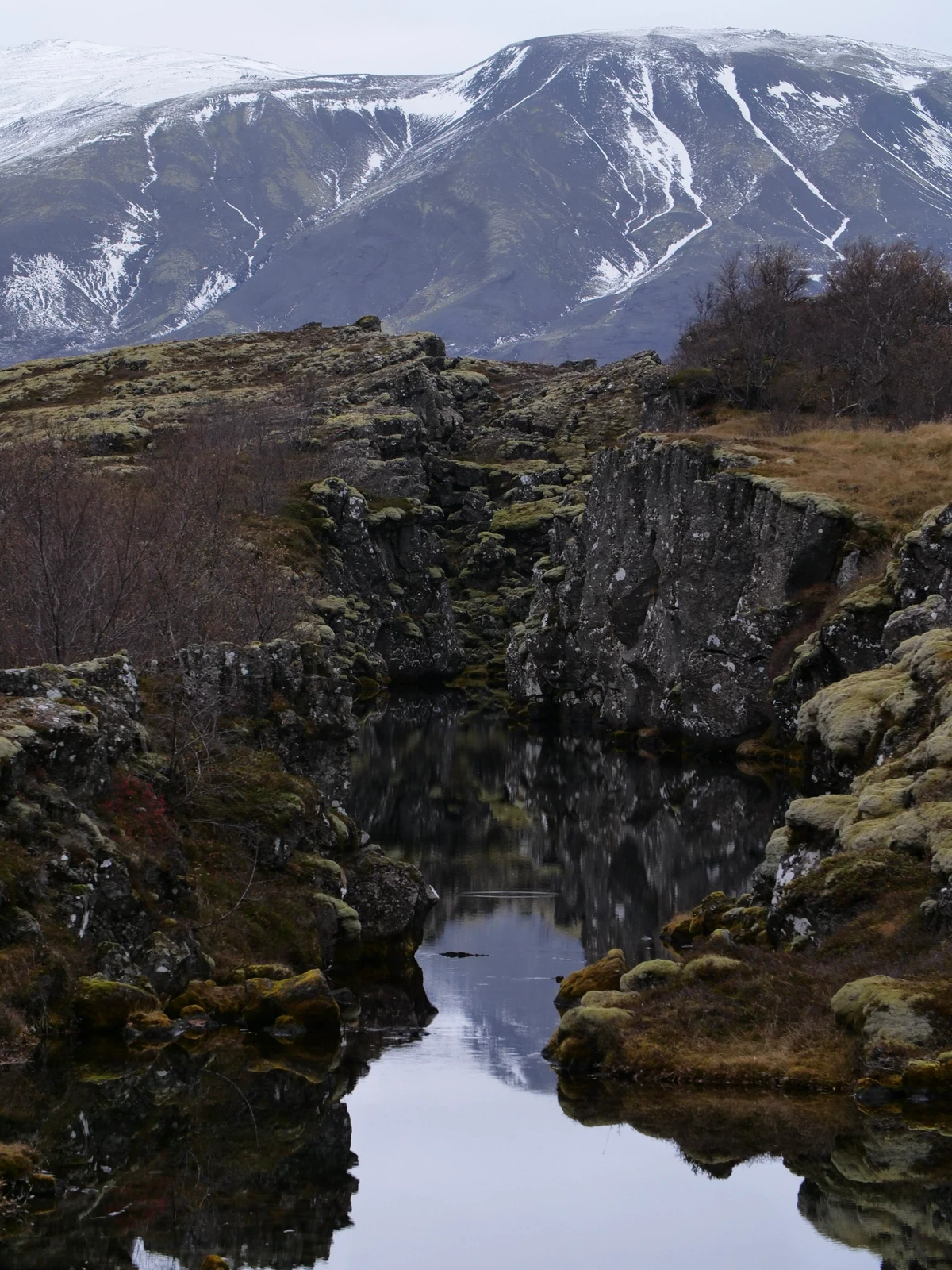
The Golden Circle is the easy loop east of Reykjavík, and it earns the traffic. At Þingvellir the land splits where the North American and Eurasian plates pull apart — a rift you can walk down into, the rock walls streaked with moss, clear water standing in the cracks. It is one of the few places you can stand in the gap between two continents.
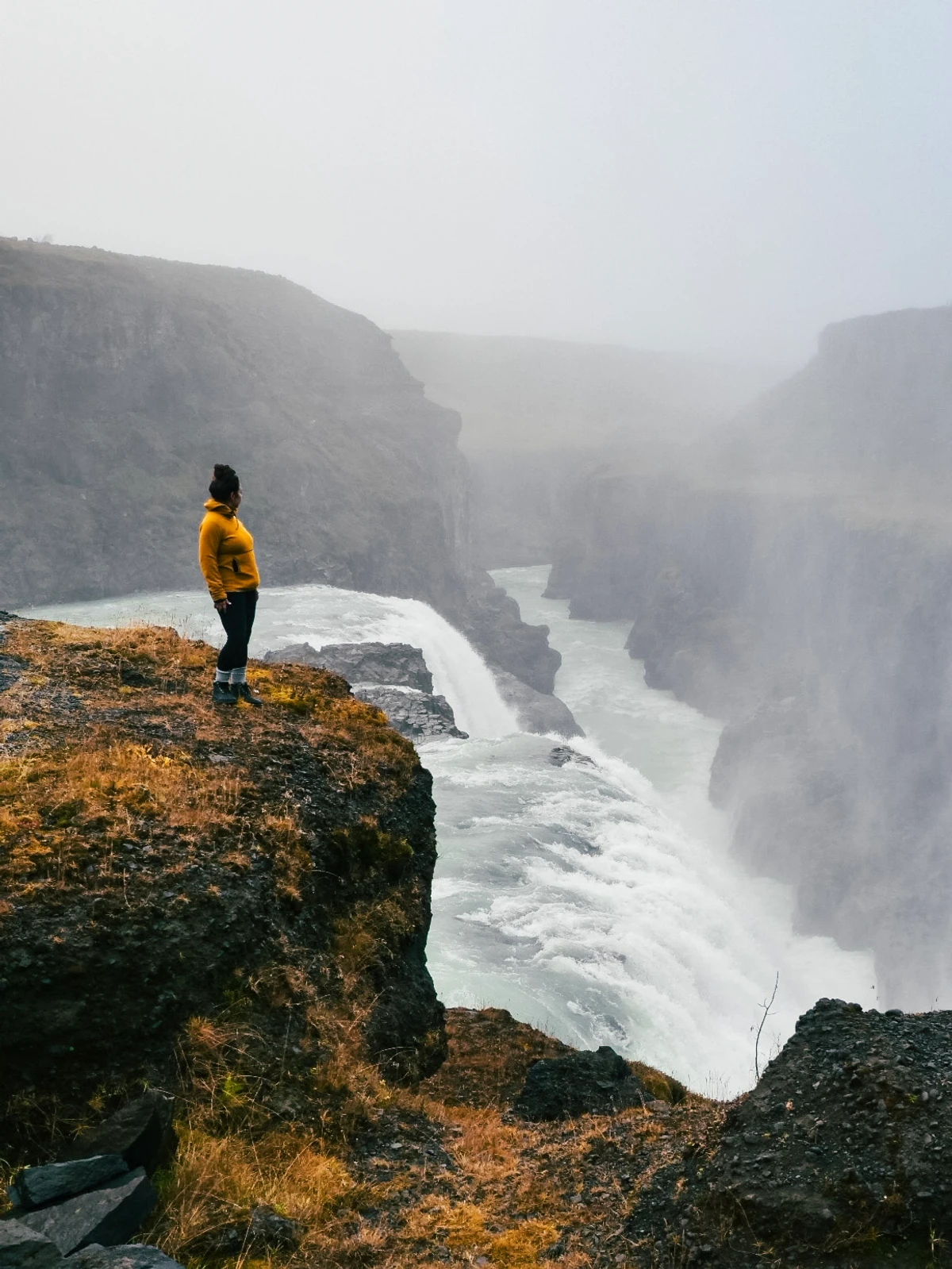
Gullfoss came later in the day, the spray hanging in the air long before we reached the edge. The river drops in two stages into a canyon and throws up enough mist to soak everything downwind. We stood at the lip until the cold worked through our layers.
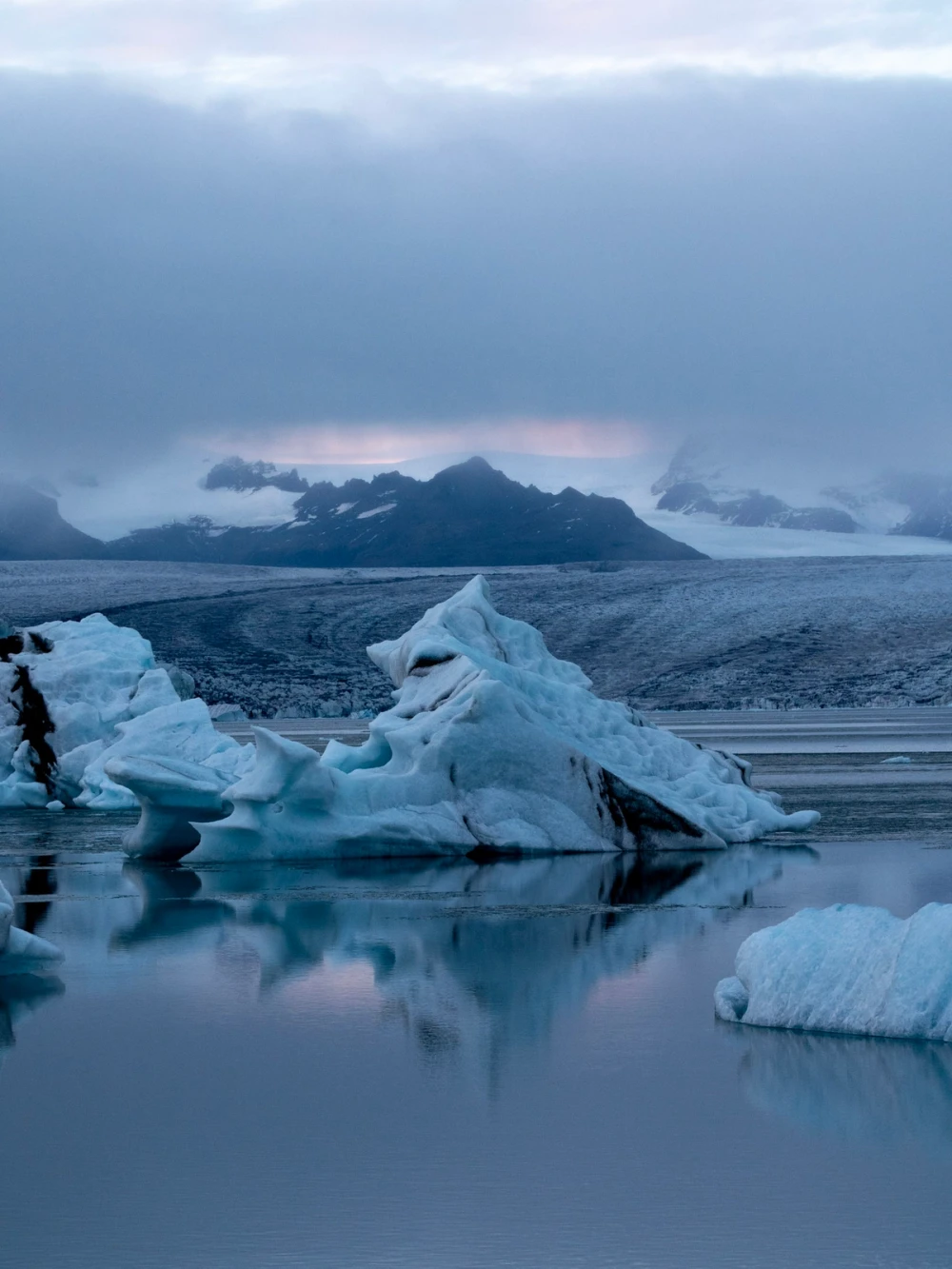
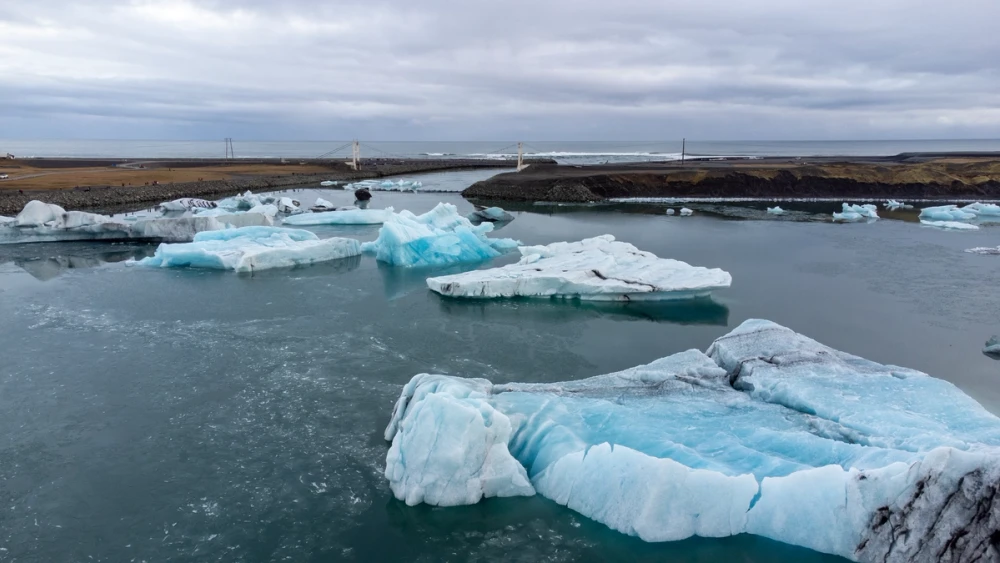
The drive east along the south coast is long and mostly empty — farms, waterfalls, lava fields under moss — until the glaciers start coming down to meet the road. Jökulsárlón is where one of them calves into a lagoon: a tongue of ice from Vatnajökull breaking off into bergs that drift toward the sea, some white, some that deep filtered blue, some streaked black with old ash.
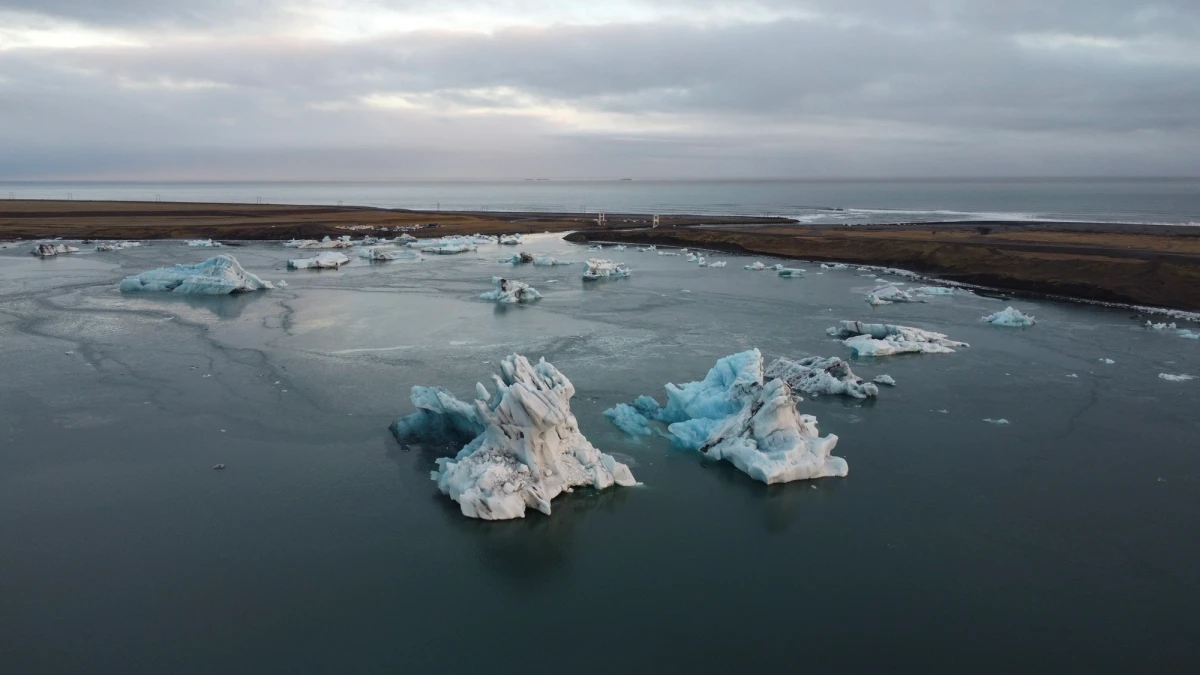
We came back to the lagoon at dusk when the crowds thinned. The glacier sat low under the cloud, the water went still, and the bergs turned the colour of the sky. The next morning we pulled on crampons for a guided walk into an ice cave under the glacier — blue ice overhead, meltwater dripping through, the whole ceiling glowing where the light found it.
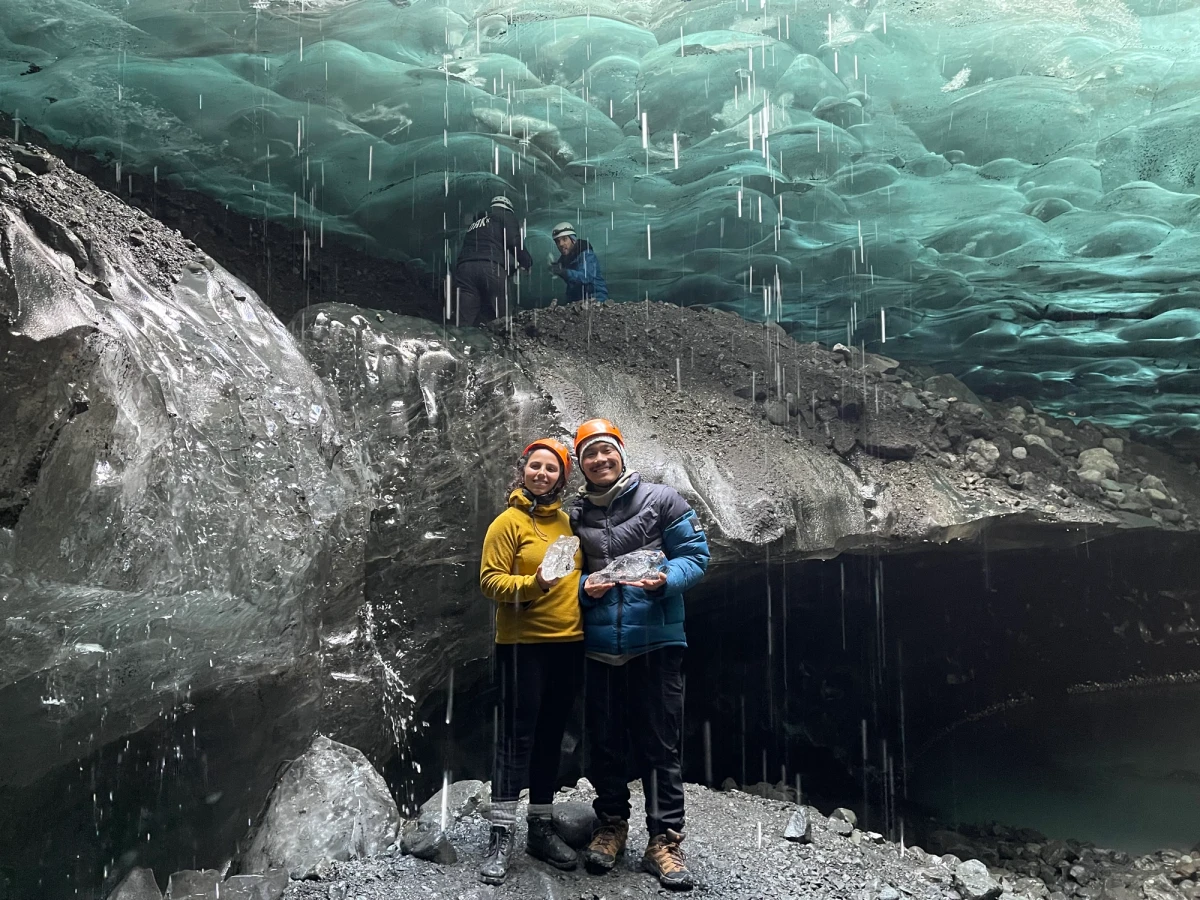
“The blue isn’t painted on — it’s what’s left after the ice has pressed every bubble of air out of itself over a few hundred years.”
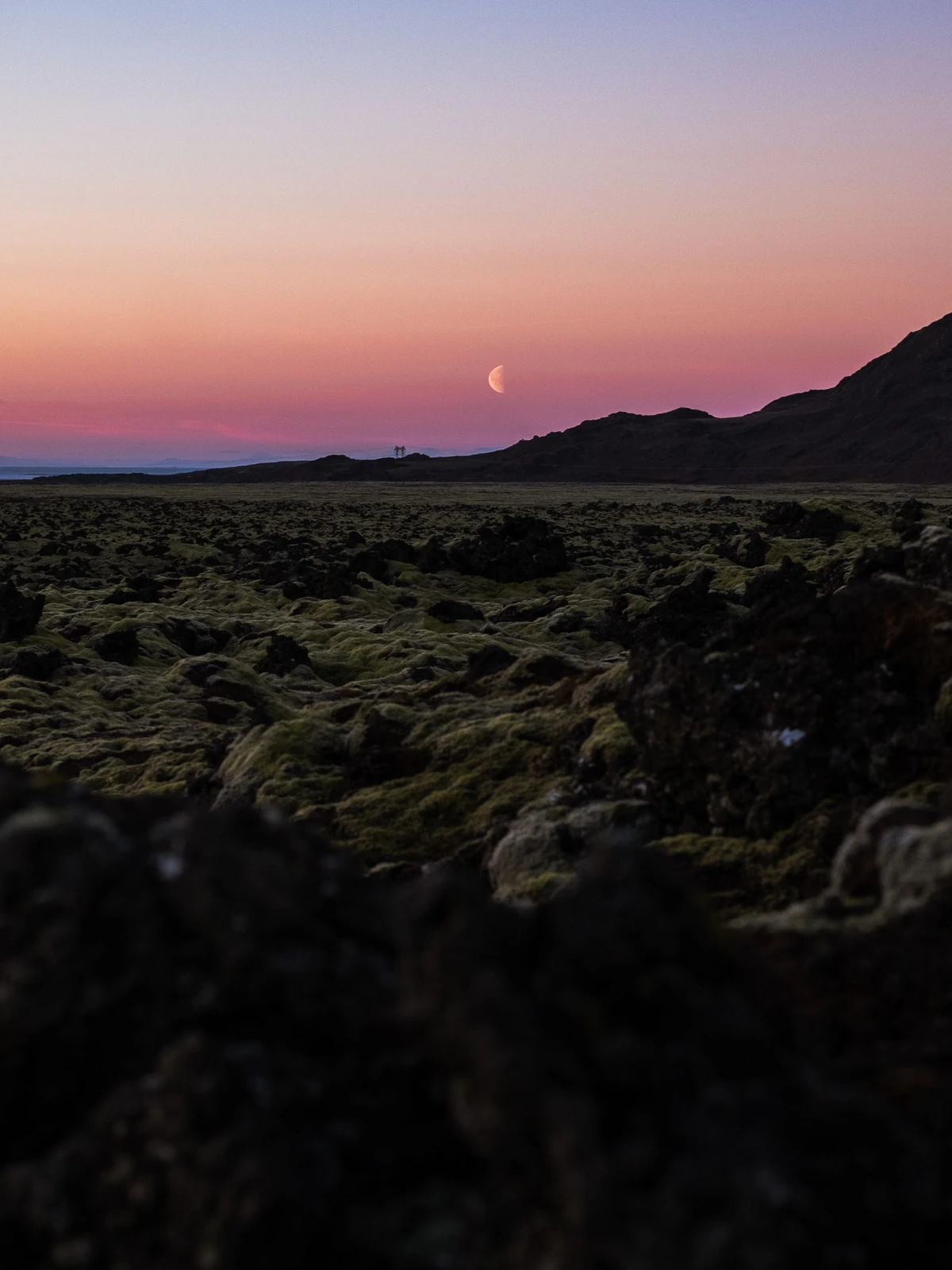
By evening the light was gone by six, and the country changed character. We crossed the Eldhraun lava field at dusk — miles of moss over old eruption, soft and grey-green, a thin crescent moon over the ridge — and felt how empty the south gets once the day-trippers drive home.
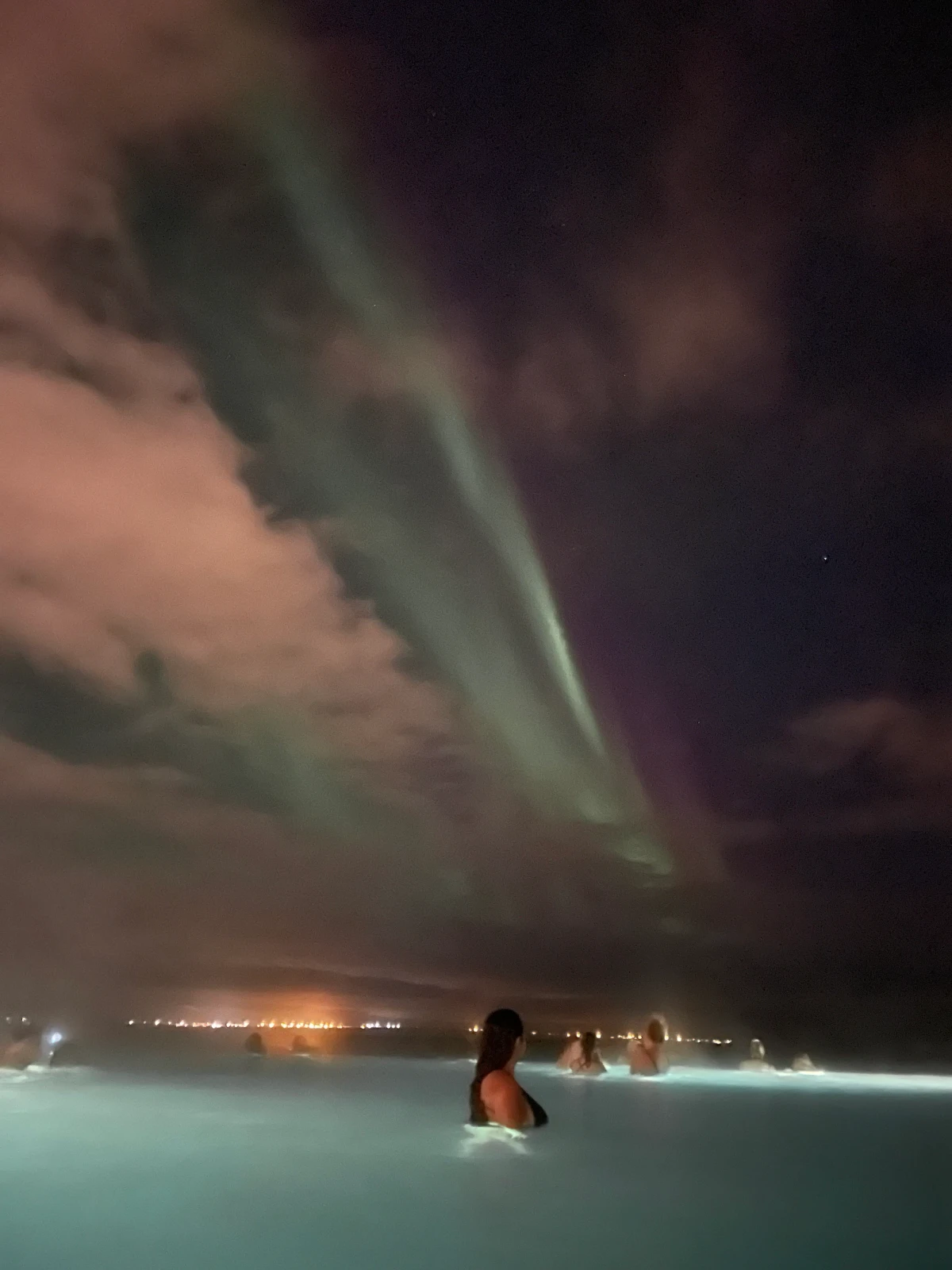
Back near Reykjavík we spent a night at the Sky Lagoon, an infinity-edge geothermal pool that runs out toward the ocean and the town lights. The water sat warm against the cold air and steam came off the surface. While we were in it the clouds thinned and a faint green band of aurora slid across the sky over the edge of the pool.
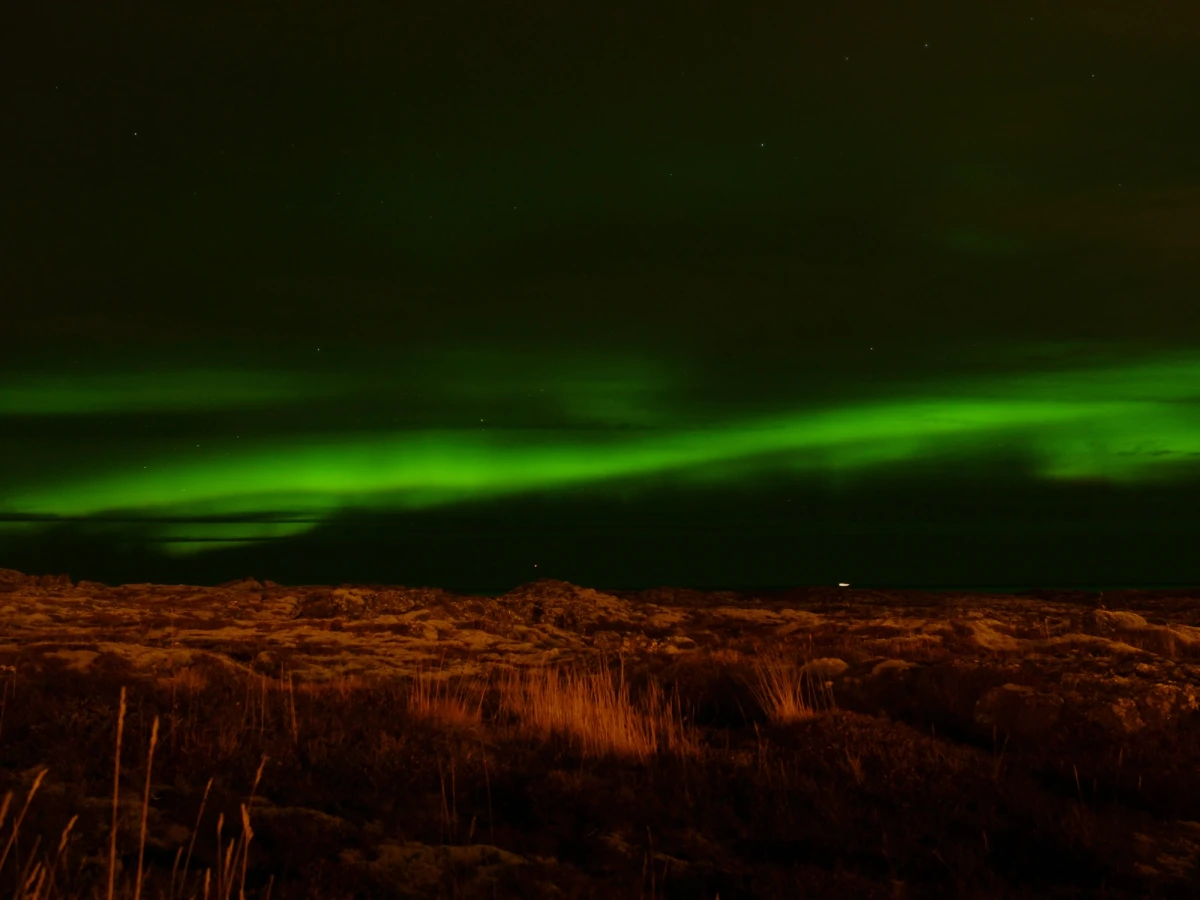
We chased the aurora properly on two clear nights, driving out of the light into the lava fields and waiting. It came slowly the first night and then all at once — a green arc that brightened, stretched, and rippled before fading back into ordinary cloud. The cold made it hard to hold the camera steady. Nobody suggested leaving.
Iceland in a week is a sampler — you see a lot and understand almost none of it. What stays with us is the speed of the weather and the scale of the water: rain to sun in minutes, rivers everywhere, ice the colour of nothing else, and steam rising out of the ground like the island is still being built. Which it is.
We went in October partly for the dark, and the dark paid off — the aurora, the long blue dusks, the empty roads. The cloud we’d worried about turned out to be the point. It moved constantly, and every time it broke, the country looked like something new.
Book the ice cave and Sky Lagoon before you fly — both sell out, and the cave only runs as a guided tour. Pack real layers and a windproof shell; the wind, not the temperature, is what gets you. And download an aurora forecast app — the alerts pulled us outside on the one night we’d nearly written off.