GRANADA
Granada, Nicaragua: A Day in the Streets of One of the Americas’ Oldest Colonial Cities
A day in Granada, Nicaragua — horse carriages, market vendors, and faded pastel colonial streets in one of the Americas’ oldest cities.
Granada sits on the northwest shore of Lake Nicaragua, in the flat tropical heat below the Mombacho volcano. Founded in 1524, it’s one of the oldest European-built cities in the mainland Americas, and it still looks the part — block after block of low colonial buildings painted in faded ochre, blue, and rose, with the great yellow cathedral anchoring the center and horse-drawn carriages clopping past the doors.
We came for a couple of days in early March, in the dry-season heat, with no agenda beyond walking the place and watching it work. Granada isn’t a museum town; it’s a busy, slightly worn, completely alive city where the colonial grid is also a market, a thoroughfare, and a front porch for everyone who lives on it.
So that’s what this is — a walk through the streets of an old city on a hot day: the carts and the carriages, the market, the peeling paint, and the light coming off the lake at the end of it.
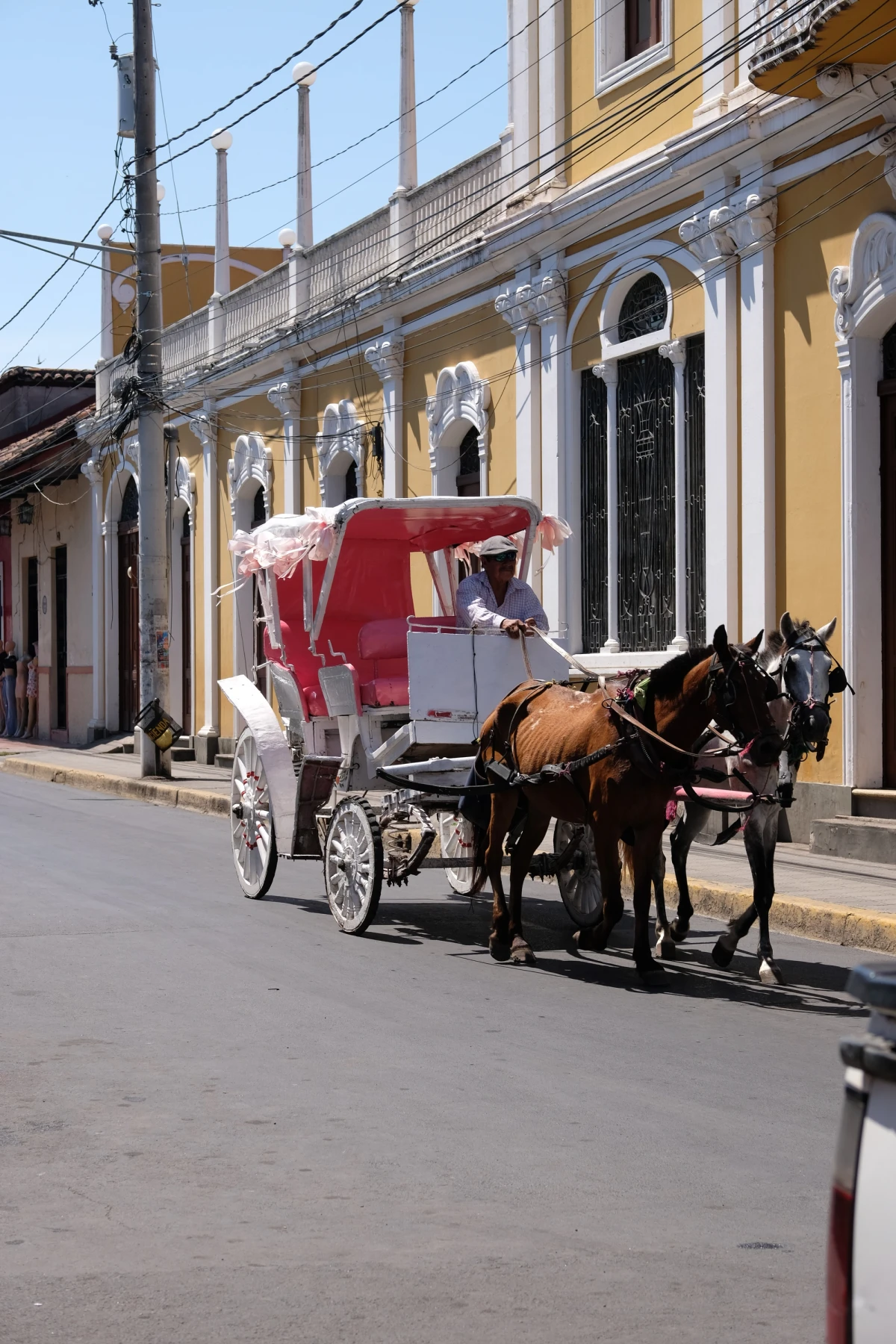
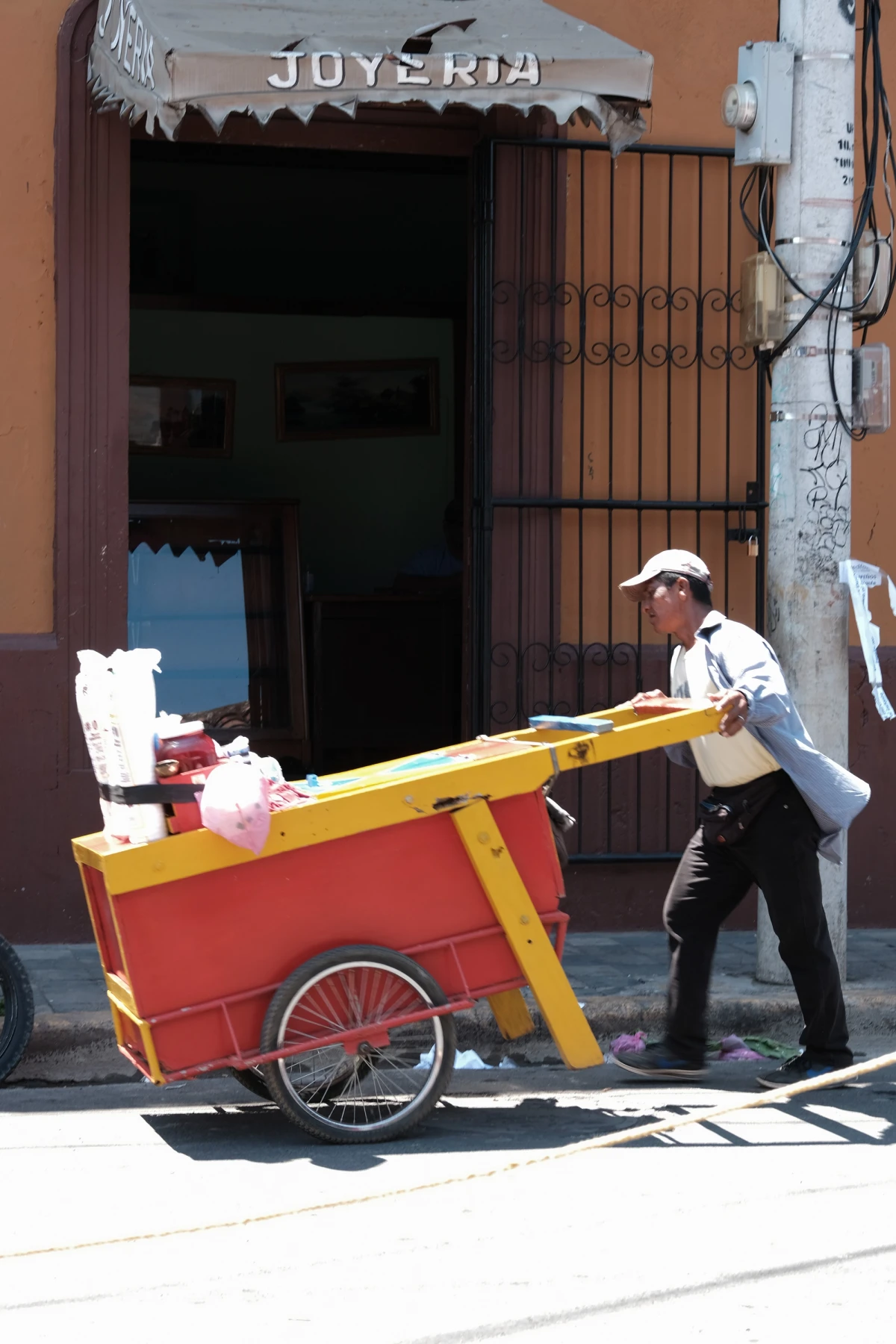
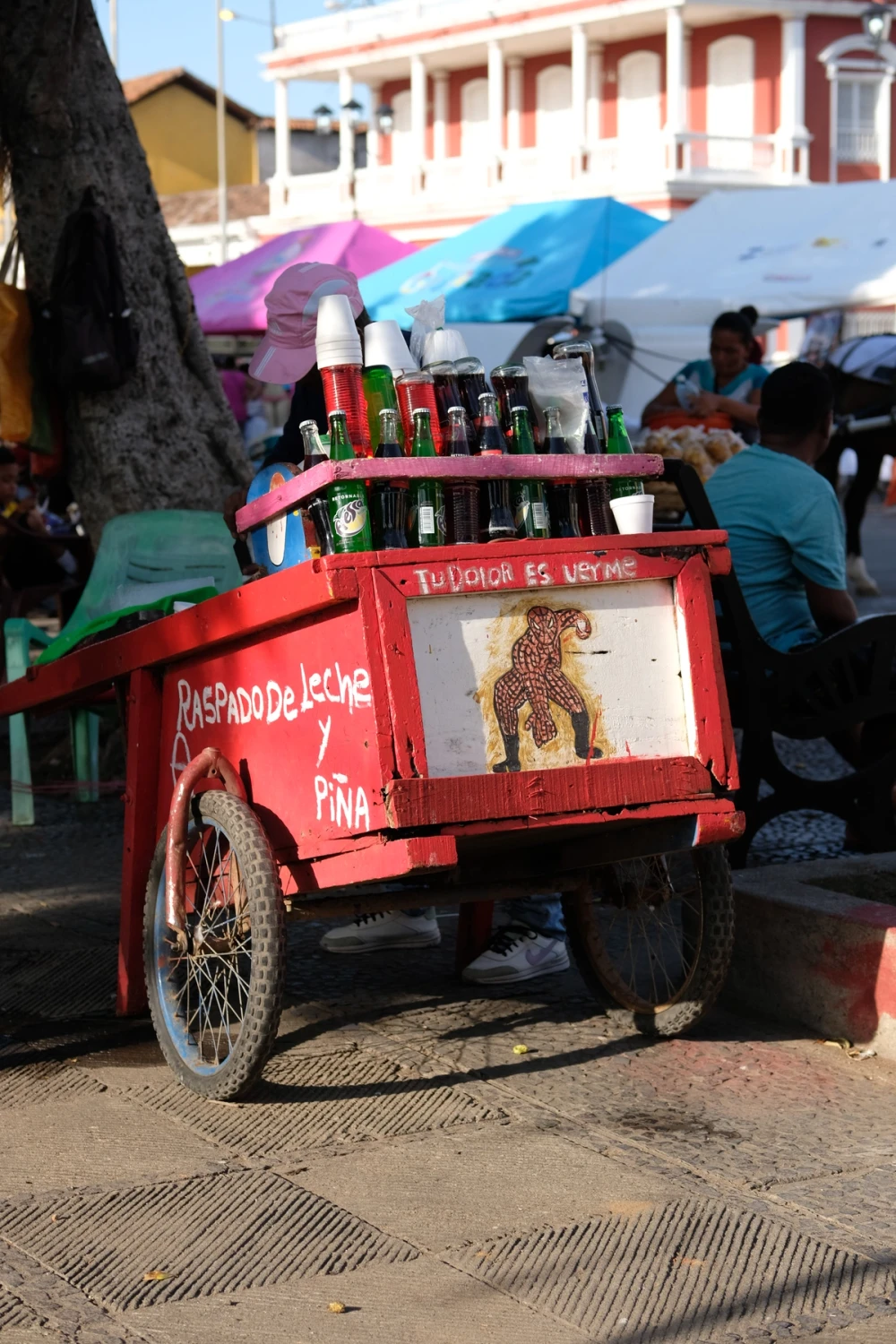
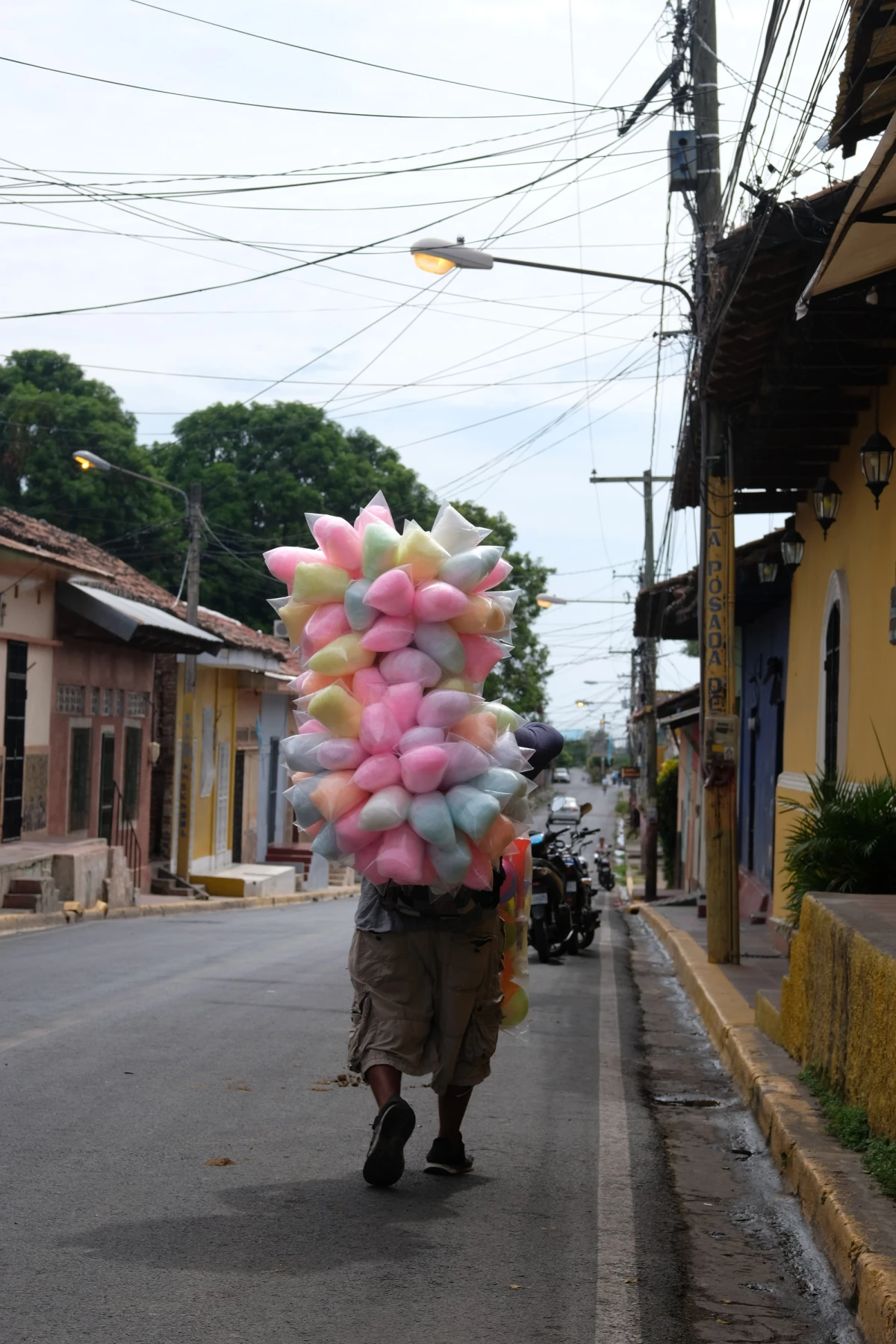
The first thing you notice on foot is how much of the city’s commerce rolls by on two wheels and three. Vendors push wooden carts of drinks, snacks, and shaved ice down the middle of the street; men pedal bikes loaded with whatever needs moving. The colonial walls hold the heat and throw it back at you, and everyone finds the shady side.
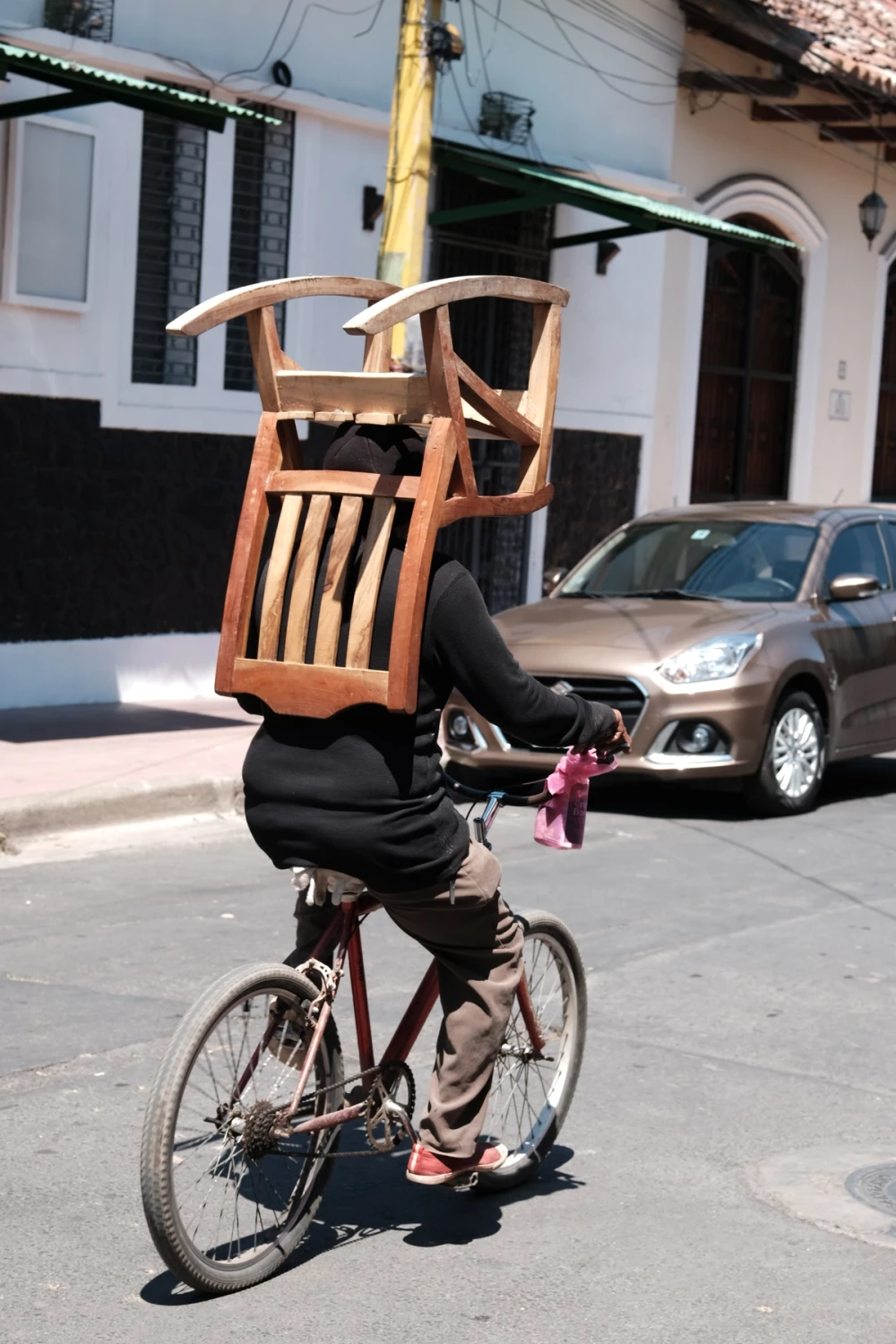
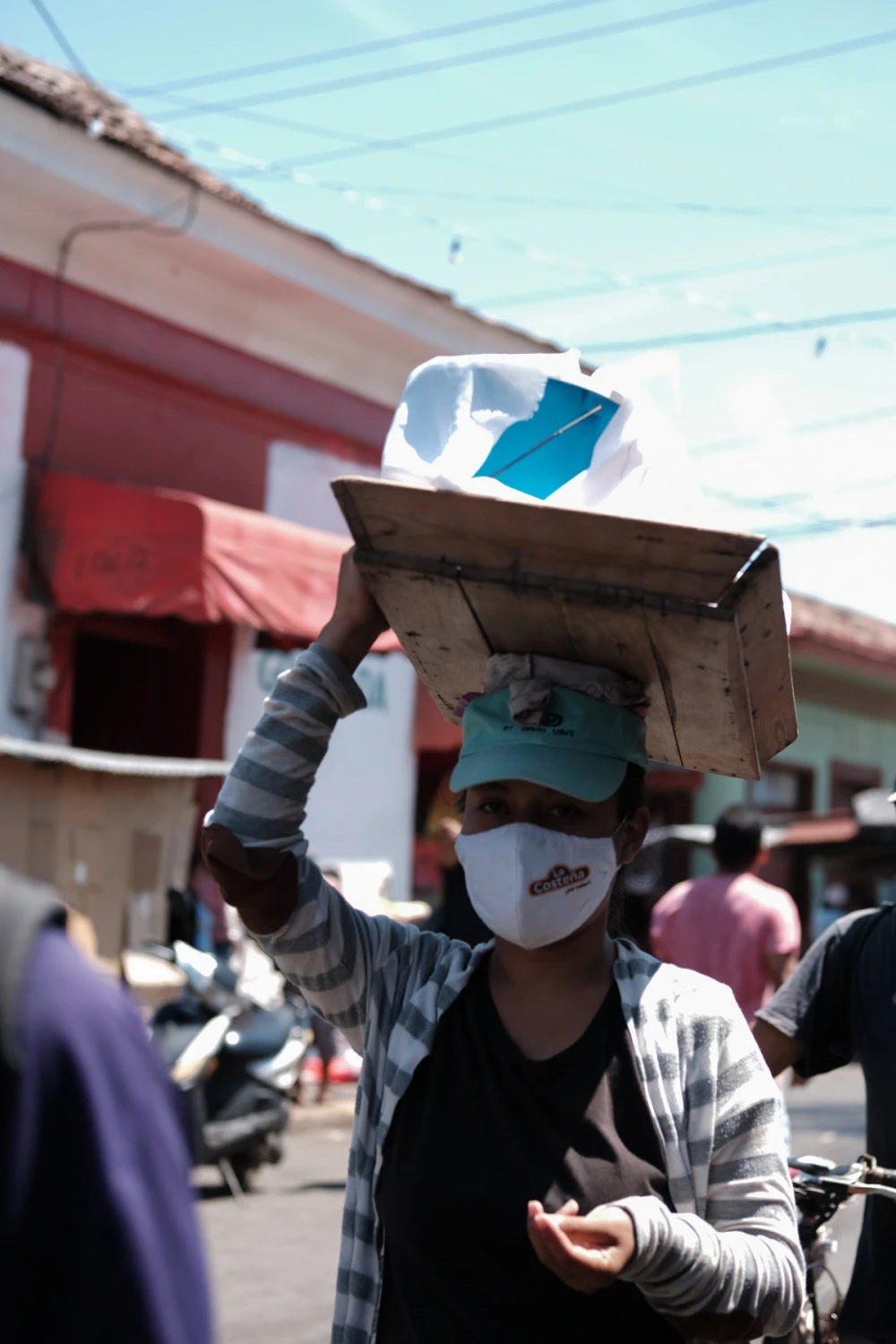
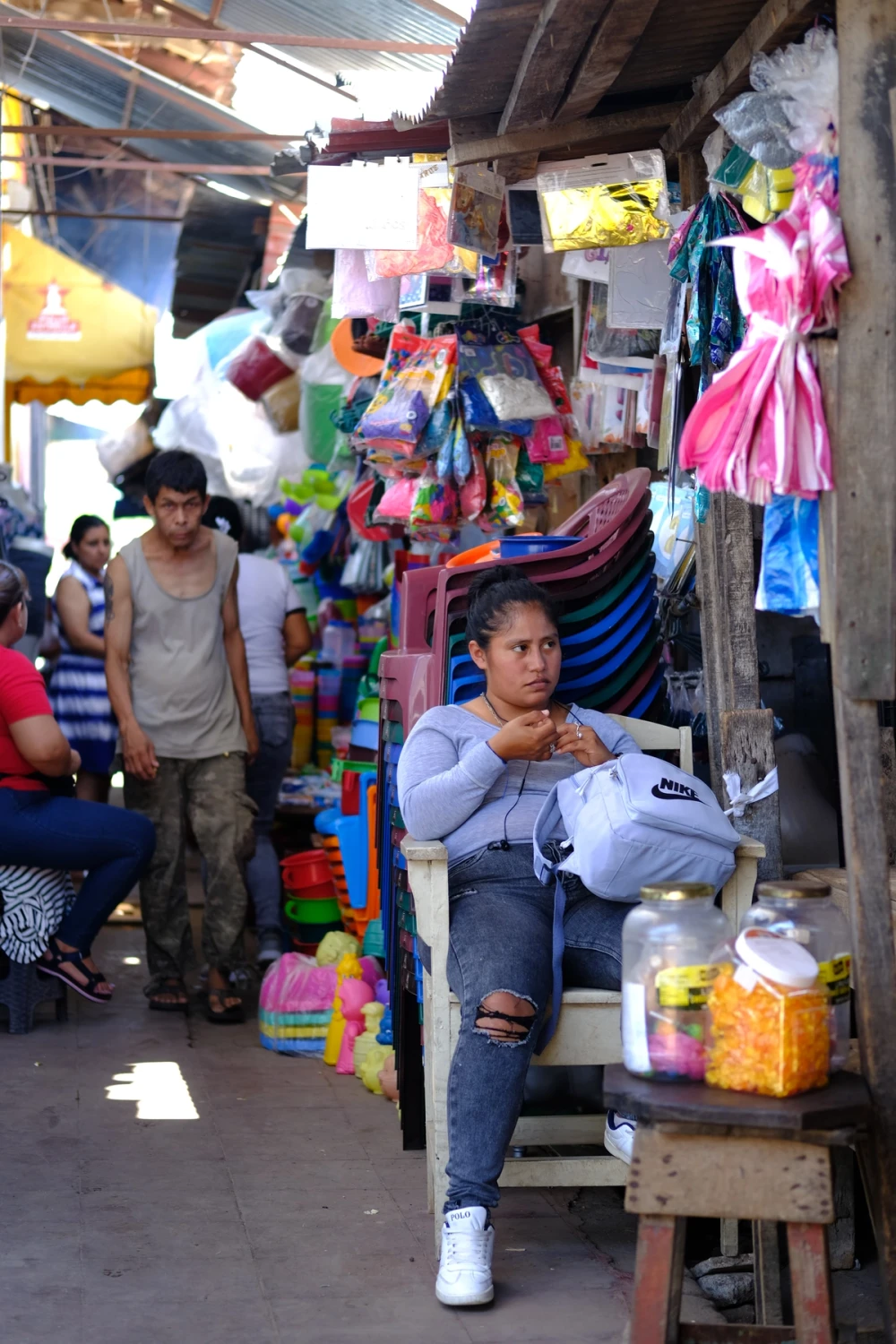
The municipal market is the loud, dense heart of the city — a warren of stalls under tarps and tin selling produce, plastics, toys, hardware, and food, with barely room to pass. Nothing here is staged for visitors. People work, rest, eat, and haul goods through the crush, a lot of it balanced on heads and shoulders because a cart won’t fit.
Up close, the beauty of Granada is in its wear. The grand facades are cracked and sun-bleached, plaster flaking off to show the adobe and brick underneath, every surface layered in old color. It’s a city that’s been burned and rebuilt more than once — sacked by pirates, torched in the 1850s — and it carries the centuries lightly, used rather than restored.
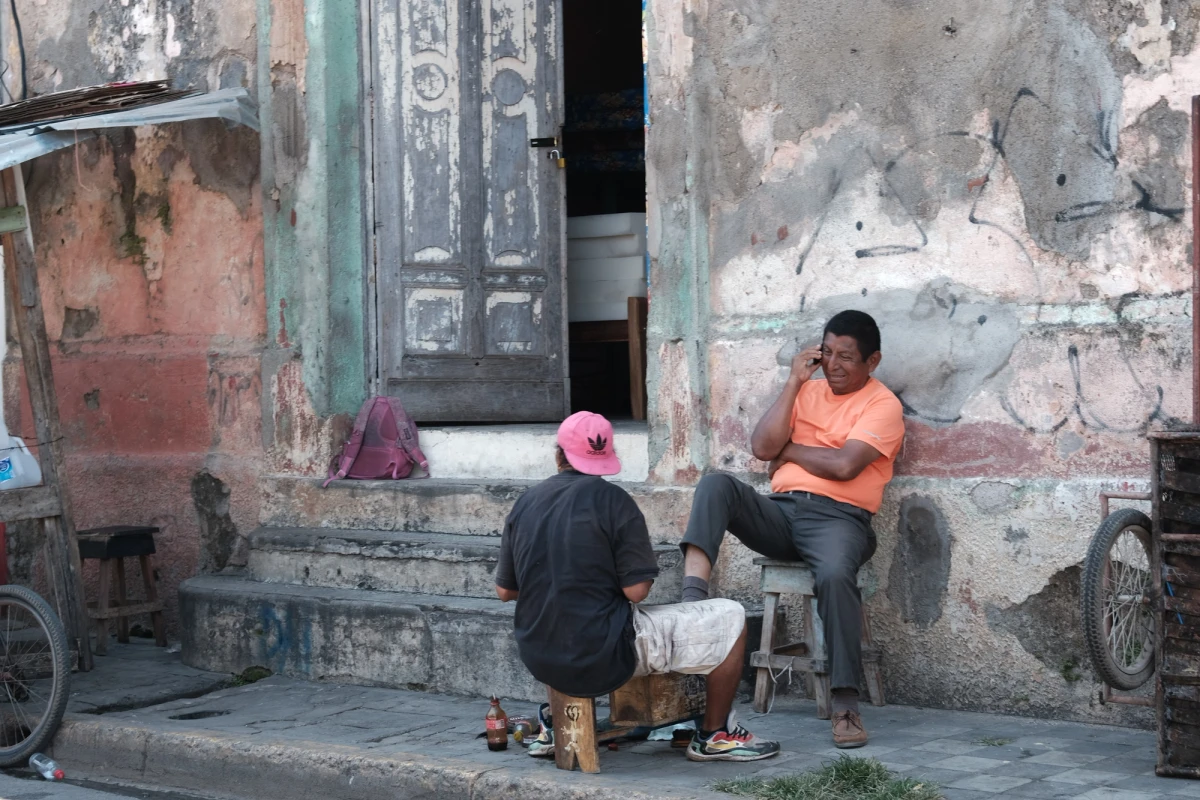
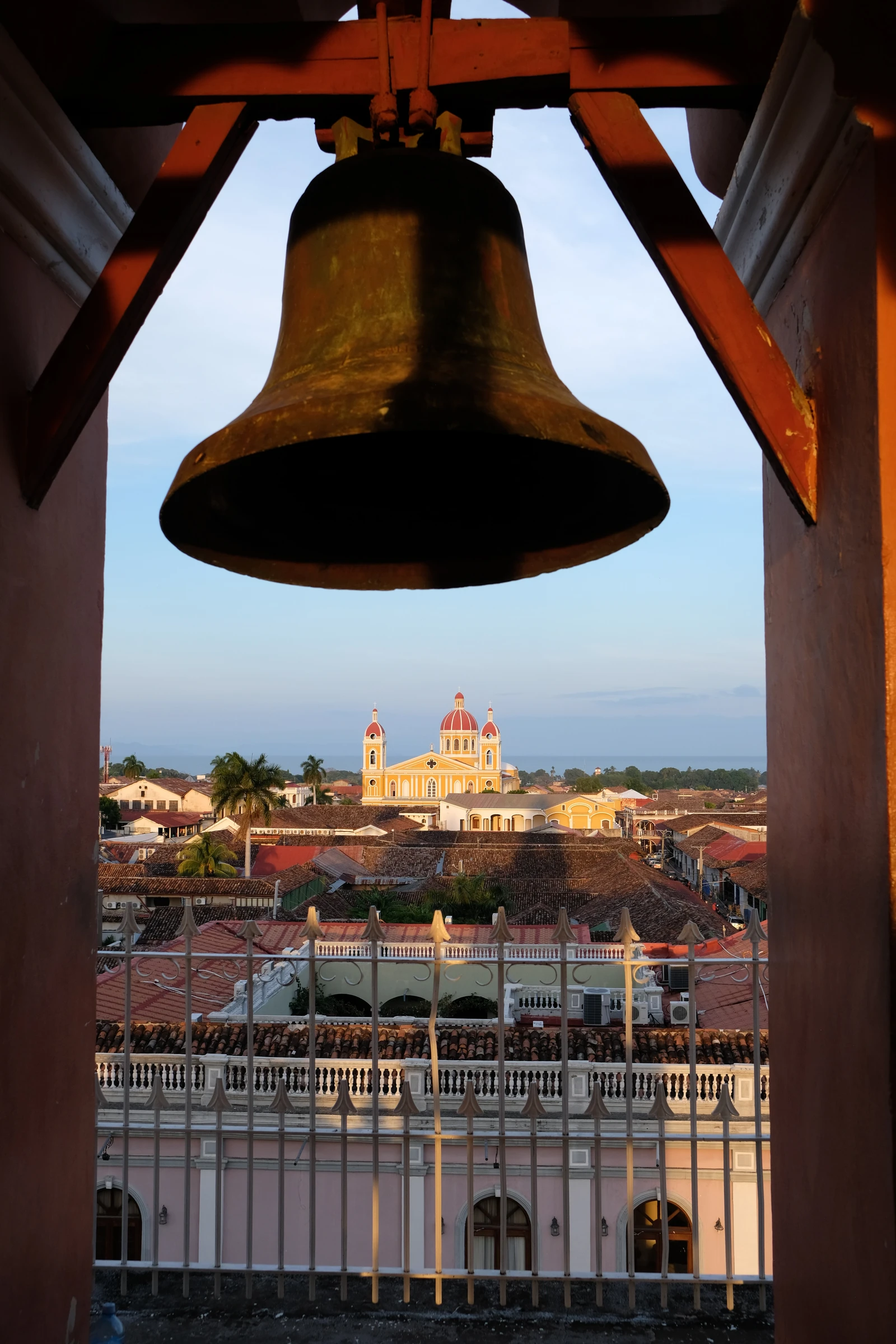
And it’s lived in at street level — doorways open straight onto the sidewalk, neighbors out front, deliveries made on foot under the tiled roofs. We climbed the bell tower at La Merced for the wide view over it all: rooftops running to the yellow cathedral, and the lake and Mombacho hazy beyond.
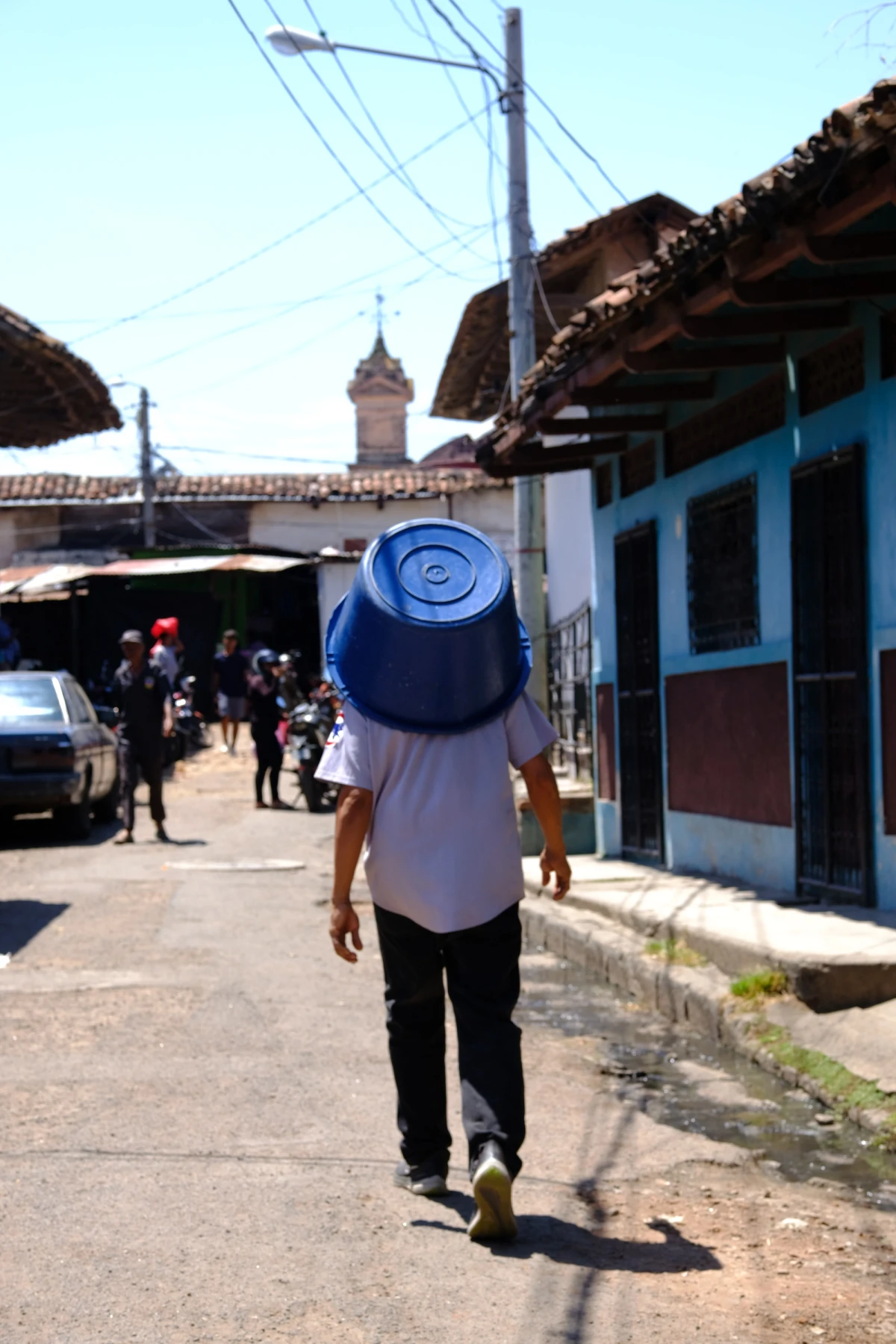
“It’s a city the color of faded paint and warm stone — every wall peeling, every street still working for its living.”
By late afternoon the heat finally eases, and Granada turns gold — the low sun lighting the church towers and the dust in the air, the streets filling again now that it’s bearable to be out. We watched the sun drop behind one of the old churches and called it.
It’s an easy place to like: small enough to walk in a day, old enough to feel the weight of, and busy enough that you never feel like a spectator. We used it as a base for the volcano and the lake, but the city itself — hot, faded, and fully alive — was the part that stuck.
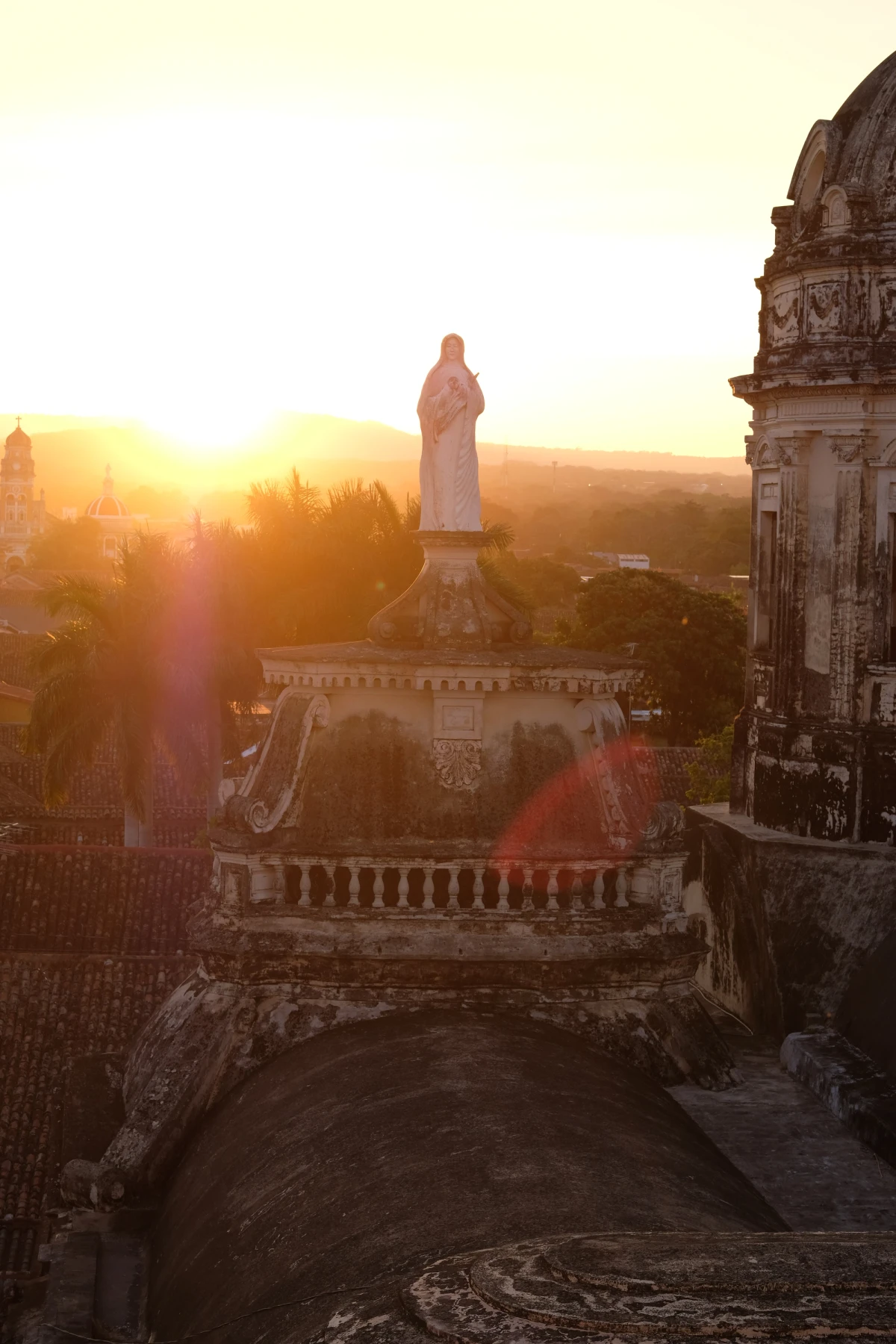
Granada is small and flat, so walk it — and let the heat set the schedule: out early, slow through the midday, back out when it cools. Climb the bell tower at the La Merced church for the best view over the rooftops to the cathedral and the lake, ideally near sunset. And use the city as a base: Mombacho’s cloud forest, the Masaya market and volcano, and the swimmable Laguna de Apoyo are all short trips away.