BISTI BADLANDS
Bisti/De-Na-Zin Wilderness Trip Report (3 Days): Hoodoos, Cracked Eggs, and Car Camping in New Mexico’s Badlands
Three days exploring New Mexico’s hoodoos, balanced rocks, and petrified wood while car camping between desert sunsets.
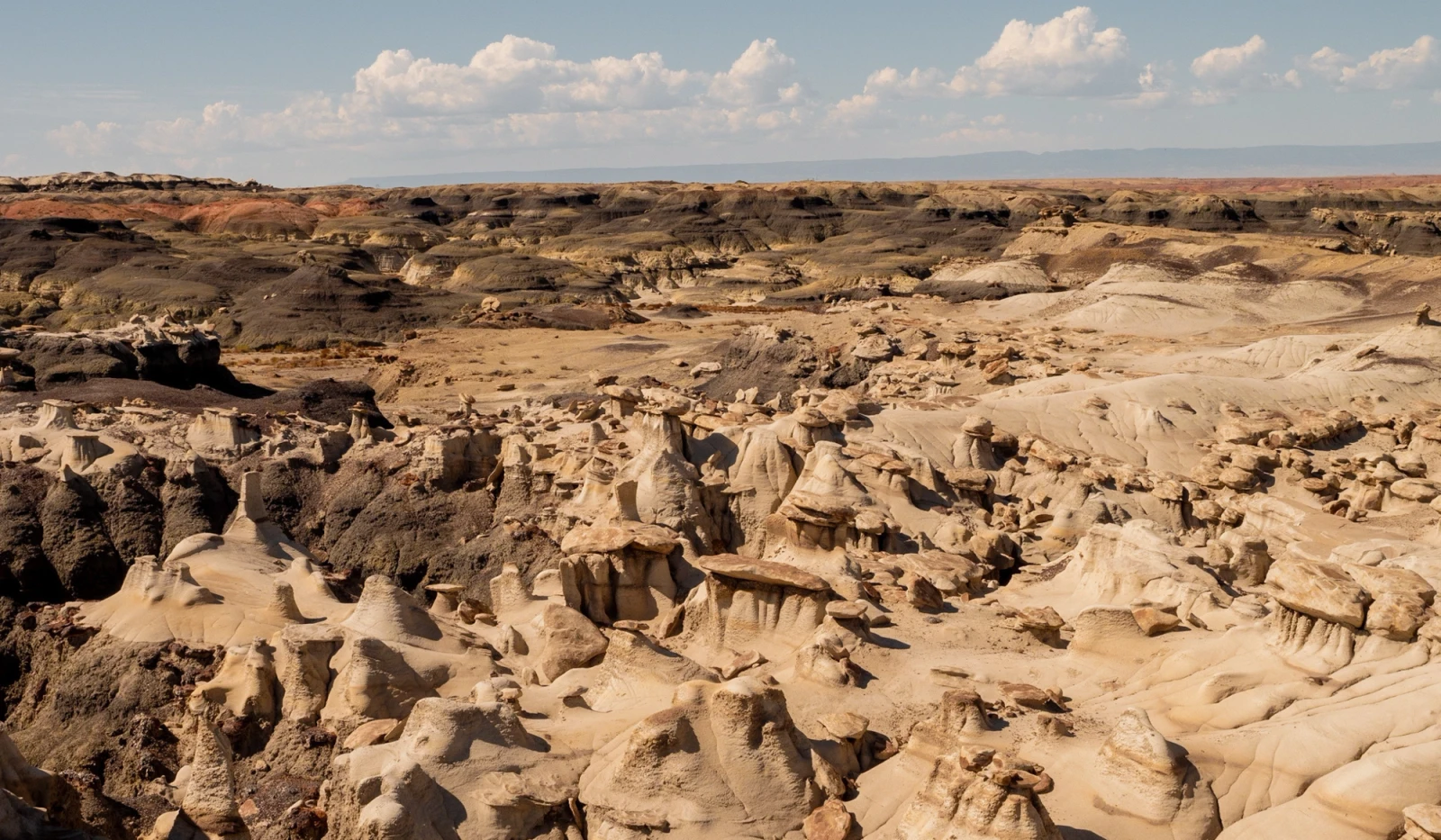
Bisti/De-Na-Zin sits on the high desert south of Farmington, New Mexico — a stretch of BLM wilderness with no trails, no signs, and no water. What it has instead is erosion: tens of millions of years of it, working soft clay and sandstone into hoodoos, fins, balanced caps, and the petrified remains of an ancient swamp.
We came in October for three days with cameras and enough water to last, and slept in the car at the edge of the dirt lot each night. The draw is simple. You park, you walk out across cracked ground, and the formations start. Nothing is marked. You navigate by memory and a pin dropped on a phone, and the reward for getting a little lost is that you rarely see another person.
Days ran warm and bright; the nights dropped close to freezing and the sky filled with stars. Most of the good light happened in the first and last hour, so we built the days around sunrise and sunset and let the bright middle hours go to wandering.
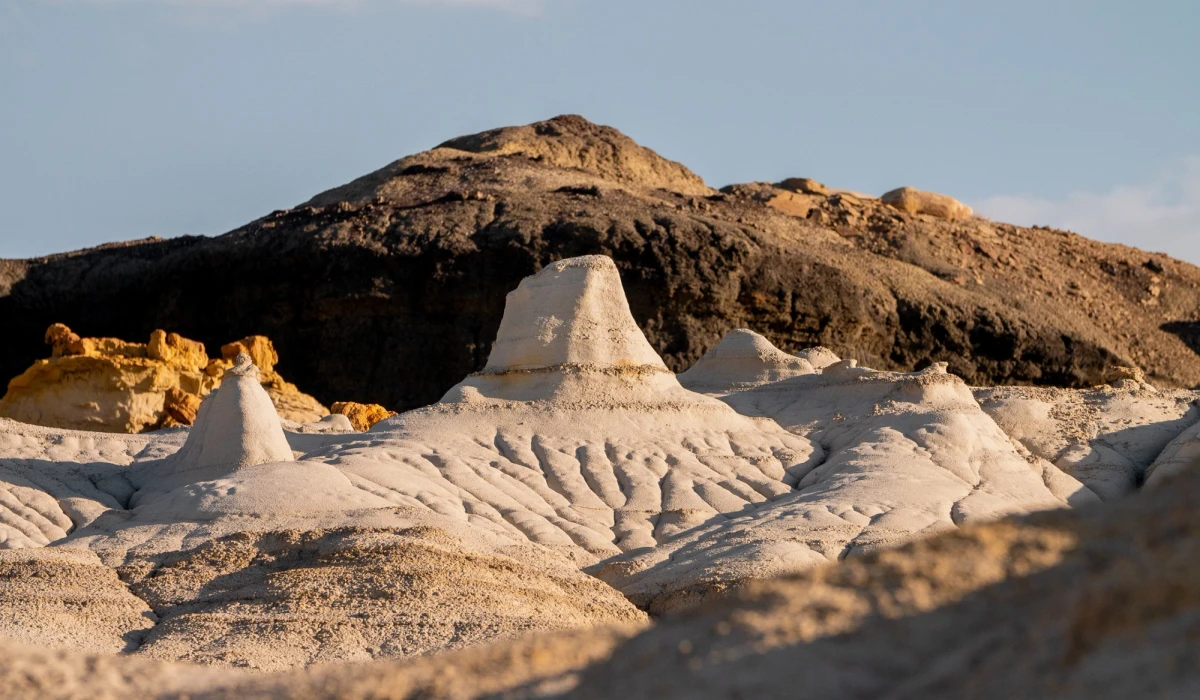
The road in is dirt and washboard — fine in dry weather, a bad idea in wet. We reached the small lot in the late afternoon, the only car there, and walked out before we lost the sun. There is no obvious way in, just a wash to follow and a low rise to climb, and then the ground breaks open into pale mounds and the first hoodoos.
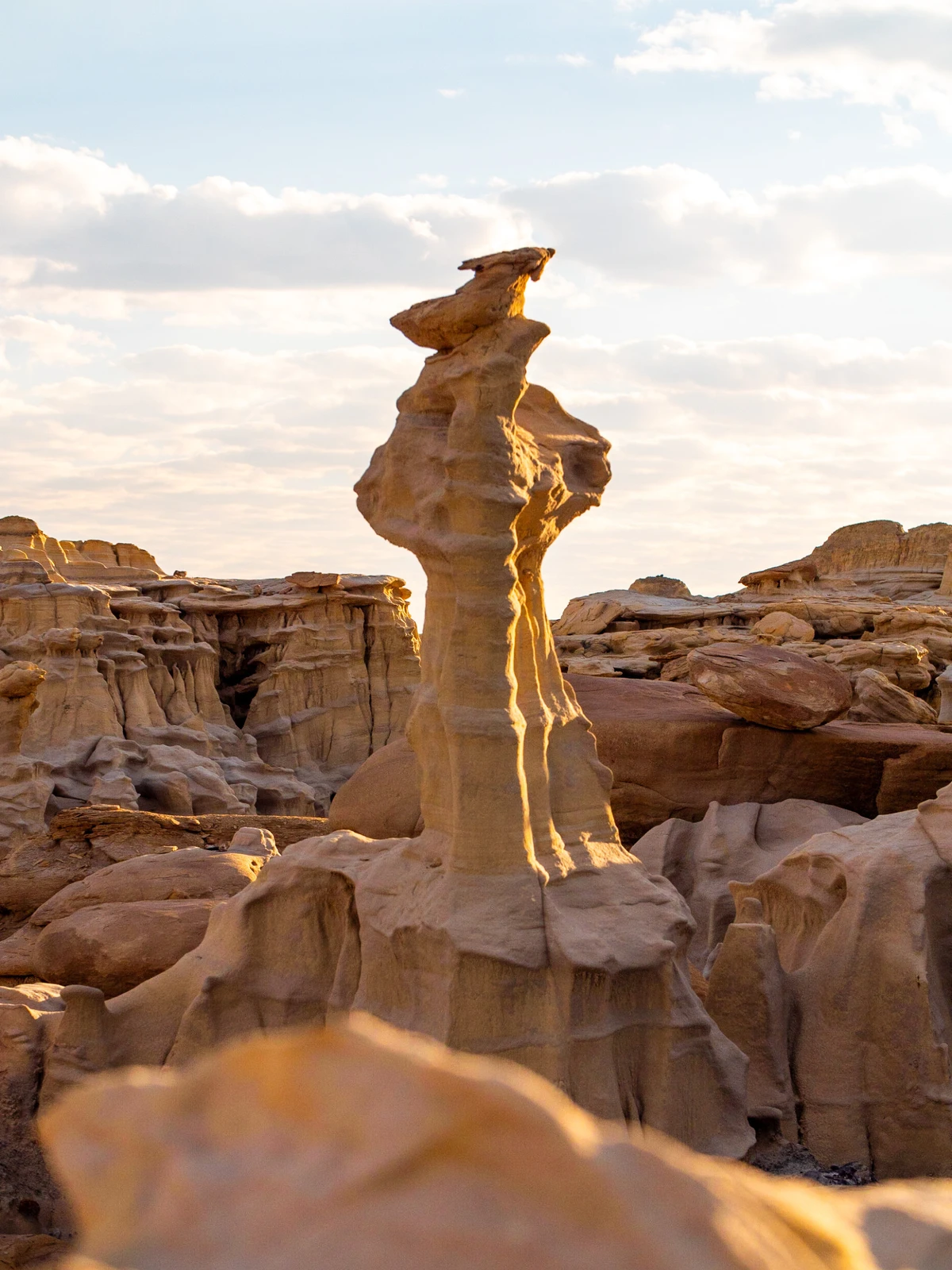
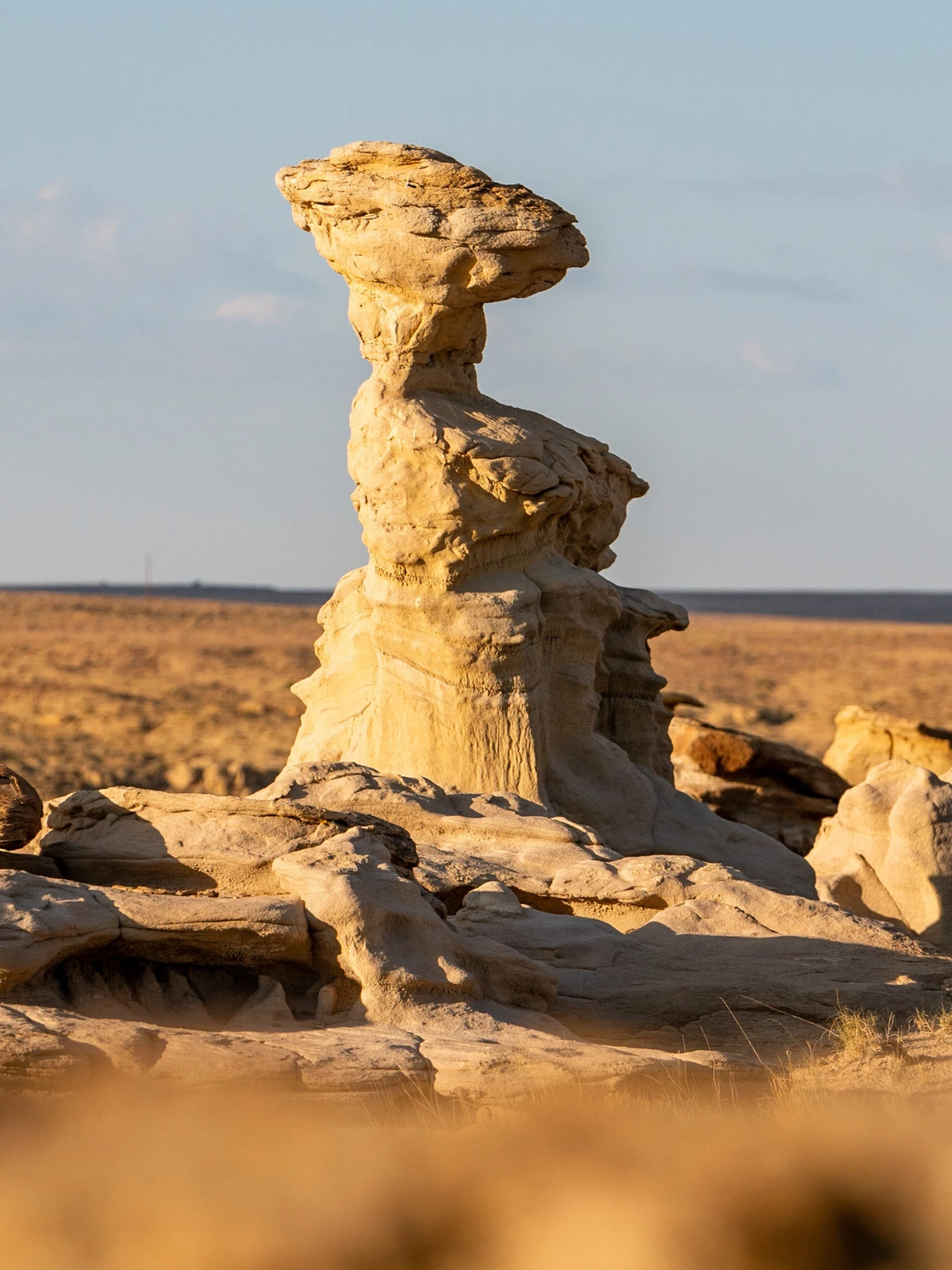
The light went gold fast. Caprock that looked grey at noon turned amber, and the long shadows pulled every ridge and crack into relief. We worked a cluster of spires until the color drained out of the sky, then walked back to the car by headlamp and cooked dinner on the tailgate.
Sleeping in the car kept setup simple — no tent to stake in the wind, and we could be shooting within minutes of waking. The wind worked the flats most of the night. By the time it dropped, the temperature had fallen near freezing.
“You don’t find the formations so much as stumble onto them — the ground looks flat until it suddenly isn’t.”
We spent the full day on foot, moving between the pockets of formations Bisti is known for. The terrain is easy underfoot — flat clay, sand, low rises — but it all looks the same in every direction, which is exactly how people get turned around out here. We kept checking our track.
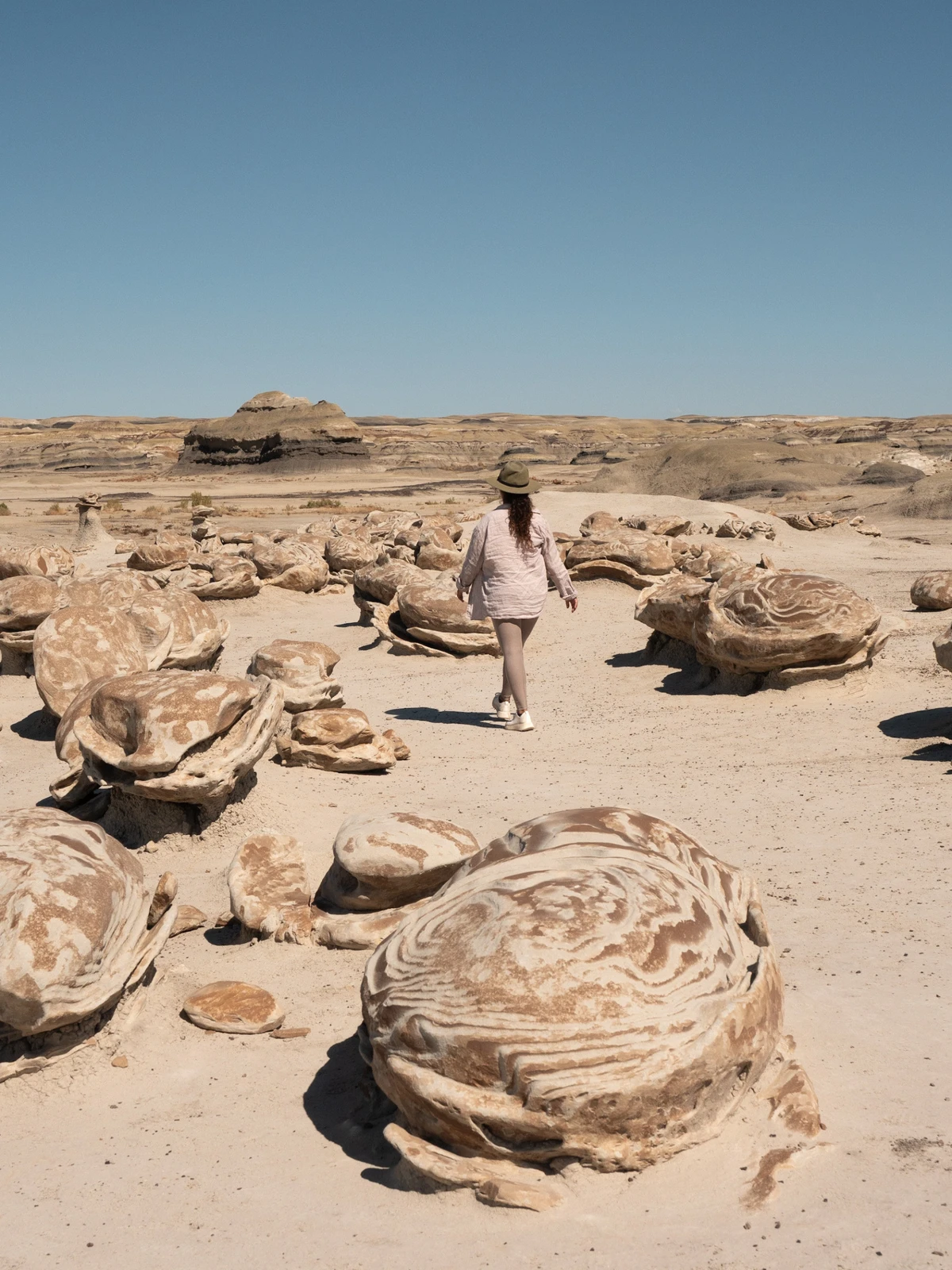
One basin holds the cracked eggs: rounded sandstone concretions split open and scattered across the sand like a field of giant stone shells. Past it, the hoodoos start in earnest — balanced caps perched on slender necks, fins, and tables of harder rock left standing while everything softer eroded out from under them.
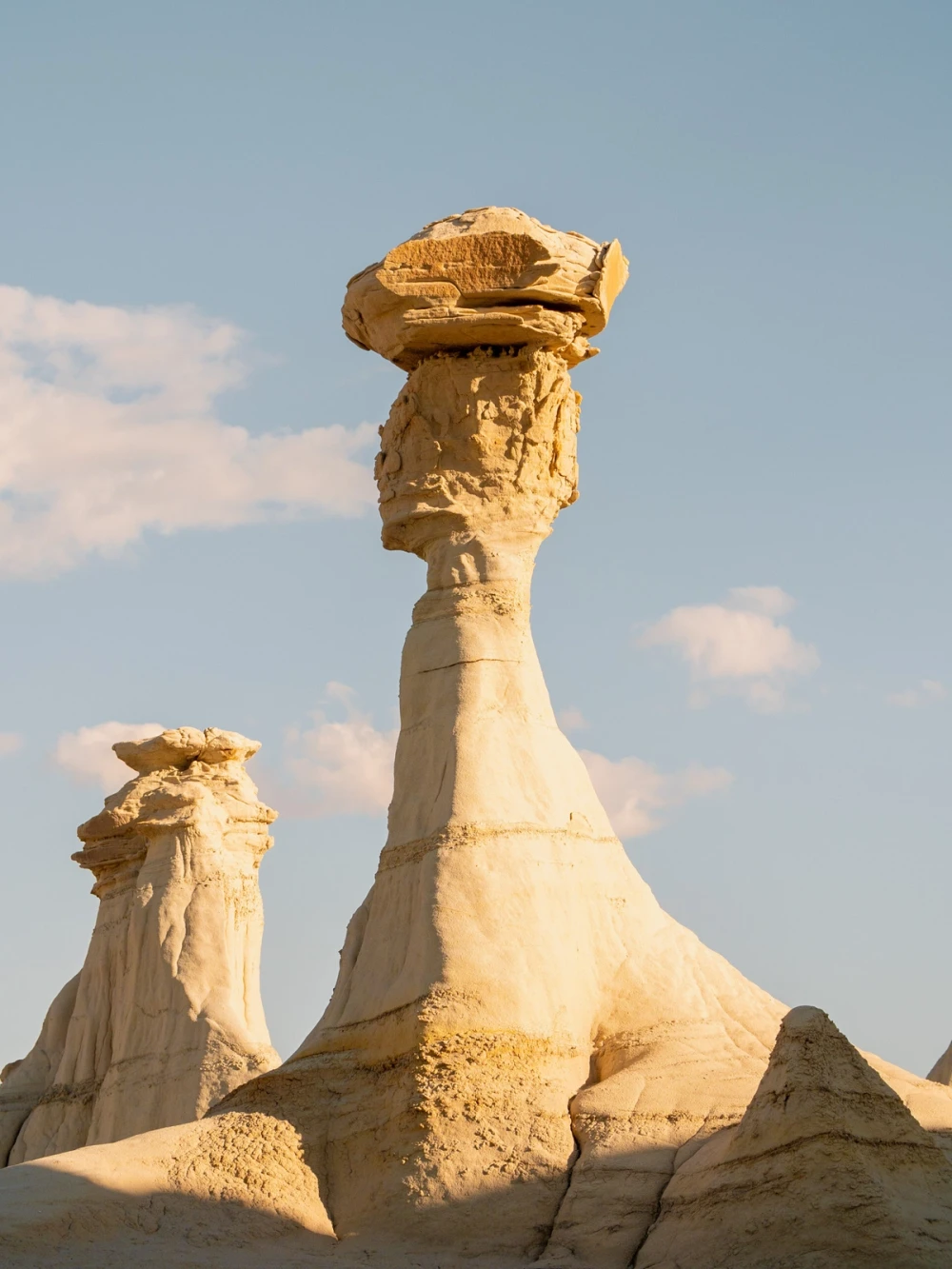
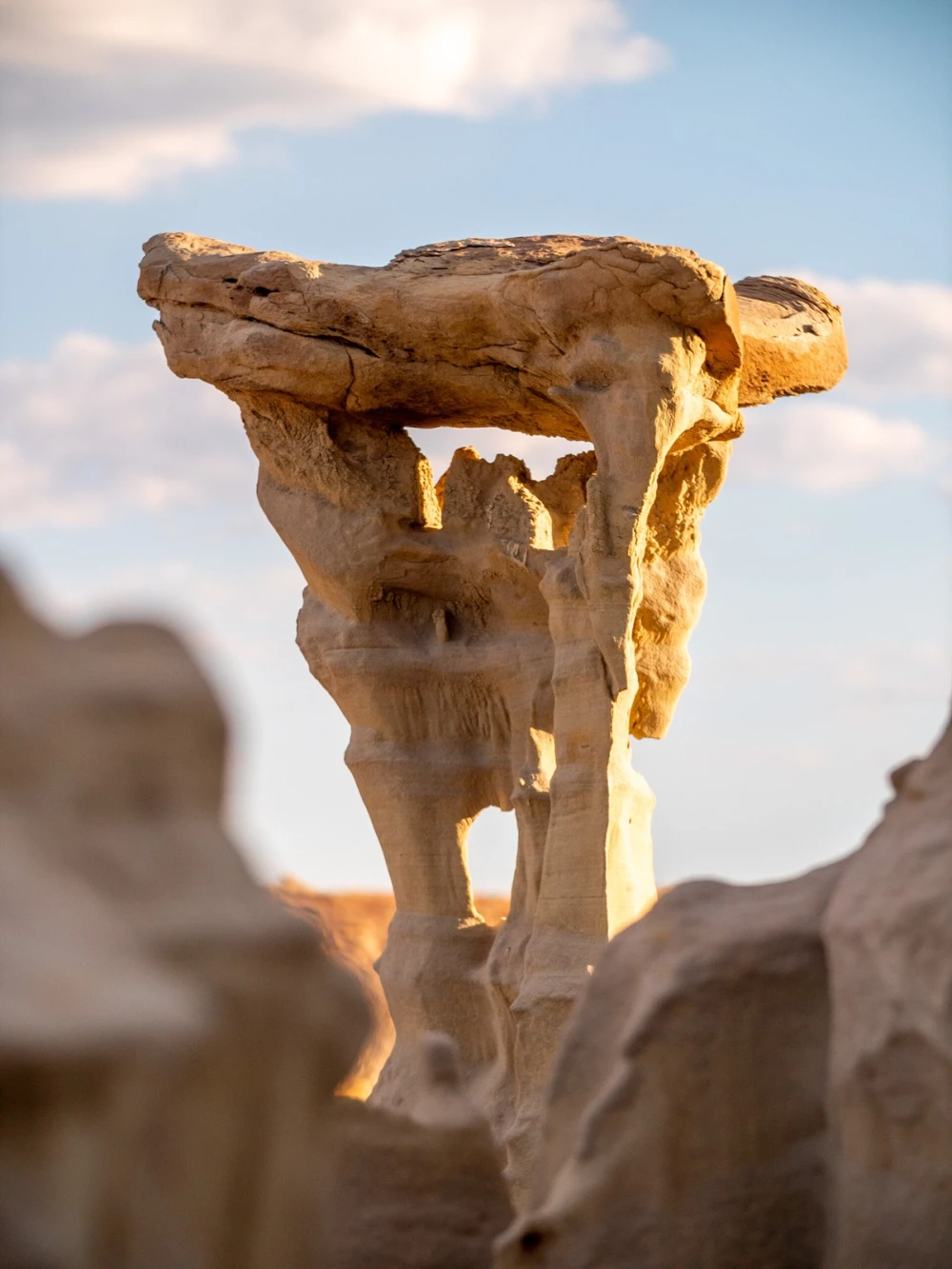
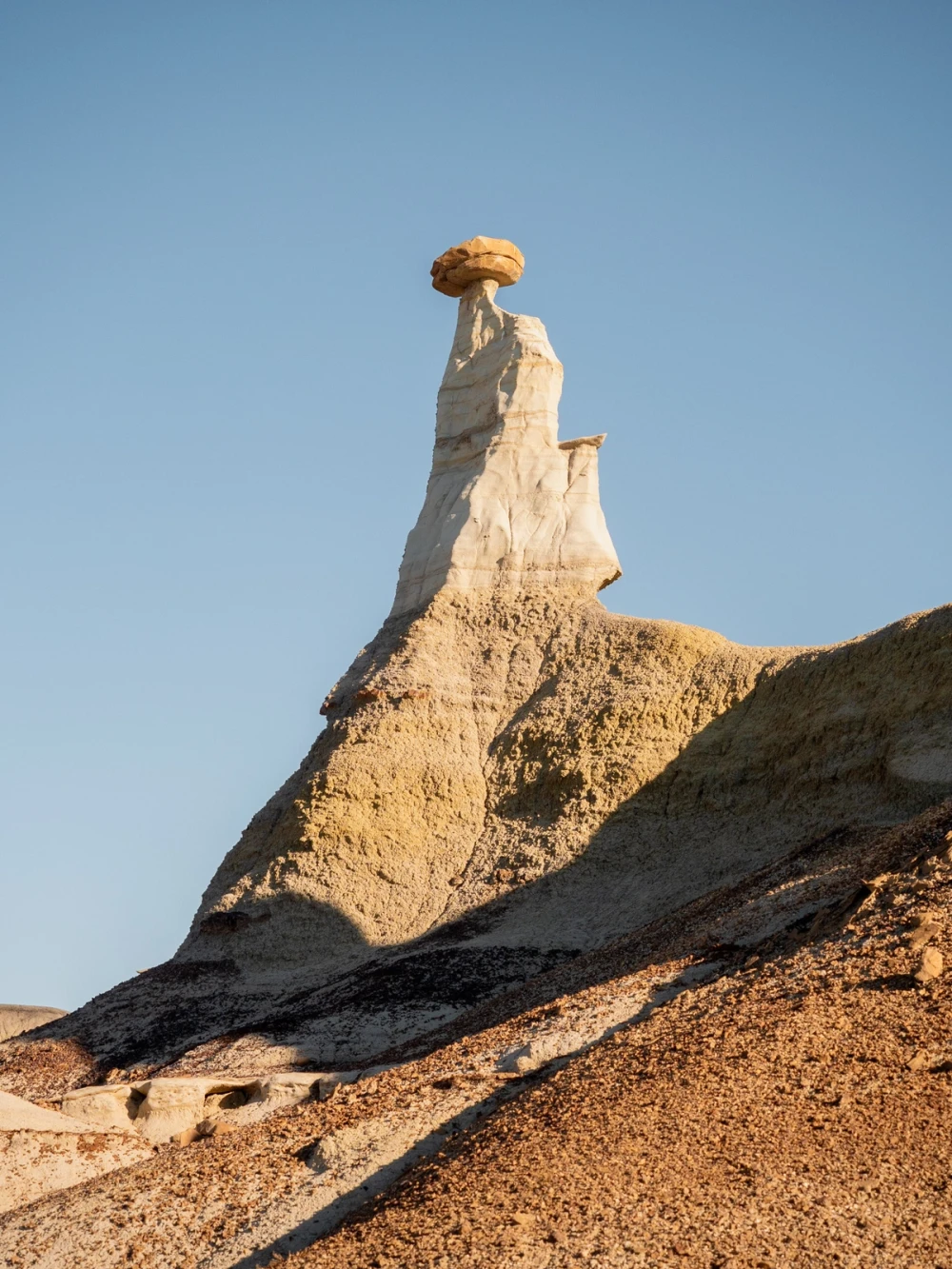
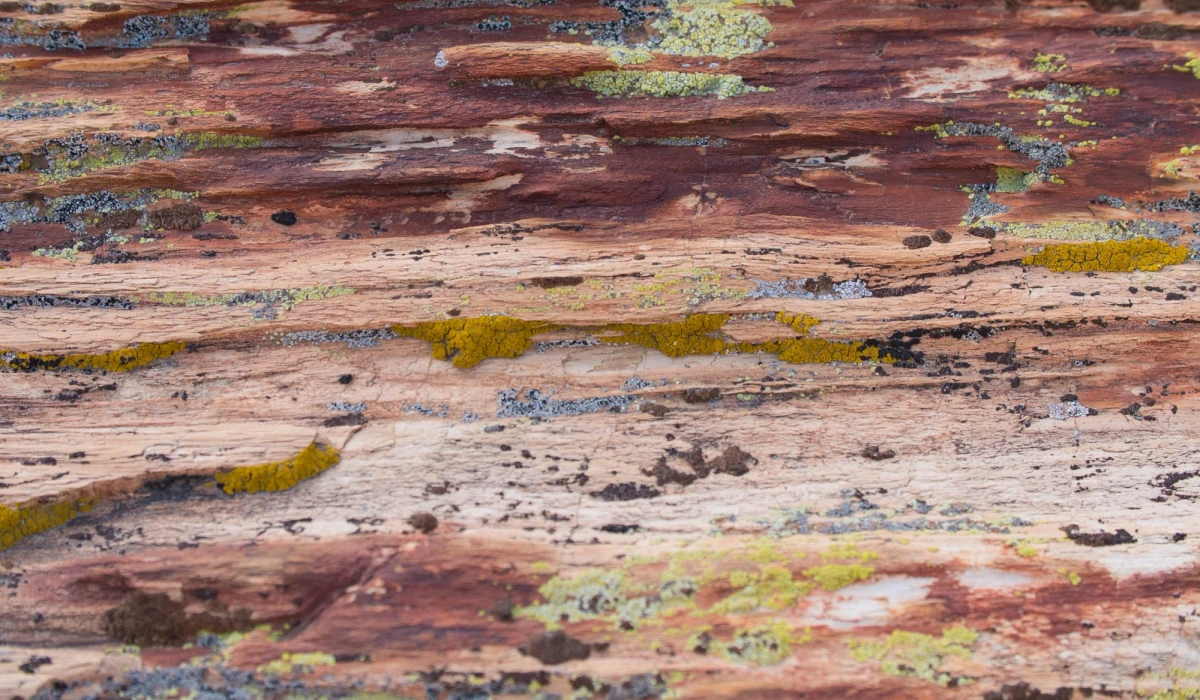
Bisti was a swamp and a river delta some seventy million years ago, and the wood from it is still here — logs turned to stone, streaked with iron reds and dotted with lichen. We found a long section of petrified trunk and sat with it through the hot part of the day.
We were up before light on the last day to catch the formations from the other side. Sunrise in Bisti is quieter than sunset — colder, the clay almost white before the sun clears the horizon, then warming through tan to amber in a few minutes. We shot until the light went flat, then walked back, packed the car, and drove out the dirt road toward pavement.
Bisti rewards a particular kind of patience. There is no summit, no marked loop, no payoff waiting at a fixed mileage — just ground that keeps unfolding into stranger shapes the longer you walk it. Three days was enough to learn how the light moves across it and not much more.
What stays with you is the quiet and the scale of time: rock that was a forest, then a seabed, then a desert, eroding a little more with every wind. We left more careful than we arrived — about water, about the road, about keeping track of the way back. Mostly we left wanting the next sunrise.
Drop a GPS pin at the car before you walk in and download an offline map — there are no trails or landmarks, and the formations all start to look alike once you’re a mile out. Check the forecast for the access road too; the clay turns to grease when it’s wet.